Timelapse photography of the Northern Lights filmed in Iceland by Boris Schaarschmidt.

Timelapse photography of the Northern Lights filmed in Iceland by Boris Schaarschmidt.
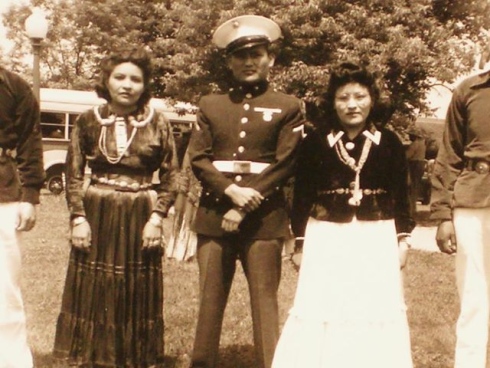
Last Of The Original World War II ‘Code Talkers’ Passes On
Chester Nez (Navajo), 93, helped create a code the Japanese couldn’t break.
Chester Nez, the last of the original group of U.S. Marine Code Talkers, died Wednesday of kidney failure, according to various sources.
Nez, 93, was the author of Code Talker: The First and Only Memoir By One of the Original Navajo Code Talkers of WWII and the inspiration for the 2002 film Windtalkers, starring Adam Beach and Nicholas Cage.
Nez was recruited in the spring of 1942 by the U.S. Marines, who came to Arizona recruiting Navajo speakers for a top-secret mission: develop a code that the Japanese could not decipher. The Navajo language, with a difficult syntax and grammar that was difficult to understand compared to many other languages, provided the basis for a nearly unbreakable code which was instrumental during U.S. efforts in the Pacific theatre during World War II.
The language they created was made even more complicated by the ambiguous and sometimes ribald choices made by its Navajo creators, says the Washington Post:
As Nez explained in his memoir, “the Navajo word for ‘jackass’ — spelled tkele-cho-gi in our code phonetics, stood for the English letter J.”
The efforts behind the code’s creation and implementation were not fully recognized until 1968, when the nature of the operation was declassified and Nez and his fellow servicemen began to receive recognition for their service. The original 29 Navajo Code Talkers were awarded the Congressional Gold Medal in 2001, while other Code Talkers were awarded the Silver Medal.
“We mourn his passing but honor and celebrate the indomitable spirit and dedication of those Marines who became known as the Navajo code talkers,” the Marines said in a statement.
Credit: Steven Phelps in Cowboys and Indians

Photo of a platoon of Navajo Code Talkers upon their graduation from Marine Corps recruit training in 1942
Chester Nez died on June 4, 2014 at his home near Albuquerque, NM.

Four hundred-eighty years ago, on June 9, 1534, Jacques Cartier’s party sailed into the St. Lawrence River. This excursion began in France in April of 1534. Cartier’s mission was to find gold and spices, and passage by water from Europe to Asia. While he failed in his mission to find a water route to China, Cartier had discovered an important water route into what would become Canada and the United States. In fact Canada was named by Cartier. He met with Iroquois people who gave him directions upriver to a town or settlement. “Kanata” signifies a village in the Huron-Iroquois tongue. The word has come to be the name for an entire nation.
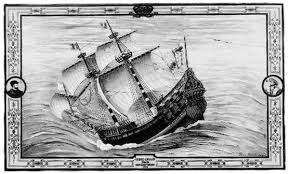 Cartier’s ship Grand Hermine
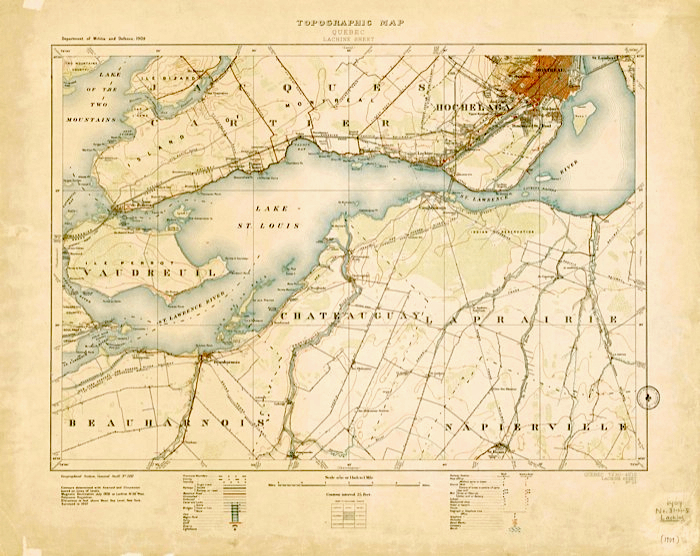
While Cartier recognized the North American continent for what it was – a separate land mass from Europe and Asia, he hoped that the St. Lawrence would furnish passage to China. That is why the rapids near Montreal are named the Lachine Rapids.
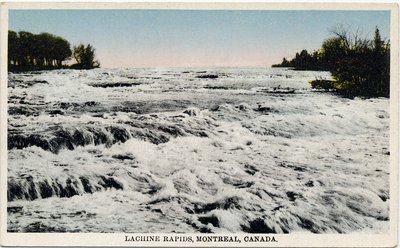
The Lachine Rapids are a series of rapids on the Saint Lawrence River, between the Island of Montreal and the south shore. They are located near the former city of Lachine. The Lachine Rapids contain large standing waves because the water volume and current do not change with respect to the permanent features in the riverbed, namely its shelf-like drops. Seasonal variation in the water flow does not change the position of the waves, although it does change their size and shape. The rapids are about 3 miles (4.8 km) in length. In the past these represented a considerable barrier to maritime traffic. Until the construction of the Lachine Canal through Montreal, the rapids had to be portaged.
Refs. America’s Library, Wikipedia.
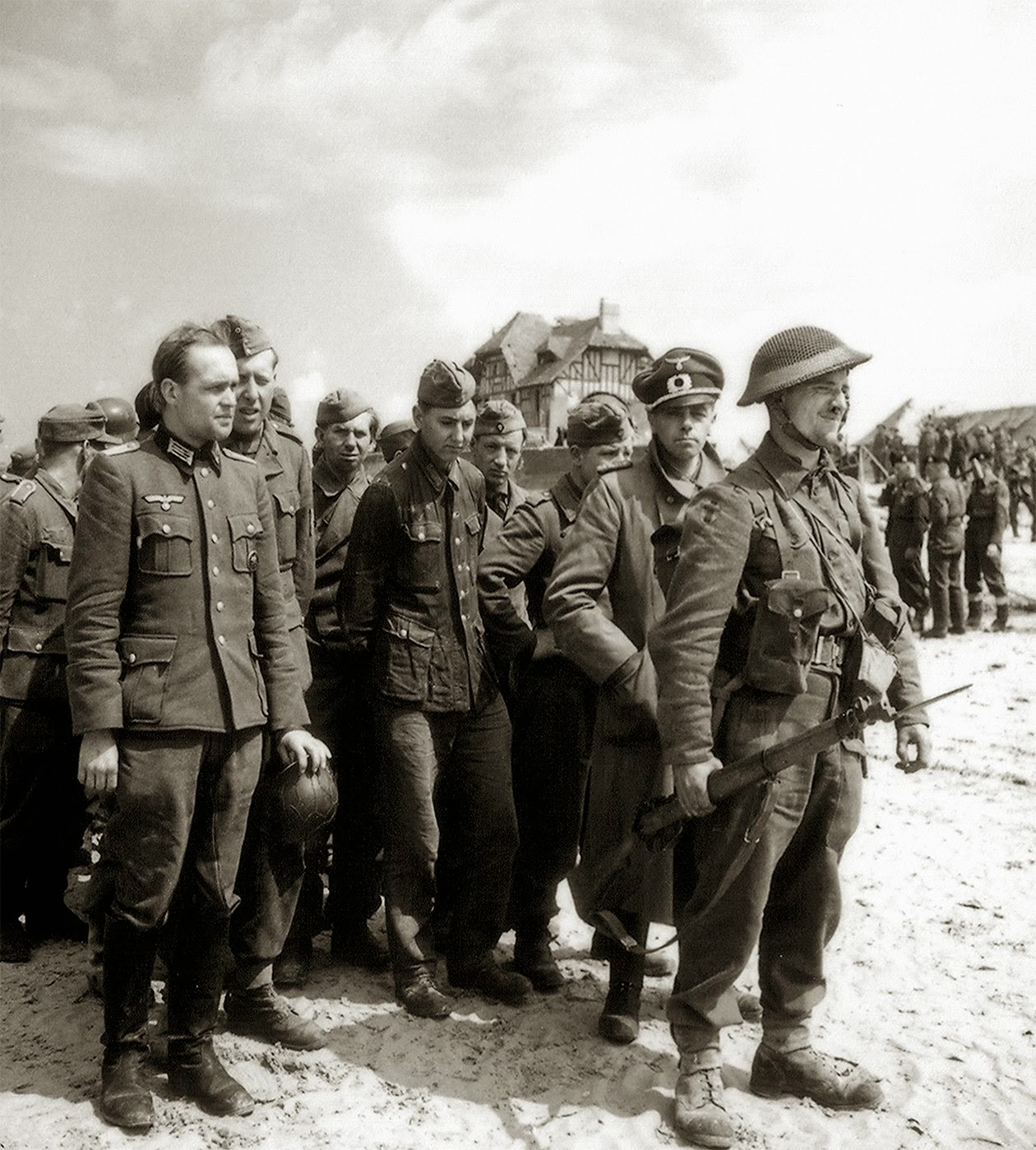 D-Day – June 6, 1944 – 70 years ago today
Click here for more interactive photos – shamelessly ripped borrowed from HMS Defiant.
My fascination with watermelon carvings remains unabated. Here are some more that I like including the obligatory baby in the watermelon suit, some interesting facts about watermelons (I did not know that!), and a handy video that shows how to make your own carvings.

Melons are all “Cucumbers” (Cucurbits or Cucurbitaceae) to the botanist, along with squash, gourds and actual cucumbers. To the agriculturist they are are all “vine crops”. All are technically “fruit” but in culinary practice all are treated as “vegetables” except the melons which are treated as fruit.
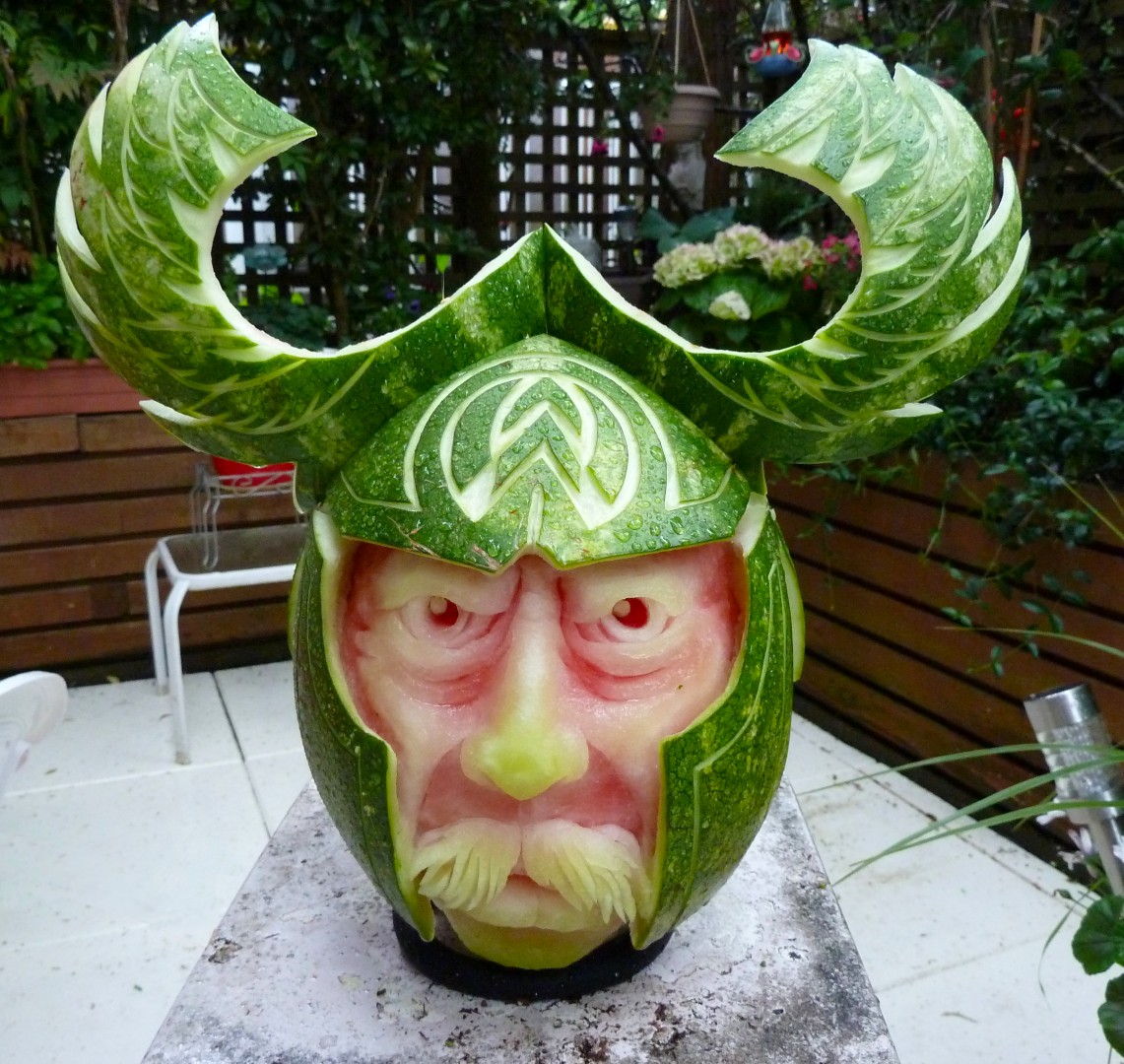

Here is how to do it:
 I thought this was a lovely geology tattoo on a graduate student that celebrates her field of study.
I am reading a book on the geology of the Cleveland region that was published in 1940 and found in a bunch of books that were being discarded (!)
Here are a couple of the figures from that book. I find interesting the different intersection land forms that make up this area – and the fact that I live on top of the last foothill of the Appalachian Plateau. Interesting in history, if not in altitude.


Year It Began: 1928
Bite of History: When Kraft first brought Velveeta to market, they declared it to “always melt perfectly.” Velveeta’s ads instructed housewives to melt a 1/2 lb. of the “famous cheese food” and gradually stir in 1/4 cup of milk. We know what you’re thinking, they were suggesting to use it to make macaroni and cheese, right? Not quite. That “sauce” was recommended it be served, “over toasted sandwiches of peanut butter and sweet pickle relish.” Hmm…
Prior to the launch of Velveeta, Kraft spent several years researching the nutritional benefits of whey, the bi-product that is part of the cheese-making process. In 1931, the American Medical Association gave Velveeta its official seal of approval. When the product was released there in 1937, it became so wildly popular in Germany that the plant in Lindenberg could not keep up with demand. In 1953, it was introduced as a spread with less fat and fewer calories. Over the years, Velveeta has been slightly altered and new varieties have been introduced including its newest member, Spicy Buffalo.
Fun Fact: The brand name Velveeta was intended to convey the product’s velvety texture.
Ref: Delish – the History of Velveeta
I was at the big CWRU Annual Book Sale this weekend. One of the treasures I found was an older Velveeta Cookbook to add to my collection.


I have a friend who named her orange tabby Velveeta.

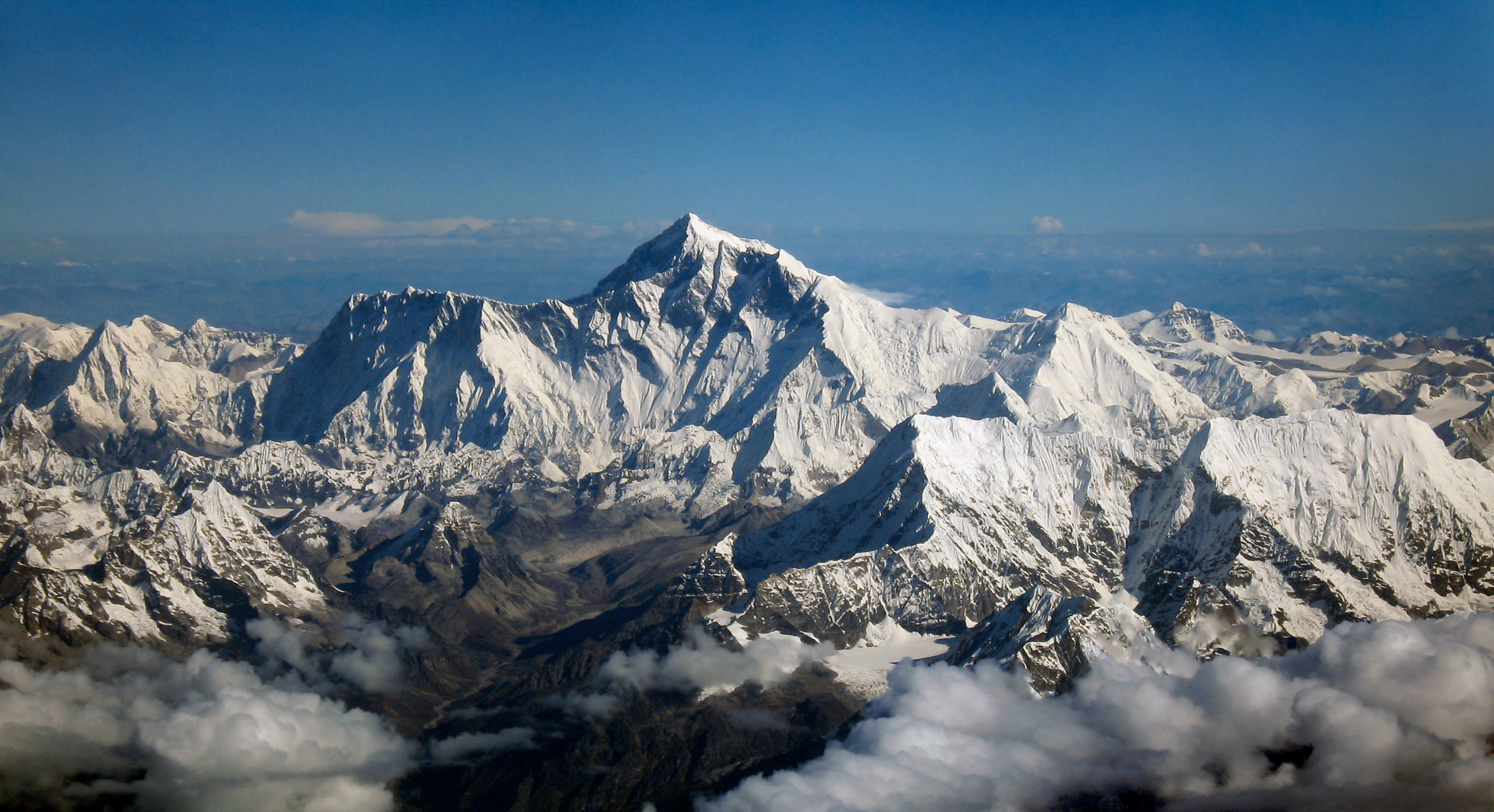
1953 Everest Expedition
The route to Everest was closed by Chinese-controlled Tibet, and Nepal only allowed one expedition per year. A Swiss expedition (in which Tenzing took part) had attempted to reach the summit in 1952 but was turned back by bad weather and exhaustion 800 feet (240 m) from the summit. During a 1952 trip in the Alps, Hillary discovered that he and his friend George Lowe had been invited by the Joint Himalayan Committee for the approved British 1953 attempt and immediately accepted.
Shipton was named as leader but was replaced by Hunt. Hillary considered pulling out, but both Hunt and Shipton talked him into remaining. Hillary was intending to climb with Lowe but Hunt named two teams for the assault: Tom Bourdillon and Charles Evans; and Hillary and Tenzing. Hillary therefore made a concerted effort to forge a working friendship with Tenzing.
The Hunt expedition totalled over 400 people, including 362 porters, twenty Sherpa guides and 10,000 lbs of baggage,and like many such expeditions, was a team effort. Lowe supervised the preparation of the Lhotse Face, a huge and steep ice face, for climbing. Hillary forged a route through the treacherous Khumbu Icefall.
The expedition set up base camp in March 1953. Working slowly it set up its final camp at the South Col at 25,900 feet (7,890 m). On 26 May Bourdillon and Evans attempted the climb but turned back when Evans’ oxygen system failed. The pair had reached the South Summit, coming within 300 vertical feet (91 m) of the summit. Hunt then directed Hillary and Tenzing to go for the summit.
Snow and wind held the pair up at the South Col for two days. They set out on 28 May with a support trio of Lowe, Alfred Gregory and Ang Nyima. The two pitched a tent at 27,900 feet (8,500 m) on 28 May while their support group returned down the mountain. On the following morning Hillary discovered that his boots had frozen solid outside the tent. He spent two hours warming them before he and Tenzing attempted the final ascent wearing 30-pound (14 kg) packs.[14] The crucial move of the last part of the ascent was the 40-foot (12 m) rock face later named the “Hillary Step”. Hillary saw a means to wedge his way up a crack in the face between the rock wall and the ice and Tenzing followed. From there the following effort was relatively simple. Tenzing Norgay stated in his narration “The Dream Comes True” that Hillary had indeed taken the first step atop Mount Everest, despite Hillary quoting that both had reached the summit at the same time. They reached Everest’s 29,028 ft (8,848 m) summit, the highest point on earth, at 11:30 am. As Hillary put it, “A few more whacks of the ice axe in the firm snow, and we stood on top.”
They spent only about 15 minutes at the summit. Hillary took the famous photo of Tenzing posing with his ice-axe, but since Tenzing had never used a camera, Hillary’s ascent went unrecorded. However, according to Tenzing’s autobiography Man of Everest, when Tenzing offered to take Hillary’s photograph Hillary declined: “I motioned to Hillary that I would now take his picture. But for some reason he shook his head; he did not want it.” Tenzing left chocolates in the snow as an offering and Hillary left a cross that he had been given by John Hunt. Additional photos were taken looking down the mountain in order to confirm that they had made it to the top and that the ascent was not faked.
The two had to take care on the descent after discovering that drifting snow had covered their tracks, complicating the task of retracing their steps. The first person they met was Lowe, who had climbed up to meet them with hot soup.
 Hillary and Tenzing Norgay
Over a period of nearly twenty years, [Tenzing Norgay] had made himself a part of every expedition that set out to put a man on the top of Mt. Everest. He had climbed as a lowly porter and as a respected member of the climbing team. He had accompanied large, confident armies (such as the 1936 and 1953 British Everest Expeditions) on their way to the summit, but he had also gone to the mountain with a solitary climber, Earl Denman, in 1947, on the chance that even this might give him an opportunity to get to the top. By 1953, he had probably spent more time on Mt. Everest than any other human being – and had come closer to its summit. Only months before his successful climb with Edmund Hillary, he and Raymond Lambert of the 1952 Swiss expedition, had come within 1,000 feet of the summit — the highest point that anyone had reached until then. Unlike most of his fellow Sherpas of the time for whom, by and large, climbing was just a challenging way of making a living, Tenzing desperately wanted to get to the summit of Mt. Everest and devoted most of his life to this goal. “For in my heart,” he once said, “I needed to go . . . the pull of Everest was stronger for me than any force on earth.” If there was ever anyone who deserved to get there first, it was Tenzing.


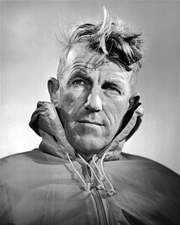 Sir Edmund Hillary died in 2008.
He is buried near his home in New Zealand.
That is the thing that international travel brings home to me – it’s always good to be going home.
This is the only place I want to live in; this is the place I want to see out my days.
— Edmund Hillary, speaking about Auckland’s West Coast
Firearms, fibers, any news or behaviors that make me say, "hmm, let me take another look at this."
I still miss my man, but my aim is getting better.