
Food art at my local grocery store. They were giving samples of tangerines . . .

and they are delicious!

Food art at my local grocery store. They were giving samples of tangerines . . .
and they are delicious!

He puts his cheek against mine
and makes small, expressive sounds.
And when I’m awake, or awake enoughhe turns upside down, his four paws
in the air
and his eyes dark and fervent.“Tell me you love me,” he says.
“Tell me again.”
Could there be a sweeter arrangement? Over and over
he gets to ask.
I get to tell.
This is from Dog Songs by Mary Oliver, to which I was introduced on Brainpickings.
Mary Oliver is a Pulitzer Prize winning poet. Oh, how I wish I could write like that.
Enjoy vicariously the baked Alaska prepared for us at Tio Pepe. It was a wonderful dinner with Rethorical Questions, Word Tapestry, and HMS Defiant. DAS was also at the table, however he and Mr. Kilometro, who suggested the event, do not currently have a blog presence!
Thanks to a timely phone conversation, Word and I got to devour some of this….

… In the excellent company of Anne Bonney and her companions.
Huzzah!
 It is Shrove Tuesday, Pancake Tuesday, Fat Tuesday, or Mardi Gras!
I suspect that this is another one of those holidays that has been taken over by the church and yet predates Christianity. If you know its earlier origins, please let me know.
 This is a pancake race in Great Britain.
Pancakes are associated with the day preceding Lent because they were a way to use up rich foods such as eggs, milk, and sugar, before the fasting season of the 40 days of Lent. The liturgical fasting emphasized eating plainer food and refraining from food that would give pleasure: in many cultures, this means no meat, dairy products, or eggs.
In Canada, Australia, the United Kingdom, Ireland and New Zealand the day is also known as “Pancake Day” as it is a common custom to eat pancakes as a meal.
In Newfoundland small tokens are frequently cooked in the pancakes. Children take delight in discovering the objects, which are intended to be divinatory. For example, the person who receives a coin will be wealthy; a nail that they will become or marry a carpenter.
Source: Wikipedia
And, of course, there are tattoos:

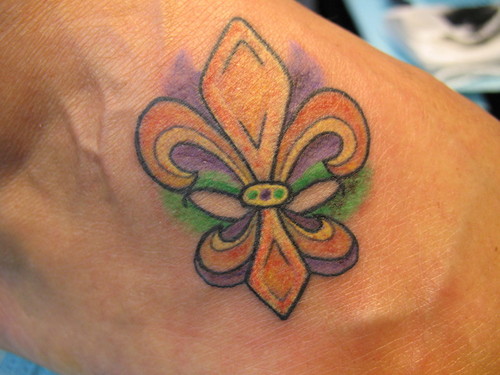

Celebrate the day with pancakes, jambalaya, a slice of King cake, and a hurricane!
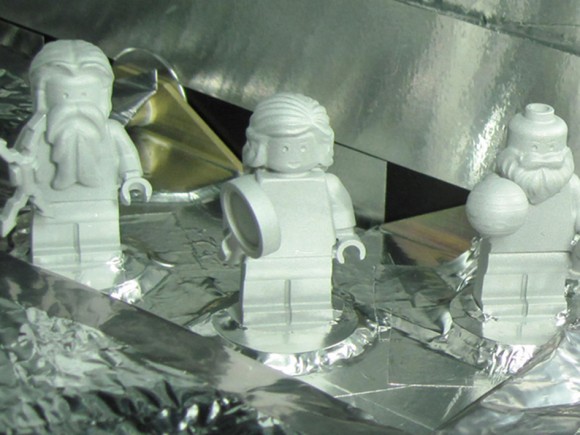
David Reneke at Dave Reneke’s World of Space and Astronomy posted this wonderful story about strange and unusual objects that people have launched into space. What caught my eye, of course, were the LEGO characters of Magellan, Jupiter and Juno being carried on a probe to Jupiter.
Mini-figurines of Galileo and the Roman deities Jupiter and Juno were launched in 2011 aboard NASA’s Juno spacecraft en route to Jupiter . LEGO has flown products aboard the U.S. Space Shuttles and to the International Space Station previously, but Juno’s cargo represents the “most distant LEGO launch” ever. The figurines will burn up in Jupiter’s atmosphere along with the spacecraft at the end of the mission in October 2017.
Among the other objects launched are a Florida state quarter, the famous golden disc, the Mars penny, and a wheel of cheese. What would you send into space?

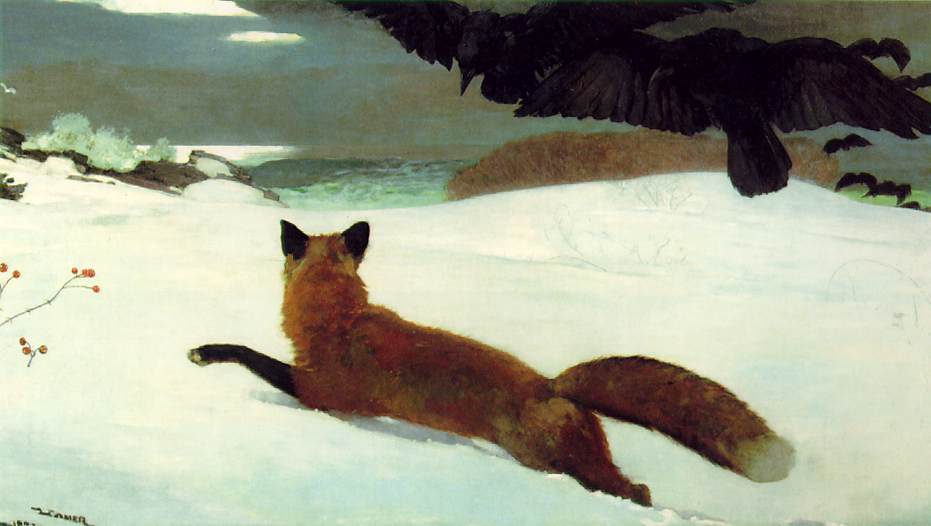
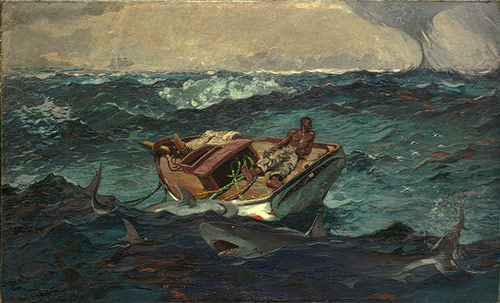
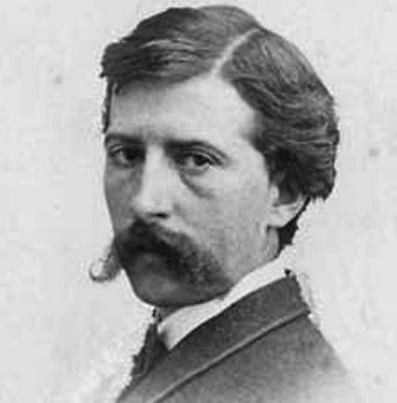
February 24 was Winslow Homer’s 178th birthday. Homer is probably best known for his seascapes, but he started his career as a print maker. In 1861, he was sent to the front as an artist-correspondent recording the battles and conditions of the American Civil War.
He lived a good part of his life in New York City employed as a magazine illustrator, but his travels to the east coast of New England, the White Mountains of New Hampshire and eventually to Europe – Paris and the English seaside, influenced his work. He has been described as foreshadowing the abstract movement, but I think his work is most characterized by his mastery of air, water and weather.
A longer biography can be found here.
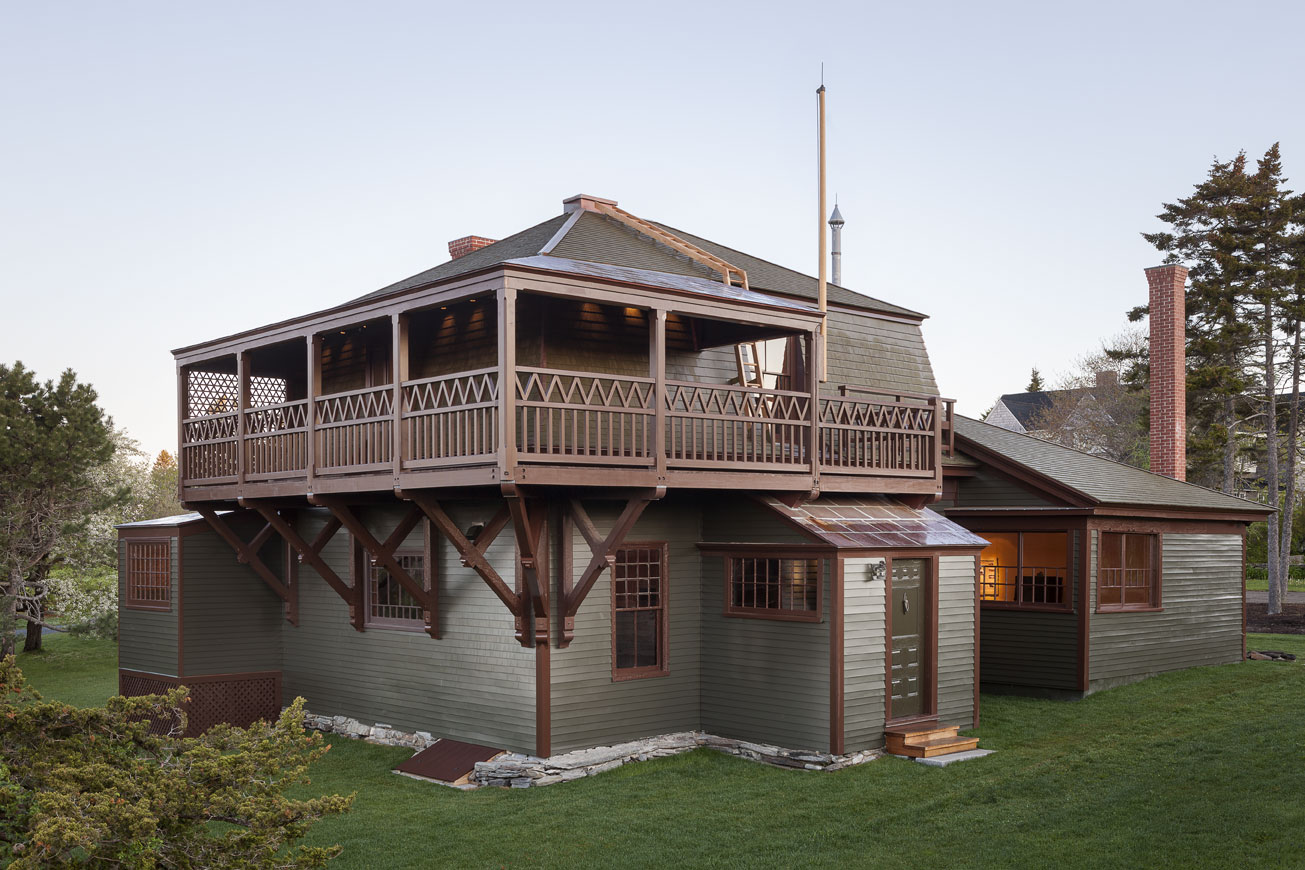
Homer eventually settled in Prouts Neck, Maine. Some of his most famous paintings come from his life and work in that area. Interestingly, his studio still exists and it has recently been restored:
On September 25, 2012 the Portland Museum of Art opened the Winslow Homer Studio to the public for the first time. One of the most significant locations in the history of American art, the Studio, located at Prouts Neck, Maine, is where the great American artist Winslow Homer (1836-1910) lived and painted many of his masterpieces from 1883 until his death.
Ref. Pine State Services (of all things)
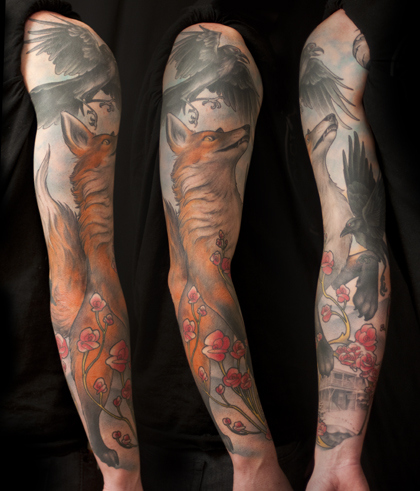
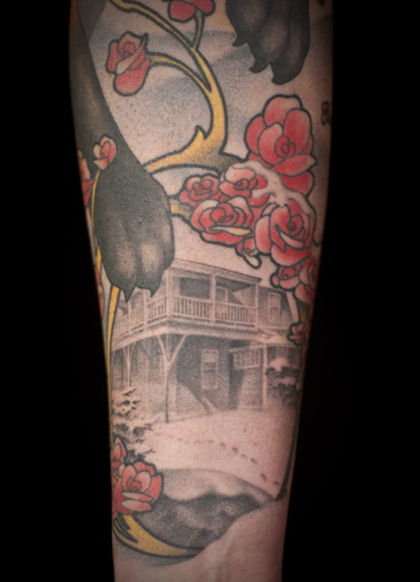
It is tattoo Tuesday, but I thought that finding a tattoo related to Winslow Homer was a long-shot, but I was wrong:

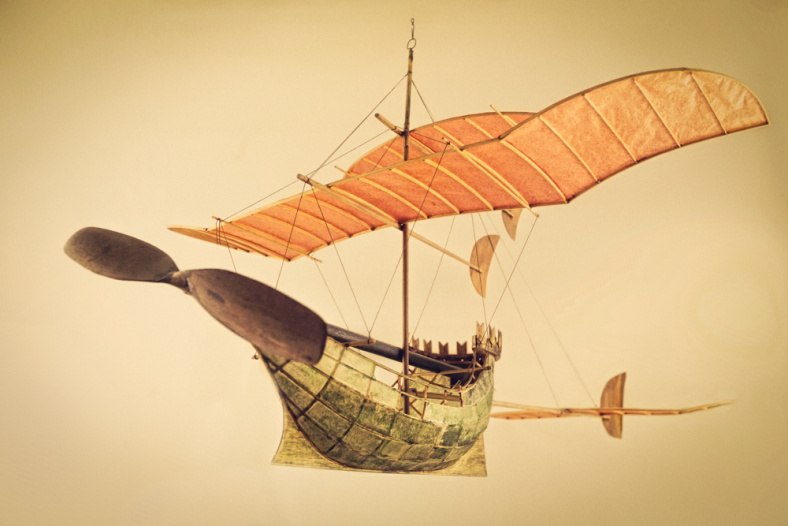
I wrote earlier about my experience visiting the Udvar-Hazy Air and Space Museum in Virginia. I thought the design and ambience of the museum was wonderful. But, look at these wonderful Airships of Dreams! A collection that is similar in concept to the Udvar-Hazy, but completely comprised of magic and whimsey.
‘The Ships That Sail Through the Clouds’ by Luigi Prina, 83-year-old builder of flying model ships.
Luigi Prina, 83 years old, has been an architect for more than 50 years. He has been interested in aircraft modelling since a very young age. The flying ships are made from ultrathin paper and balsa wood. Everything is optimized for flight: from the weight (between 20 and 50 grams) to the aerodynamic shape. They fly like any propeller airplane. The only difference is that here the propeller is powered by an internal elastic band and not an engine. (Text by Blinking City, photographs by Gianluca Giannone)




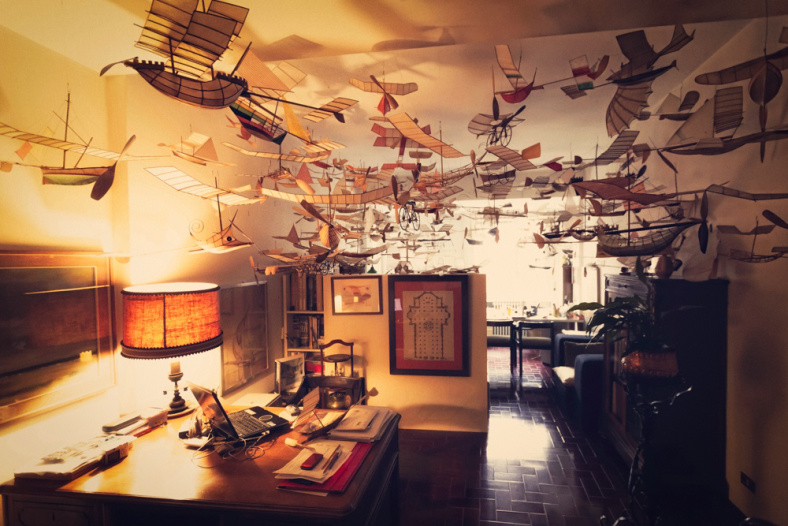
Did anyone but me see the Deep Space Nine episode where Cisco and his son go on a vacation in a space ship that is powered by solar sails and is pushed along by the solar wind? It was this kind of ship.
This has been a cold, cold winter for us in the old Western Reserve, and elsewhere along the Great Lakes. This story is from New Scientist.
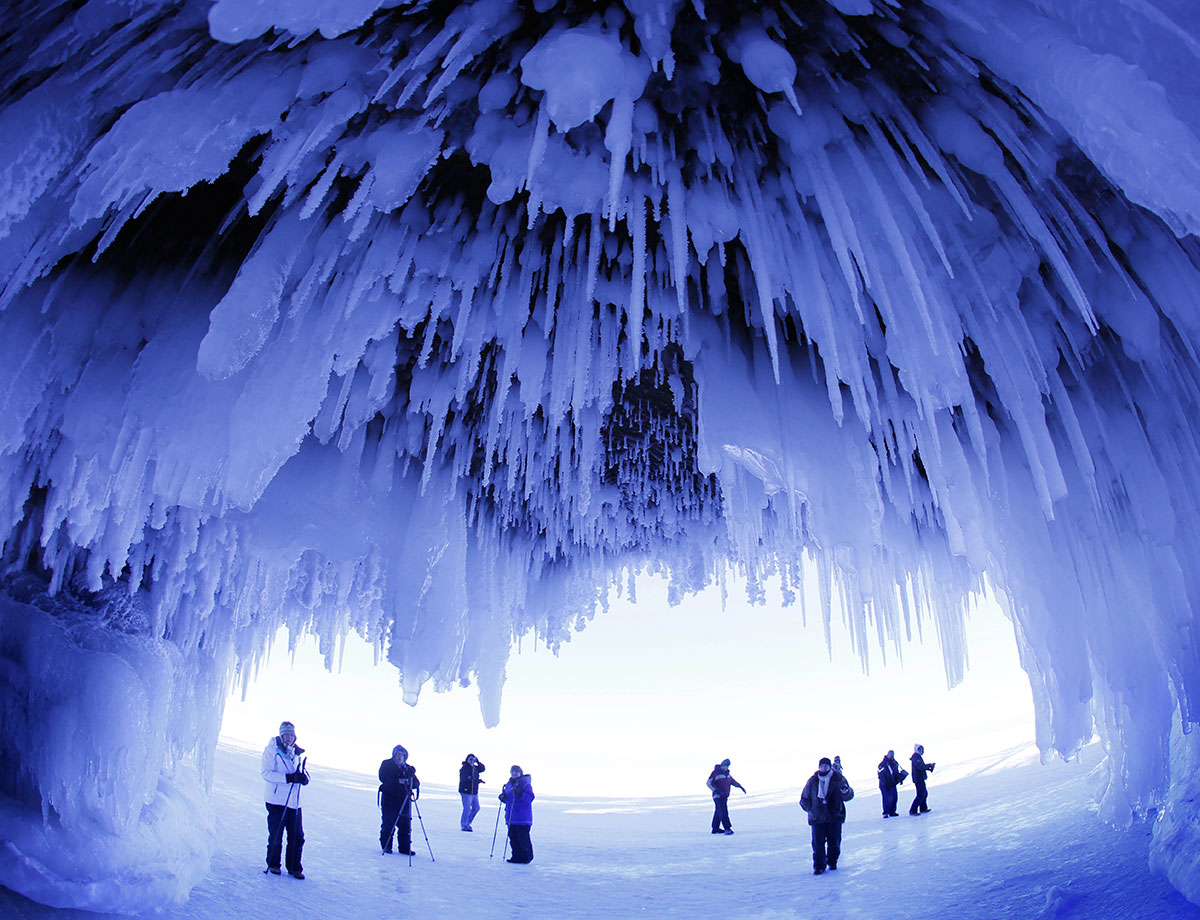
Look out below! These people appear doomed by a gigantic overhead explosion. But they’re safe. The firework-like formations are actually icicles formed by huge waves that batter the Apostle Islands sea caves in the south-west corner of Lake Superior, just off the coast of Wisconsin.
The caves are normally inaccessible. But the exceptionally cold weather in the US this year has led to almost record coverage of ice over the Great Lakes, creating a safe route to the caves for the first time since 2009.
 Frosted Lakes
(Image: NOAA)
An estimated 10,000 visitors have trekked over since the route was declared safe by the US National Parks Service on 15 January.
The Parks Service says that access could remain until as late as March, but warns visitors to take no chances with creaky ice on the lake, and to beware falling ice if they do make it to the caves.

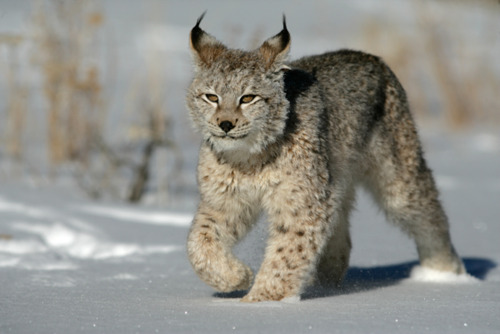
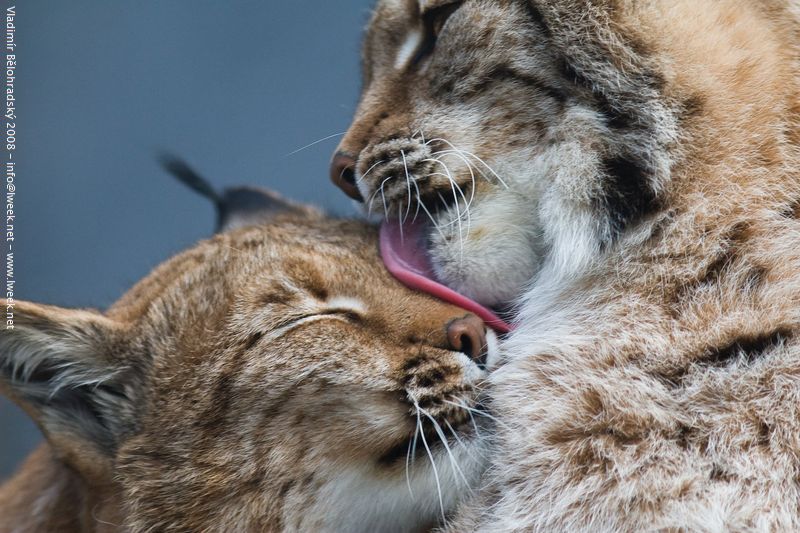
A walk on the wild side with a post about lynx – large, secretive, ear-tufted members of the cat family.
“The lynx is a solitary cat that haunts the remote northern forests of North America, Europe, and Asia. Lynx are covered with beautiful thick fur that keeps them warm during frigid winters. Their large paws are also furry and hit the ground with a spreading toe motion that makes them function as natural snowshoes.
These stealthy cats avoid humans and hunt at night, so they are rarely seen.
There are several species of lynx. Few survive in Europe but those that do, like their Asian relatives, are typically larger than their North American counterpart, the Canada lynx.”
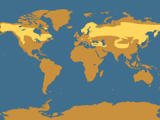 Map shows where lynx are found.

You are currently browsing the archives for the Uncategorized category.
Firearms, fibers, any news or behaviors that make me say, "hmm, let me take another look at this."
I still miss my man, but my aim is getting better.