National Nurses Day is celebrated on May 6 in the USA
International Nurses Day is celebrated on May 12.
The history of Nurses Day can be traced back to 1953 when Dorothy Sutherland of the U.S. Department of Health, Education, and Welfare sent a proposal to President Eisenhower to proclaim a “Nurse Day” in October of the following year. The proclamation was never made, but the following year National Nurses Week was observed from October 11 – 16, marking the 100th anniversary of Florence Nightingale’s mission to Crimea.
In 1974, President Nixon proclaimed a “National Nurse Week.” In 1981, a resolution was initiated by nurses in New Mexico to have May 6th declared “National Recognition Day for Nurses.” This proposal was promoted by the ANA Board of Directors and in 1982, with a joint resolution, the United States Congress designated May 6th to be “National Recognition Day for Nurses.” The proposal was signed by President Reagan, making May 6 the official “National Recognition Day for Nurses.” It was later expanded by the ANA Board of Directors in 1990 to a week-long celebration (May 6-12) known as “National Nurses Week.”
This article from American Digest depicts what every kid wants – enough pieces and parts of building toys to make something REALLY BIG.
This is a fantastic marble raceway – and speaking of marbles. Wikipedia provides some insight into their history:
Various balls of stone were found on excavation near Mohenjo-daro. Marbles are also often mentioned in Roman literature, and there are many examples of marbles from ancient Egypt. They were commonly made of clay, stone or glass.
Marbles were first manufactured in Germany in the 1800s. The game has become popular throughout the US and other countries.
Ceramic marbles entered inexpensive mass production in the 1870s.
A German glassblower invented marble scissors in 1846, a device for making marbles. The first mass-produced toy marbles (clay) made in the U.S. were made in Akron, Ohio, by S. C. Dyke, in the early 1890s. Some of the first U.S.-produced glass marbles were also made in Akron, by James Harvey Leighton. In 1903, Martin Frederick Christensen—also of Akron, Ohio—made the first machine-made glass marbles on his patented machine. His company, The M. F. Christensen & Son Co., manufactured millions of toy and industrial glass marbles until they ceased operations in 1917. The next U.S. company to enter the glass marble market was Akro Agate. This company was started by Akronites in 1911, but was located in Clarksburg, West Virginia. Today, there are only two American-based toy marble manufacturers: Jabo Vitro in Reno, Ohio, and Marble King, in Paden City, West Virginia.
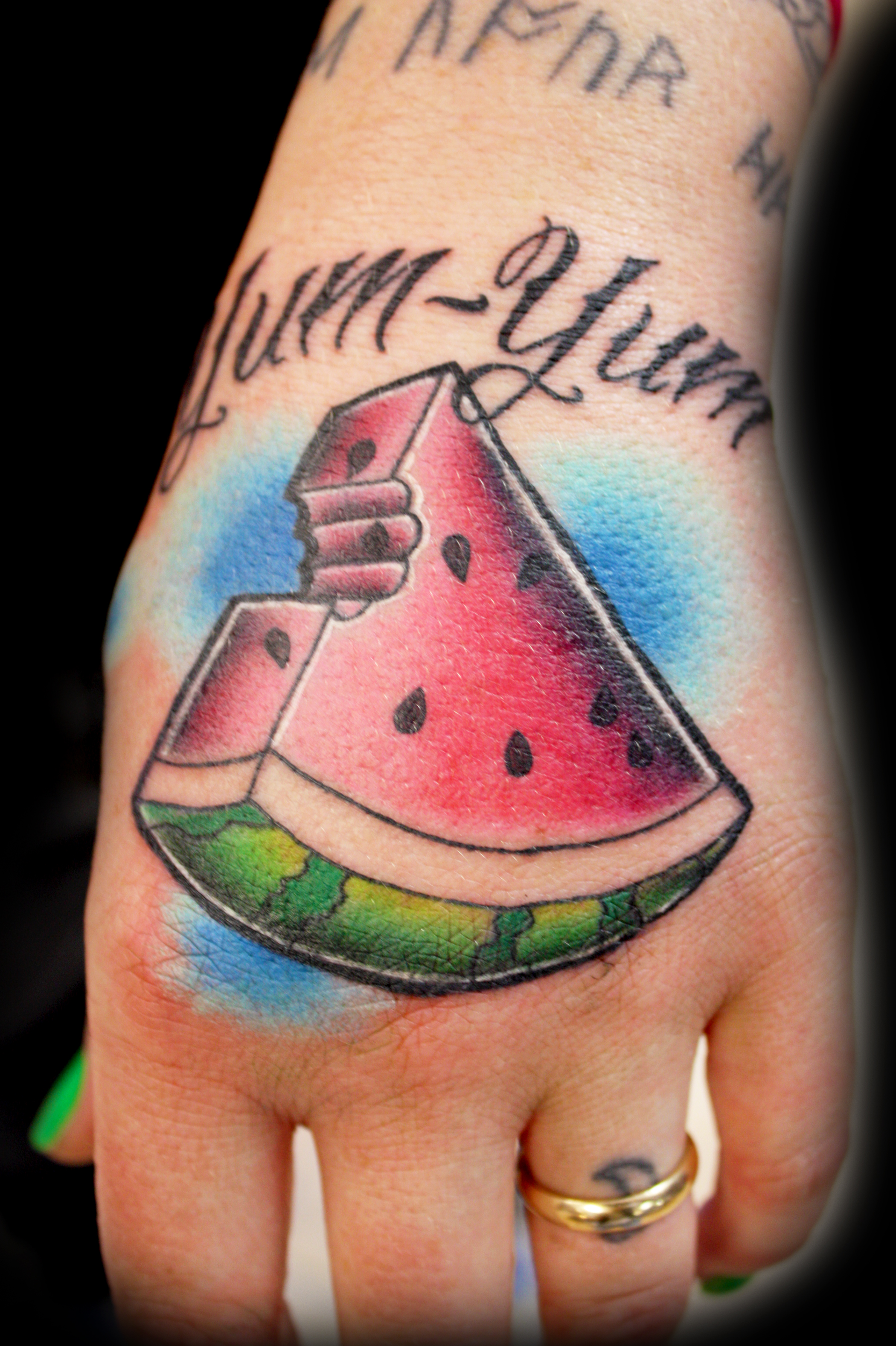
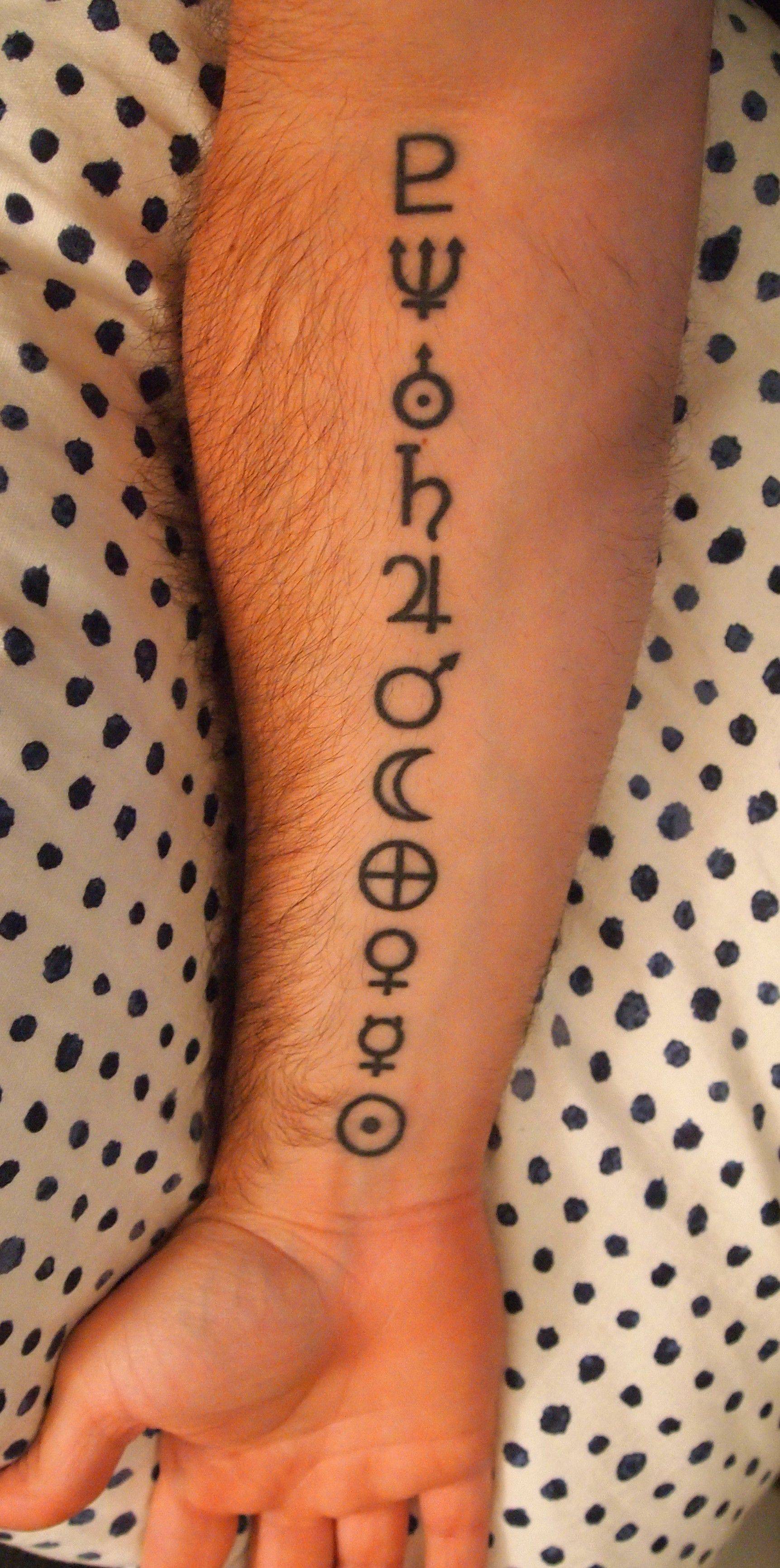
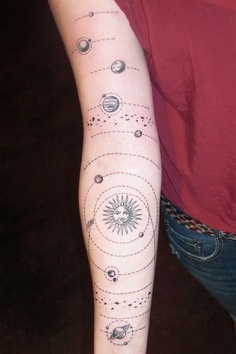
The tattoo this week is about the lunar eclipse. A lunar eclipse is a fascinating sight. This time, however, I missed it because this is what I woke up to.
I hope the daffodils survive. I was at the beach on Sunday – brought a book and a lawn chair and sat in the sun – temps in the upper 70s at least. The temperature of the lake? That is another matter entirely. It won’t warm up until much later. Too often we go from winter directly into summer (and back again) here is the Connecticut Western Reserve.
I will try to catch another lunar eclipse later in the year. This information is from NASA:
For people in the United States, an extraordinary series of lunar eclipses is about to begin.
The action starts on April 15th when the full Moon passes through the amber shadow of Earth, producing a midnight eclipse visible across North America. So begins a lunar eclipse tetrad—a series of 4 consecutive total eclipses occurring at approximately six month intervals. The total eclipse of April 15, 2014, will be followed by another on Oct. 8, 2014, and another on April 4, 2015, and another on Sept. 28 2015.
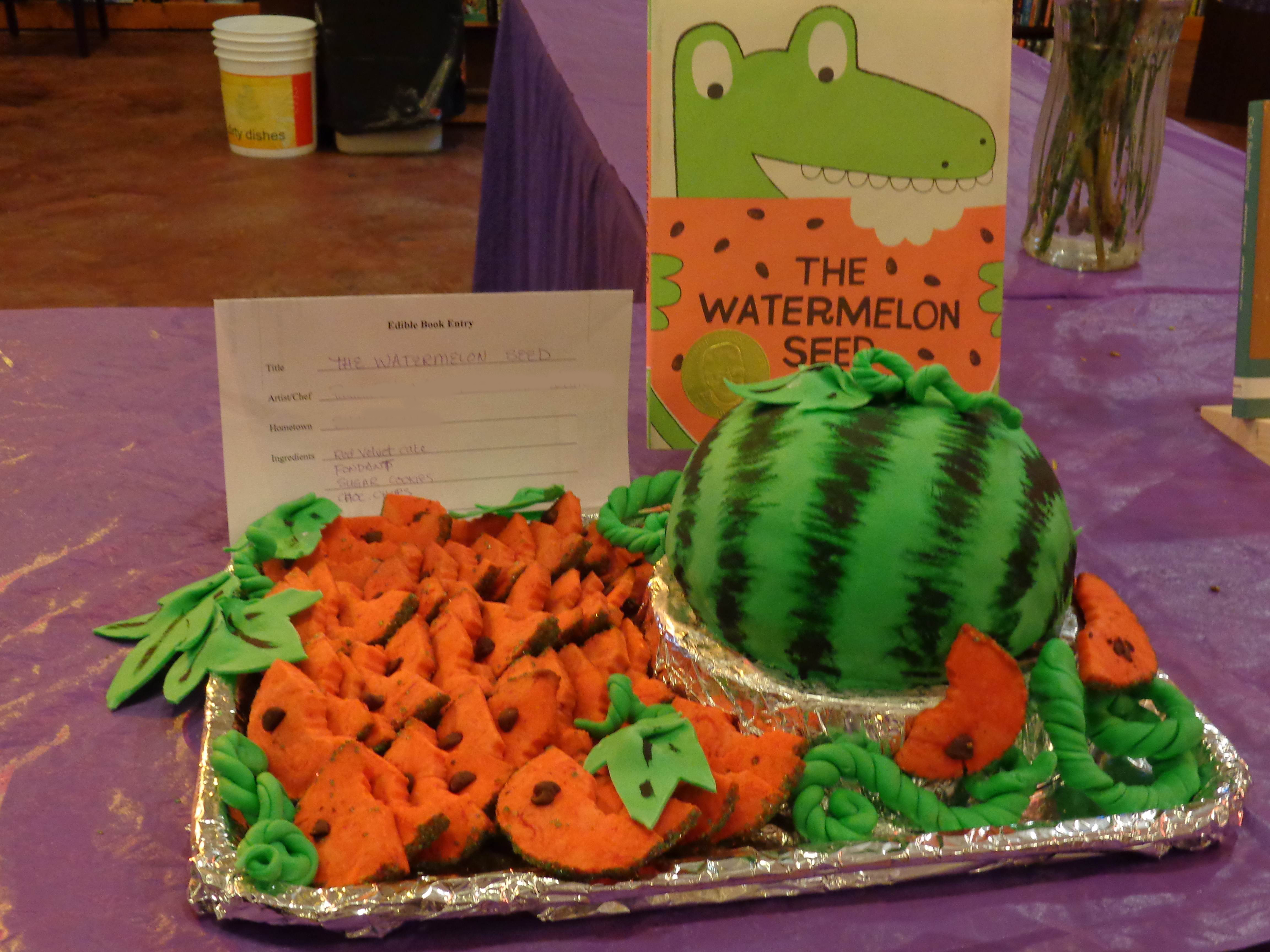
Our lovely, local, independent bookstore sponsors an Edible Book Fair every April. Everyone is invited to submit a totally edible interpretation of a book. The entries are displayed, judged, and eaten. The set up and the voting takes a couple of hours. You can’t imagine how quickly the displays are devoured!
I humbly announce that our entry (above) consisting of a fondant-covered red velvet cake watermelon with watermelon slice-shaped sugar cookies won the award for Most Appetizing. The prizes in the contest are, not a surprise, books! It is a lot of fun to see what people – kids and adults – come up with.
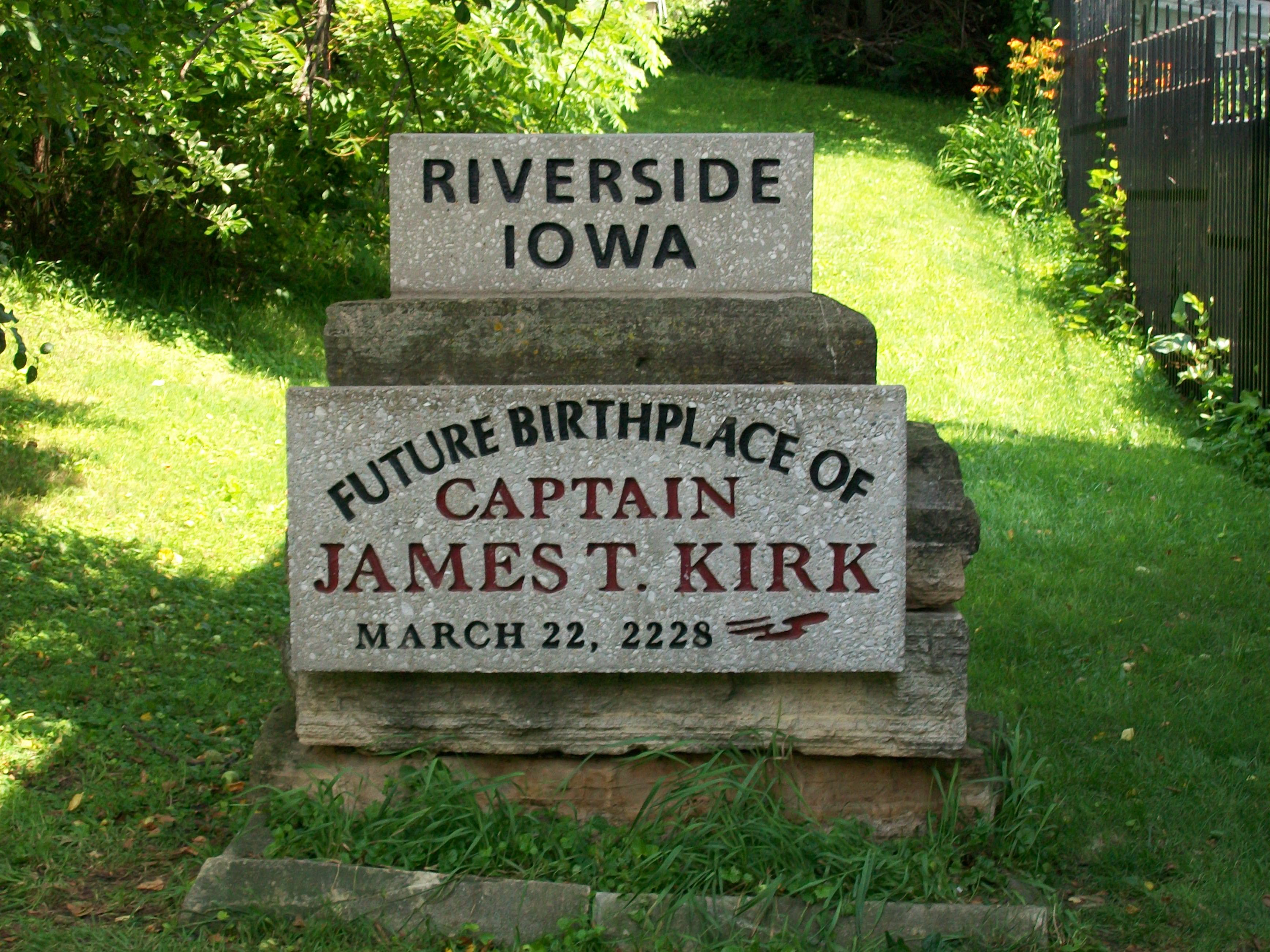
On March 22, 2228, James Tiberius Kirk will be born in Riverside, Iowa. This is a town that takes its future seriously. There is a plaque in town to pre-commemorate the event and a starship graces the town square.
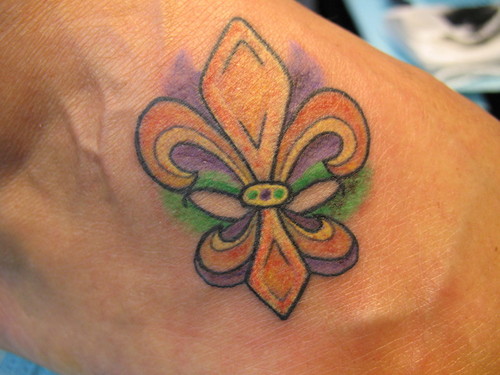
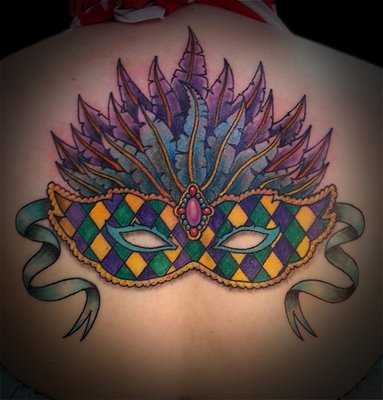
It is Shrove Tuesday, Pancake Tuesday, Fat Tuesday, or Mardi Gras!
I suspect that this is another one of those holidays that has been taken over by the church and yet predates Christianity. If you know its earlier origins, please let me know.
This is a pancake race in Great Britain.
Pancakes are associated with the day preceding Lent because they were a way to use up rich foods such as eggs, milk, and sugar, before the fasting season of the 40 days of Lent. The liturgical fasting emphasized eating plainer food and refraining from food that would give pleasure: in many cultures, this means no meat, dairy products, or eggs.
In Canada, Australia, the United Kingdom, Ireland and New Zealand the day is also known as “Pancake Day” as it is a common custom to eat pancakes as a meal.
In Newfoundland small tokens are frequently cooked in the pancakes. Children take delight in discovering the objects, which are intended to be divinatory. For example, the person who receives a coin will be wealthy; a nail that they will become or marry a carpenter.
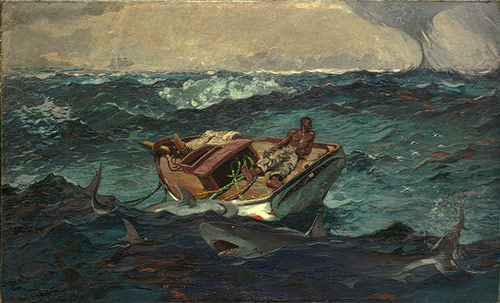
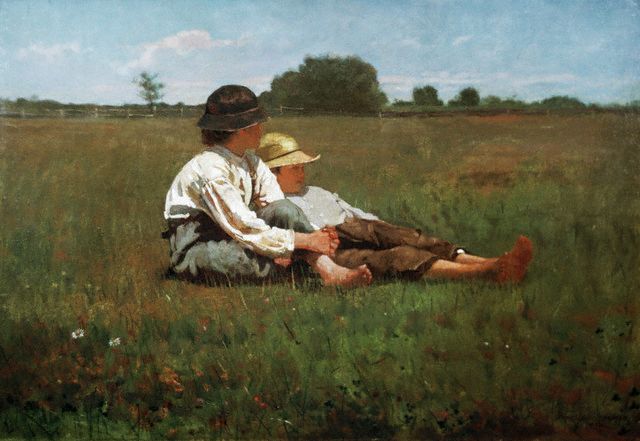
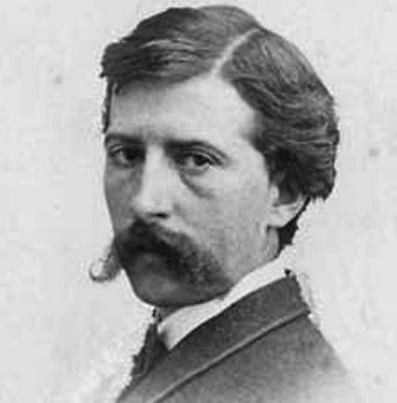
February 24 was Winslow Homer’s 178th birthday. Homer is probably best known for his seascapes, but he started his career as a print maker. In 1861, he was sent to the front as an artist-correspondent recording the battles and conditions of the American Civil War.
He lived a good part of his life in New York City employed as a magazine illustrator, but his travels to the east coast of New England, the White Mountains of New Hampshire and eventually to Europe – Paris and the English seaside, influenced his work. He has been described as foreshadowing the abstract movement, but I think his work is most characterized by his mastery of air, water and weather.
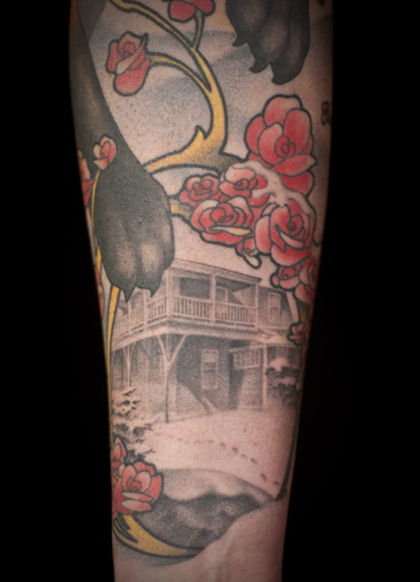
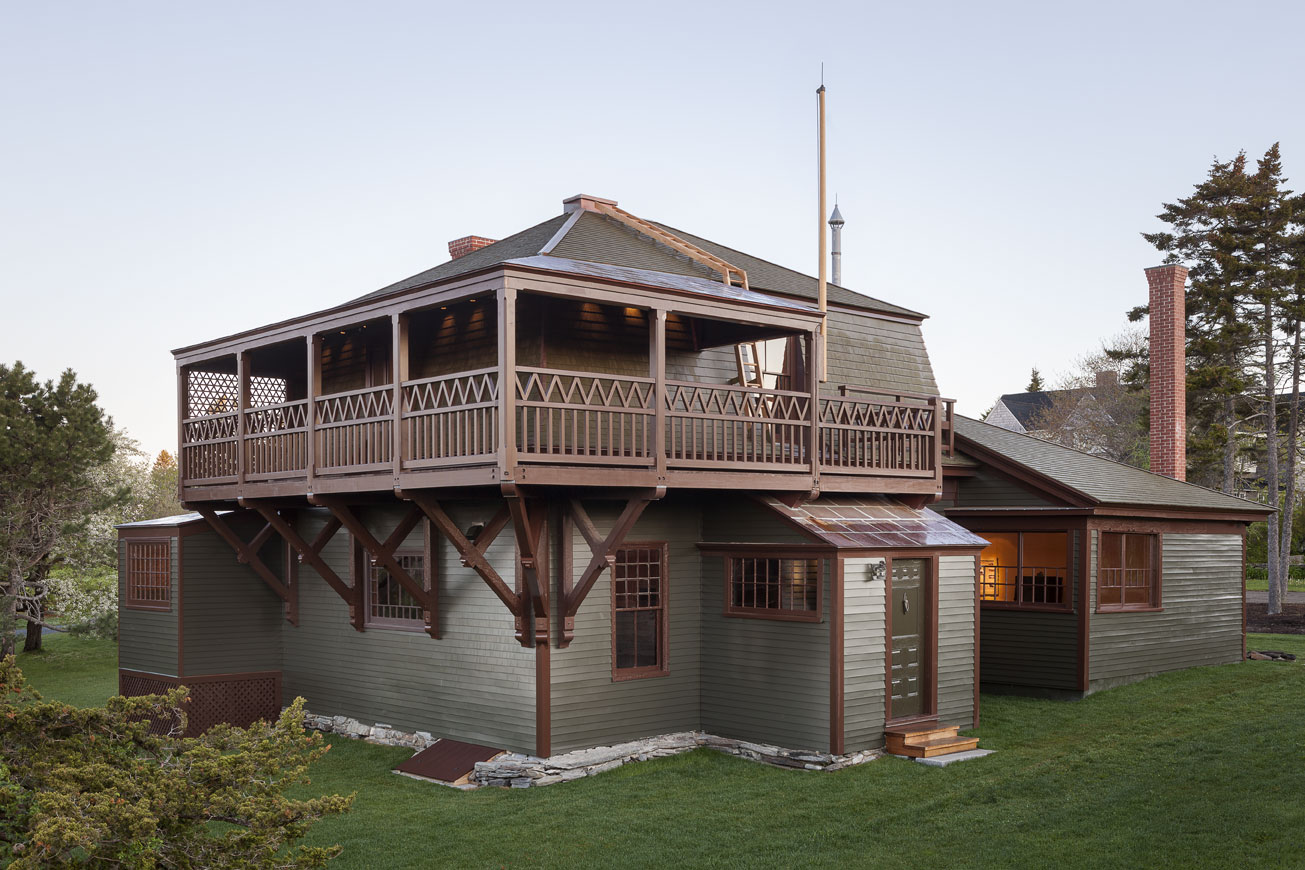
Homer eventually settled in Prouts Neck, Maine. Some of his most famous paintings come from his life and work in that area. Interestingly, his studio still exists and it has recently been restored:
On September 25, 2012 the Portland Museum of Art opened the Winslow Homer Studio to the public for the first time. One of the most significant locations in the history of American art, the Studio, located at Prouts Neck, Maine, is where the great American artist Winslow Homer (1836-1910) lived and painted many of his masterpieces from 1883 until his death.
On February 18, 1930, Clyde W. Tombaugh, an assistant at the Lowell Observatory in Flagstaff, Arizona, discovered Pluto. For over seven decades, Pluto was considered the ninth planet of our solar system.
The “Sherlock” collection design was created as part of the Lego CUUSOO project, which allows fans to share concepts in the hopes of getting official Lego approval. “Sherlock,” submitted by a user called Flailx, is one of six Lego Review qualifiers for the Winter 2014 slot. Having received support from more than 10,000 Lego fans, the “Sherlock” project is now being reviewed by the company’s designers and product managers.







































 Gunsmoke and Knitting