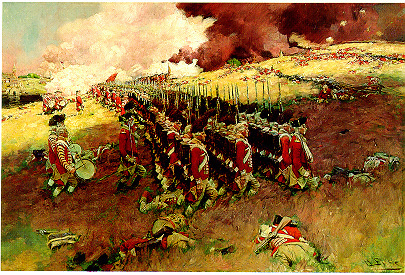
June 17, 1775 marks the battle of Bunker Hill depicted in this painting by Howard Pyle.
The battle which took place early in the American Revolution, is named for Bunker Hill which was the original objective of the battle, although most of the fighting took place on and around Breed’s Hill.
In the aftermath, it was revealed that,
The British had taken the ground but at a great loss; they had suffered 1,054 casualties (226 dead and 828 wounded), with a disproportionate number of these officers. The casualty count was the highest suffered by the British in any single encounter during the entire war. General Clinton, echoing Pyrrhus of Epirus, remarked in his diary that “A few more such victories would have shortly put an end to British dominion in America.” – ref. Wikipedia
A Pyrrhic victory, indeed. In this battle the colonial combatants proved their ability to stand up to regular British forces.
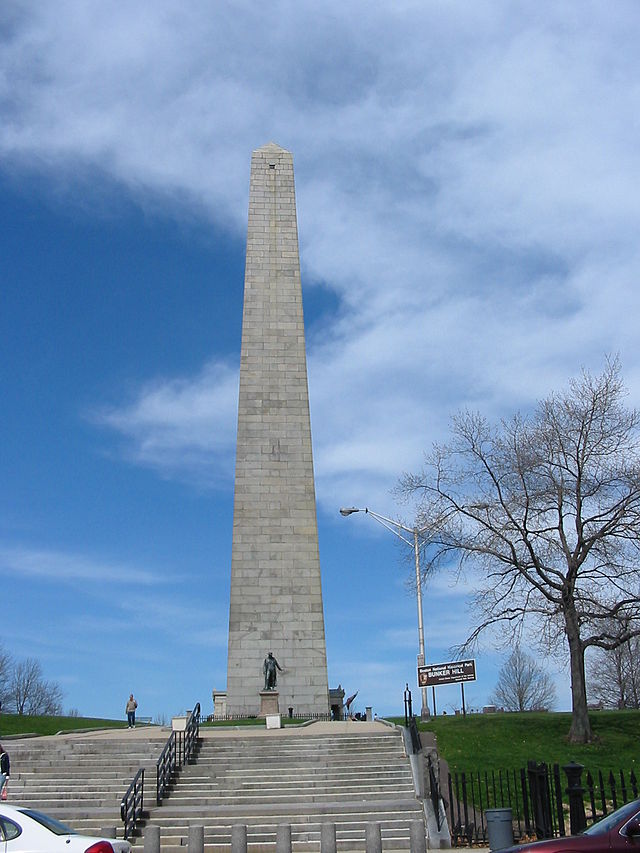
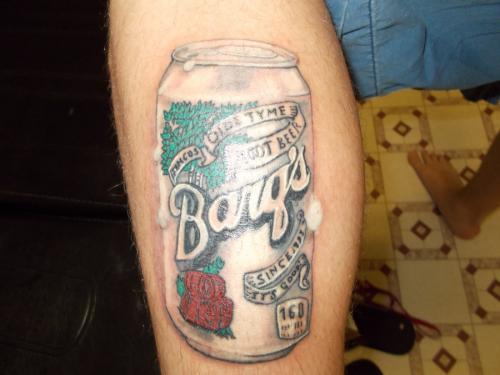
The Bunker Hill monument is above, and below some tattoos that follow today’s theme:
I thought this was a lovely geology tattoo on a graduate student that celebrates her field of study.
I am reading a book on the geology of the Cleveland region that was published in 1940 and found in a bunch of books that were being discarded (!)
Here are a couple of the figures from that book. I find interesting the different intersection land forms that make up this area – and the fact that I live on top of the last foothill of the Appalachian Plateau. Interesting in history, if not in altitude.
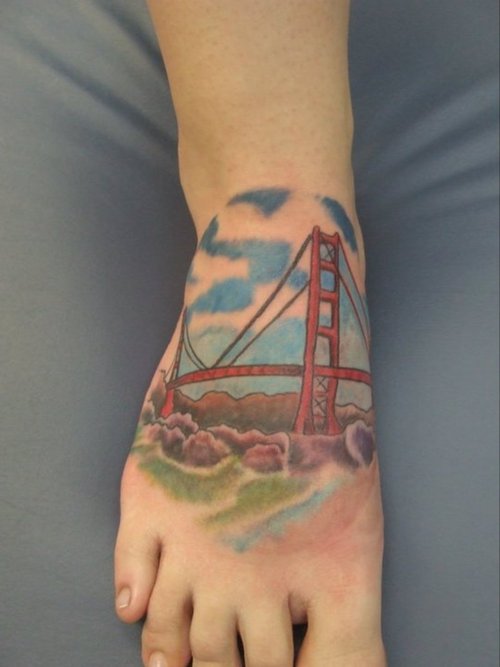
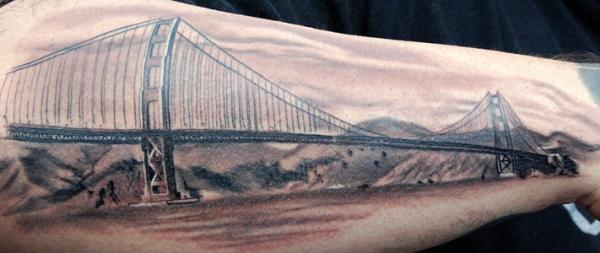
Movie star, romantic icon, the “thirty-five million dollar steel harp,” all refer to the Golden Gate Bridge, opened this day in 1937. Here is some trivia about the bridge.
Today is Root Beer day. On this day in 1876 Charles Hines introduced commercially bottled root beer to the public in celebration of the centennial of the USA in Philadelphia.
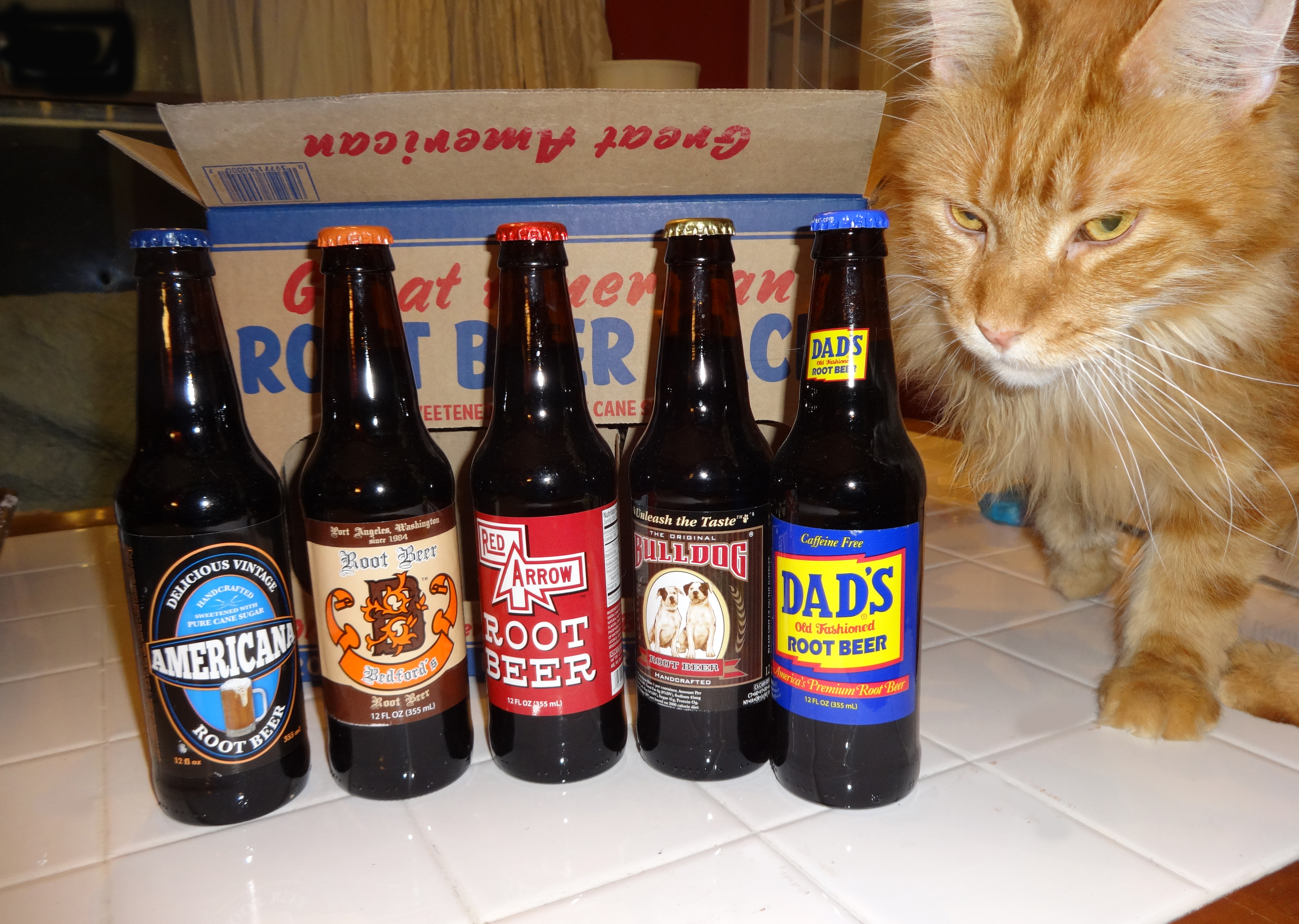
Here are some bottles from my root beer cellar being watched over by Cmdr. Sam Vimes.
Root beer, of course, had been around for a long time. It is one of those homemade concoctions like birch beer, ginger beer, spruce beer, and sarsaparilla, that has many different recipes. Some of the ingredients in root beer (from Wikipedia) include:
Main ingredients
Sassafras albidum – Sassafras (roots) – safrole. The oil from these roots is believed to be carcinogenic so artificial versions are generally used instead. However, natural extracts with the safrole distilled and removed are available.
This morning when I was on my way to work a fellow just like this one flew at eye level right in front of my car. I am very grateful that his timing was such that there was no collision. Even though I work in an urban area, there are enough trees, parks and connected green space that red tailed hawks can survive. I once saw one take down a pigeon right in front of our concert hall – pretty impressive.
National Nurses Day is celebrated on May 6 in the USA
International Nurses Day is celebrated on May 12.
The history of Nurses Day can be traced back to 1953 when Dorothy Sutherland of the U.S. Department of Health, Education, and Welfare sent a proposal to President Eisenhower to proclaim a “Nurse Day” in October of the following year. The proclamation was never made, but the following year National Nurses Week was observed from October 11 – 16, marking the 100th anniversary of Florence Nightingale’s mission to Crimea.
In 1974, President Nixon proclaimed a “National Nurse Week.” In 1981, a resolution was initiated by nurses in New Mexico to have May 6th declared “National Recognition Day for Nurses.” This proposal was promoted by the ANA Board of Directors and in 1982, with a joint resolution, the United States Congress designated May 6th to be “National Recognition Day for Nurses.” The proposal was signed by President Reagan, making May 6 the official “National Recognition Day for Nurses.” It was later expanded by the ANA Board of Directors in 1990 to a week-long celebration (May 6-12) known as “National Nurses Week.”
This article from American Digest depicts what every kid wants – enough pieces and parts of building toys to make something REALLY BIG.
This is a fantastic marble raceway – and speaking of marbles. Wikipedia provides some insight into their history:
Various balls of stone were found on excavation near Mohenjo-daro. Marbles are also often mentioned in Roman literature, and there are many examples of marbles from ancient Egypt. They were commonly made of clay, stone or glass.
Marbles were first manufactured in Germany in the 1800s. The game has become popular throughout the US and other countries.
Ceramic marbles entered inexpensive mass production in the 1870s.
A German glassblower invented marble scissors in 1846, a device for making marbles. The first mass-produced toy marbles (clay) made in the U.S. were made in Akron, Ohio, by S. C. Dyke, in the early 1890s. Some of the first U.S.-produced glass marbles were also made in Akron, by James Harvey Leighton. In 1903, Martin Frederick Christensen—also of Akron, Ohio—made the first machine-made glass marbles on his patented machine. His company, The M. F. Christensen & Son Co., manufactured millions of toy and industrial glass marbles until they ceased operations in 1917. The next U.S. company to enter the glass marble market was Akro Agate. This company was started by Akronites in 1911, but was located in Clarksburg, West Virginia. Today, there are only two American-based toy marble manufacturers: Jabo Vitro in Reno, Ohio, and Marble King, in Paden City, West Virginia.
The tattoo this week is about the lunar eclipse. A lunar eclipse is a fascinating sight. This time, however, I missed it because this is what I woke up to.
I hope the daffodils survive. I was at the beach on Sunday – brought a book and a lawn chair and sat in the sun – temps in the upper 70s at least. The temperature of the lake? That is another matter entirely. It won’t warm up until much later. Too often we go from winter directly into summer (and back again) here is the Connecticut Western Reserve.
I will try to catch another lunar eclipse later in the year. This information is from NASA:
For people in the United States, an extraordinary series of lunar eclipses is about to begin.
The action starts on April 15th when the full Moon passes through the amber shadow of Earth, producing a midnight eclipse visible across North America. So begins a lunar eclipse tetrad—a series of 4 consecutive total eclipses occurring at approximately six month intervals. The total eclipse of April 15, 2014, will be followed by another on Oct. 8, 2014, and another on April 4, 2015, and another on Sept. 28 2015.






































 Gunsmoke and Knitting