Posts Tagged ‘history’

h1

What am I celebrating?

January 6, 2013

sunriseThe Inuvik Sunrise Celebration – the annual celebration of the return of the sun after an absence of about 28 days.  A bonfire and fireworks add to this celebration on the Saturday closest to the sunrise.

inuvik-202

More about Inuvik at L’Encyclopedie canadienne.

h1

What am I celebrating today?

September 27, 2012

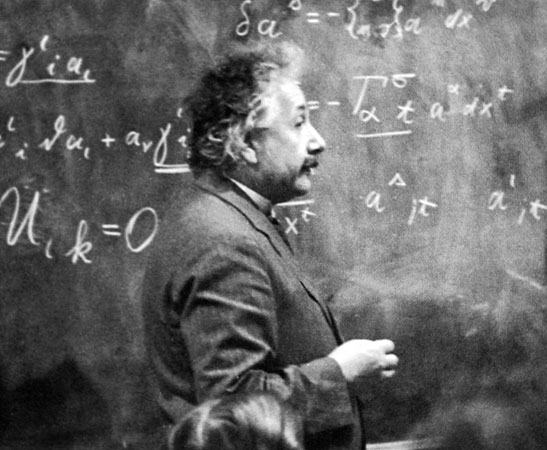
It is an important day in science relatively speaking – the 107th anniversary of Einstein’s publication of the Theory of Relativity.
Here is a little video that explains how Einstein came up with the equation:

h1

Why am I raising a glass of cider today?

September 26, 2012

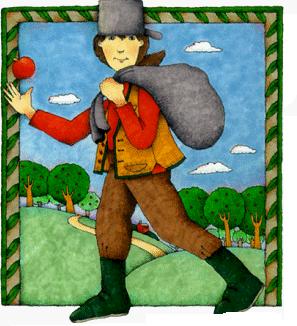
Because September 26 is the birthday of John Chapman, better known as Johnny Appleseed, born in Leominster, Massachusetts in 1774.

The popular image is of Johnny Appleseed spreading apple seeds randomly, everywhere he went. In fact, he planted nurseries rather than orchards, built fences around them to protect them from livestock, left the nurseries in the care of a neighbor who sold trees on shares, and returned every year or two to tend the nursery. Although apples grown from seed are rarely sweet or tasty, apple orchards with sour apples were popular among the settlers because apples were mainly used for producing hard cider and apple jack. In some periods of the settlement of the Midwest, settlers were required by law to plant orchards of apples and pears in order to uphold the right to the claimed land. For these reasons, Johnny Appleseed planted orchards made for popular real estate on the frontier.  His first nursery was planted on the bank of Brokenstraw Creek, South of Warren, Pennsylvania. Next, he seems to have moved to Venango County along the shore of French Creek, but many of these nurseries were located in the Mohican area of north-central Ohio. This area included the towns of Mansfield, Lucas, Perrysville, and Loudonville.

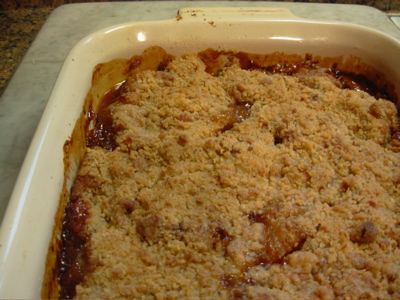
Okay, here’s another apple recipe – a really easy one for Apple Crisp.

Heat your oven to 350 degrees
Peel, core and slice 4 apples – medium to large in size.

Jonagolds are good for this recipe.

Place them in an 8″ square glass baking dish

Squeeze half a lemon over the apple slices

In a separate bowl mix 1/2 cup of flour and 1/2 cup of sugar with 1 teaspoon of cinnamon and 1/2 teaspoon of salt

Take a stick (1/2 cup) of unsalted butter and dice it up into about 1/4 inch cubes

Mix the butter into the flour mixture – use your hands to kind of rub the butter into the flour.

Sprinkle the flour-butter mixture over the apple slices and bake for about 30 minutes – or until the apple slices are soft and kind of bubbly and the top begins to get browned.

The history quote is from Wikipedia; the recipe is from my head.

h1

What did I find A-maze-ing?

September 24, 2012

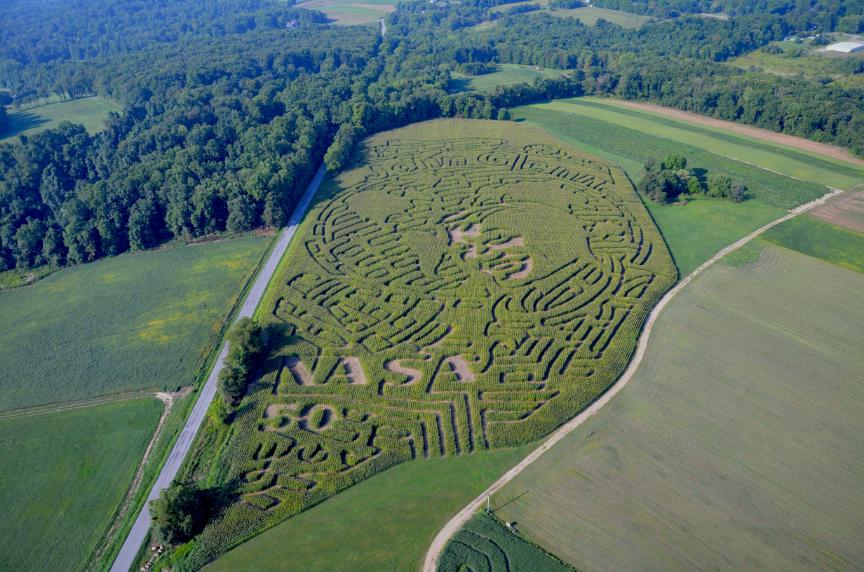
Crop circles?  Messages from space?
Well, sort of.  The Derthick family has constructed a corn maze that is an homage to Ohio astronaut and former U.S. Senator, John Glenn.  The farm is located in Mantua, Ohio (in this part of the world, the town is pronounced MAN-a-way.)

Derthick’s publicity invites you to “come and be cornfused.”

h1

What special day am I observing today?

September 19, 2012

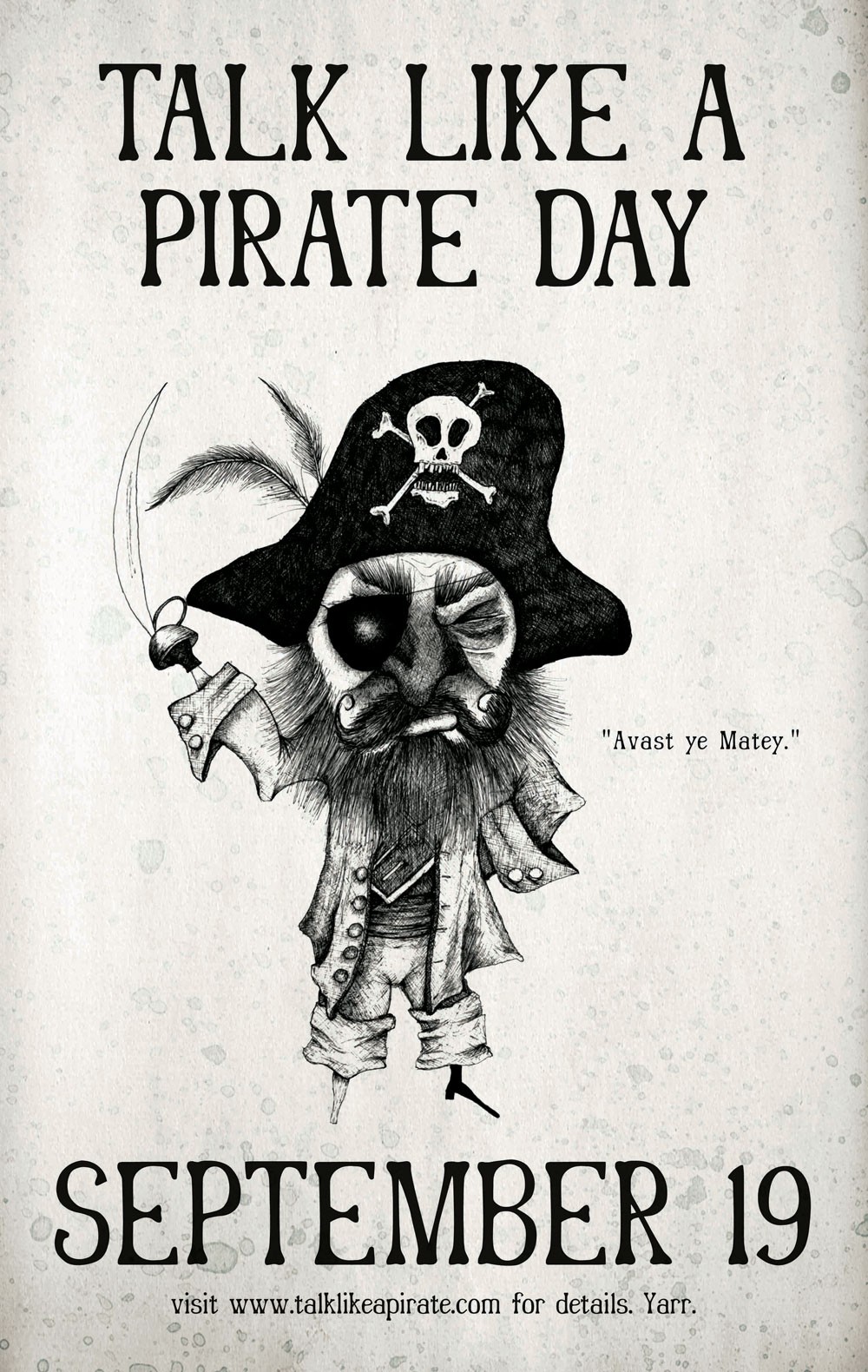
Arrrrrgh! 

She be Talk Like a Pirate Day and thanks to Artie Smartie-Pants (Black Morty Rackham) for reminding me!  Want to find out your pirate name?  Take the quiz:  http://www.piratequiz.com/

Pirate Social Networking

Recipe for Hard Tack

Mix one teaspoon of salt with one pound of flour.

Add enough water to make a very stiff dough.

Flatten the dough to about 1/2 inch and cut it into about 4 inch circles. Punch holes in each circle with a fork.

Bake in a flat pan at 250 degrees for two or three hours.
If the hard tack should happen to go bad, just remember to choose the lesser of two weevils.

h1

Whose birthday am I celebrating today?

September 14, 2012

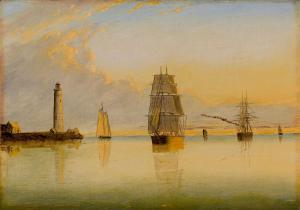
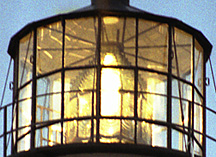
Happy birthday to Boston Harbor Lighthouse – the first lighthouse to be built in what is now the United States of America – it was first lit on September 14, 1716.  I was interested to learn that it is the only US lighthouse that still has an official keeper.  It was built to guide the way into Boston Harbor – already an important commercial port in the early 1700s – it was financed by a tax on the tonnage arriving at the harbor.

Located on Little Brewster Island in Boston’s outer harbor, it is a National Historic Landmark and an active U. S. Coast Guard aid to navigation.

Ref. Boston Lighthouse History

h1

What battle am I commemorating today?

September 8, 2012

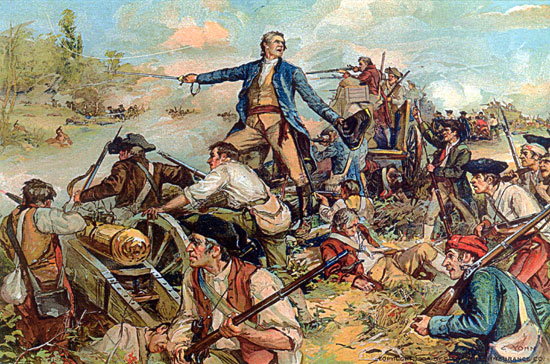
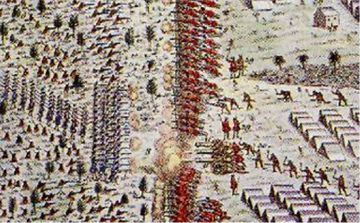
The Battle of Lake George, September 8, 1755.  This battle was actually a collection of skirmishes fought on and around Lake George in northern New York, and was part of the effort to force the French from North America.  All of these conflicts are within the context of the French and Indian War (in North America) and the Seven Years War (in Europe).


It is interesting that, although called the French and Indian War, native soldiers were engaged in the fighting on both sides of the conflict in North America.  In addition to shaping the political interests in the early years of our nation (and Canada), the French and Indian War also brought leaders such as George Washington to the forefront, while foreshadowing the lessening of British dominance in the area.

ref: http://www.historiclakes.org/wm_henry/lg_battle.html

h1

What did I miss posting on August 30?

September 2, 2012

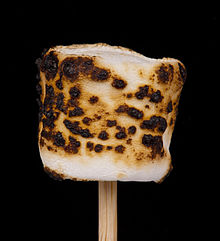
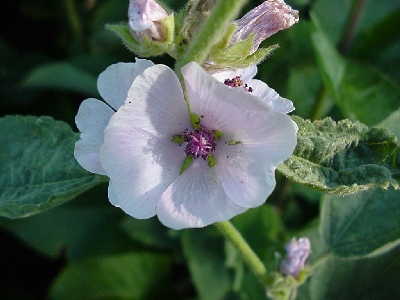
In case you missed it, August 30 was Toasted Marshmallow Day. These days marshmallows are a confection, but they started out as a medicinal product made from the extract of the marshmallow flower, a wildflower with a sticky sap.  The concoction was used as a demulcent – a compound that forms a smooth or protective coating over an irritated or inflamed area.  This was a time-intensive process, and as industrialization provided commercial gelatin and sugar became more readily available, recipes were developed and marshmallows became easier to create.

Here is a history of marshmallows at About.com.

h1

What am I sappy cat blogging this week?

August 24, 2012

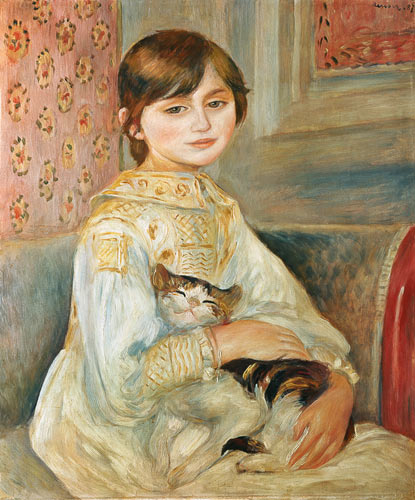
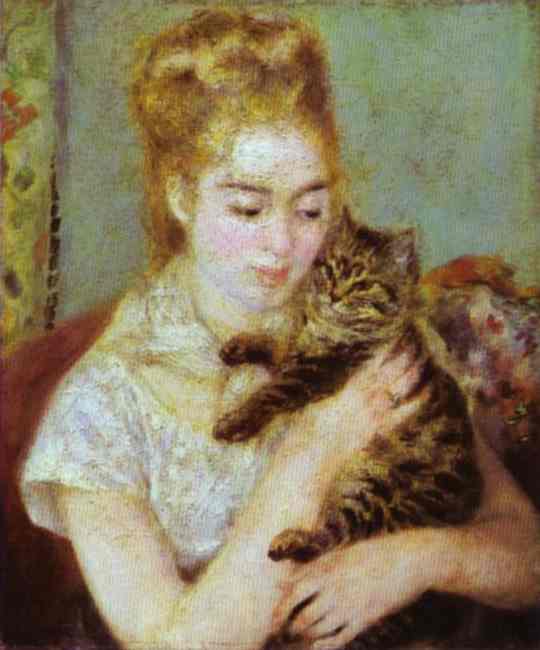
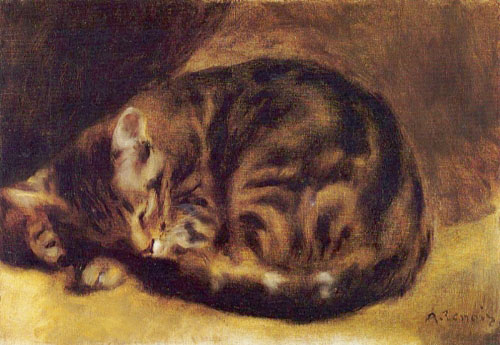
A little art history this week featuring:

Pierre-Auguste Renoir (1841–1919) was a French artist who was a leading painter in the development of the Impressionist style. As a celebrator of beauty, and especially feminine sensuality, it has been said that “Renoir is the final representative of a tradition which runs directly from Rubens to Watteau.”

In addition to feminine beauty and sensuality, he was also frequently painted cats.

Juliet Manet and Cat

Woman and Cat

Sleeping Cat

Reference:

Wikipedia

h1

What am I waffling on about?

August 24, 2012

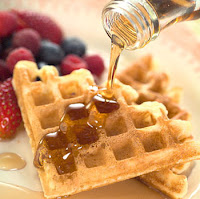
Just when you pancake it any longer, it’s time to celebrate – National Waffle Day.  On August 24, 1869, the first waffle iron was patented in the U.S. by Cornelius Swarthout.

Some Waffle History from Mr. Breakfast

13th Century A.C. – Ancient Greeks cook flat cakes between two metal plates. These early waffles were called obleios and were primarily savory in nature, prepared with cheeses and herbs.

1620 – The pilgrims bring Dutch “wafles” to America.

1735 – The word “waffle” – with two “f”s – appears in English print for the first time.

Late 1800’s – Thomas Jefferson returns to the U.S. from France with a long handled, patterned waffle iron.

1869 – Cornelius Swarthout patents the first U.S. Waffle Iron.

1953 – Frank Dorsa’s Eggo Frozen Waffles are sold in Supermarkets for the first time.

1964-65 – Brussels restaurateur Maurice Vermersch brings his wife’s Brussels Waffle recipe to the World’s Fair in New York. The fluffy yeast-infused waffle becomes a huge hit and becomes known as the Belgium waffle.