And now for something completely different, this is the opening of the 2012 Edinburgh Military Tattoo covered by the BBC
and supported by this flash

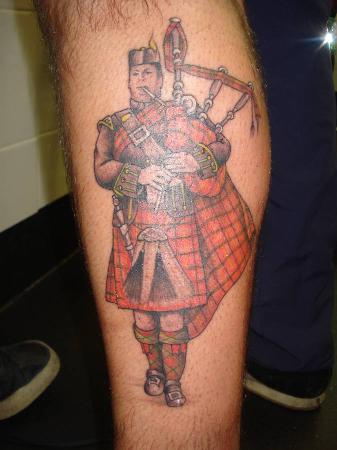


And now for something completely different, this is the opening of the 2012 Edinburgh Military Tattoo covered by the BBC
and supported by this flash
In Cleveland, in January, it can be a big difference.
Here are some photos from last week. Sightseeing at home, enjoying the lakefront and the city center.

Here is the Terminal Tower complex from Public Square.
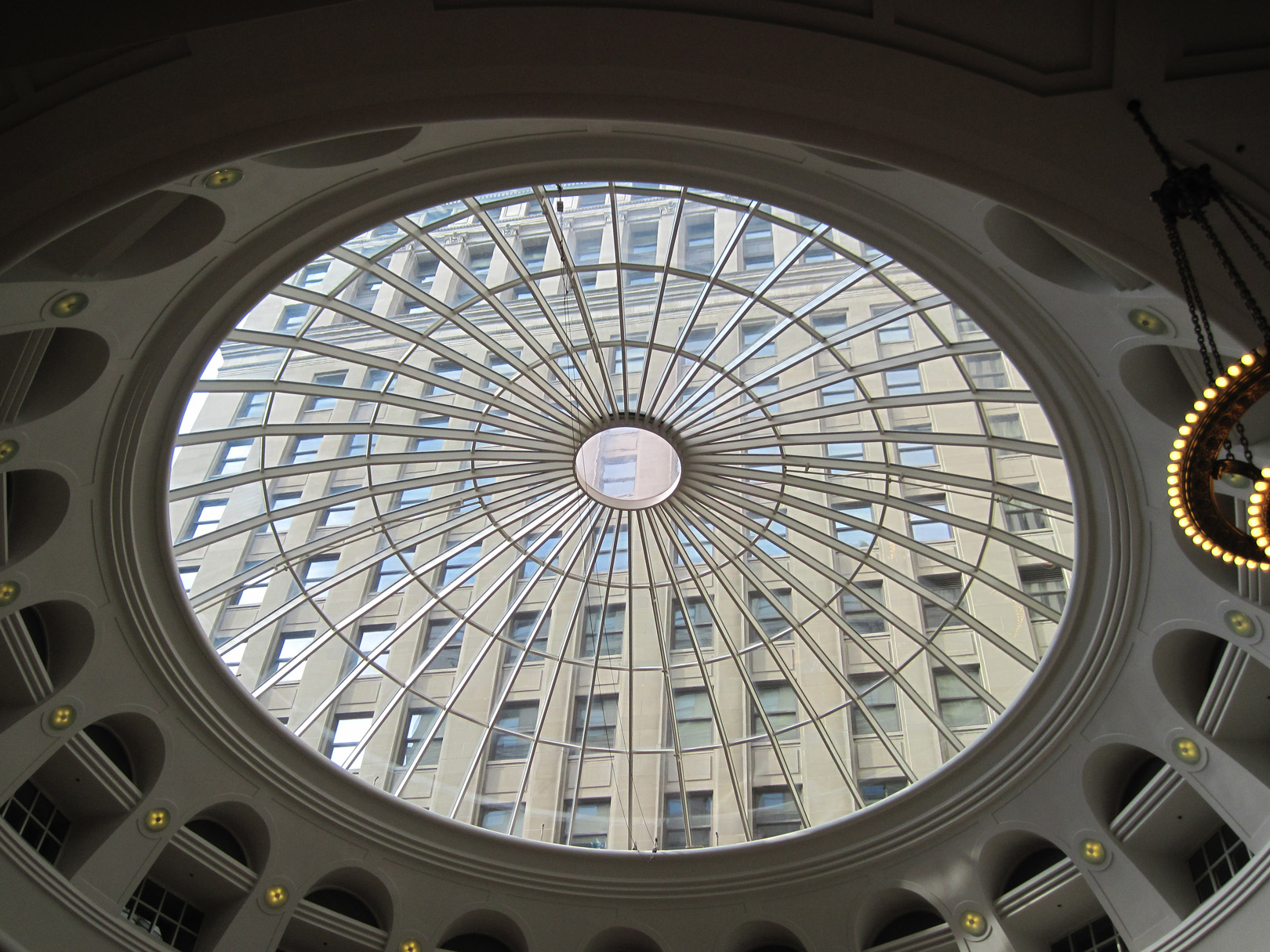
The skylight in Tower City

A chandelier also in Tower City
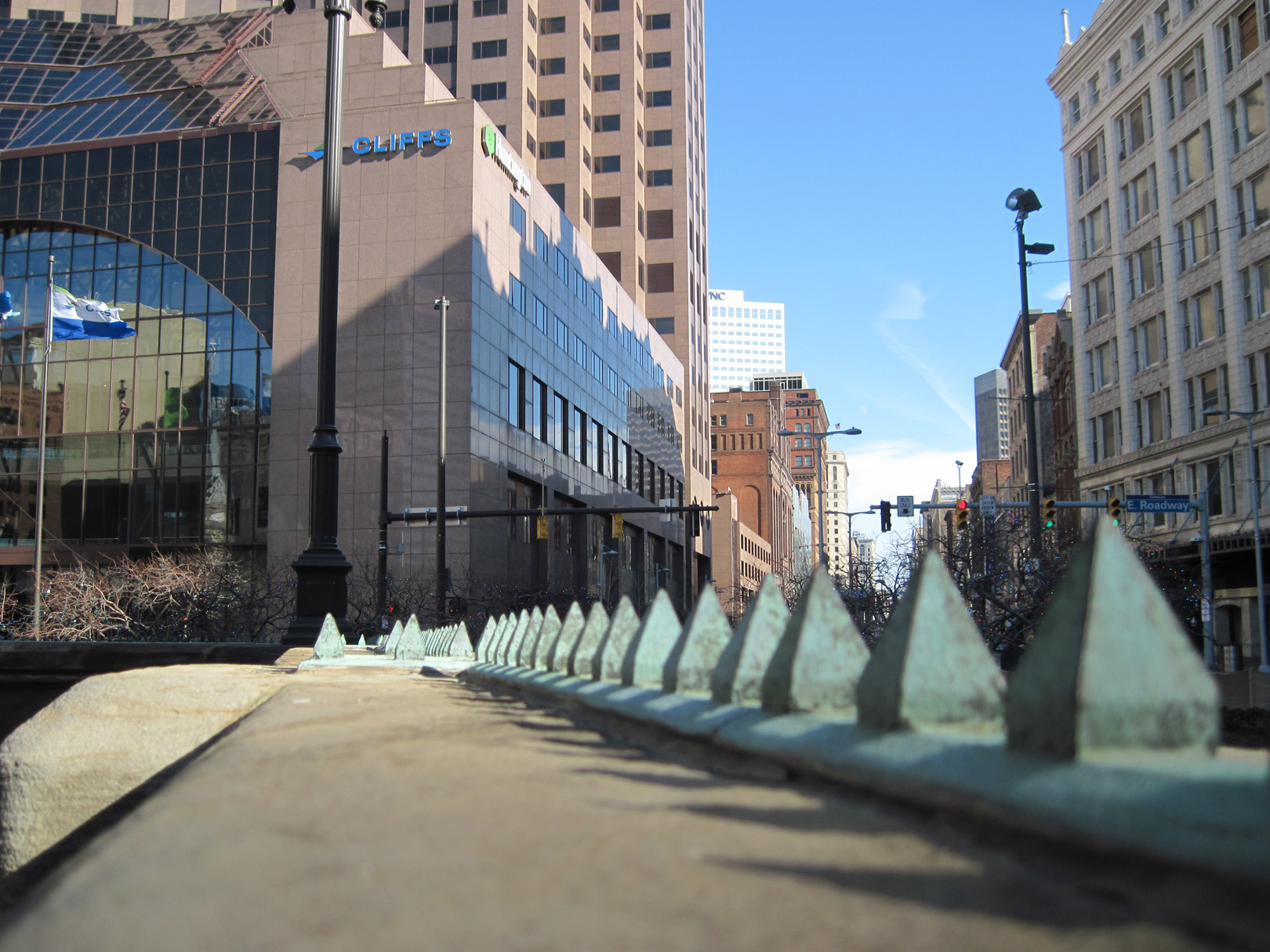
View up Euclid Avenue from the Soldiers and Sailors Monument

Detail of the monument

Terminal Tower framed by the railroad bridge – taken from Whiskey Island

The beautiful old Coast Guard Station on Whiskey Island
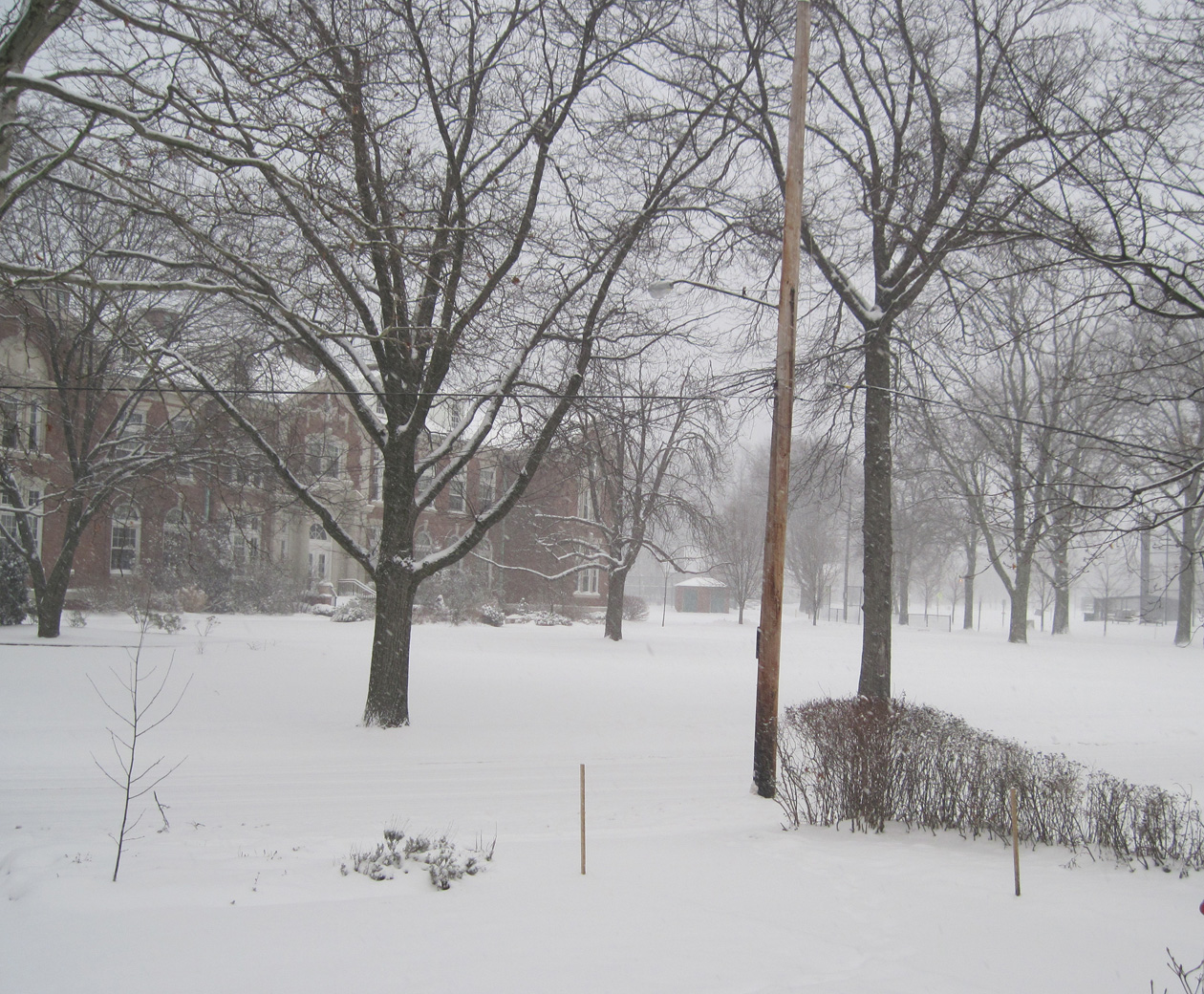
And the weather today – one week later – pretty typical for January in this neck of the woods.
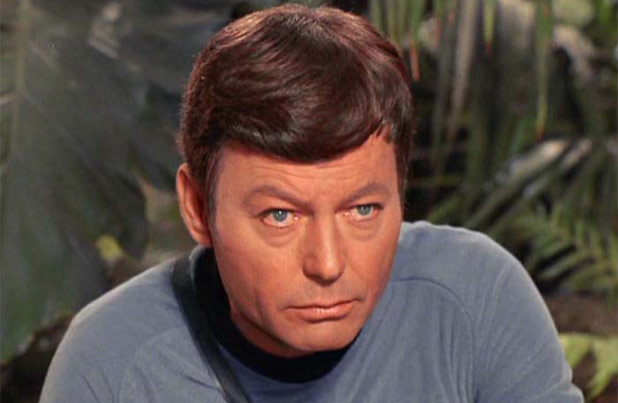
Leonard “Bones” McCoy, born January 20, 2227.
STARFLEET HISTORICAL FILE: McCoy, Leonard H.
Mid-level Biography Brief Mode
Final Rank: Admiral, retired
Full Name: Leonard H. McCoy, M.D.
Year of birth: 2227
Parents: Mr. and Mrs. David McCoy
Education: University of Mississippi, 2245-49; medical school, 2249-53
Marital status: Divorced
Children: A daughter, Joanna
Quarters: Original Enterprise: 3F 127
Happy Birthday to Flash Gordon. This comic strip first appeared on January 7, 1934.

The comic strip follows the adventures of Flash Gordon, a handsome polo player and Yale graduate, and his companions Dale Arden and Dr. Hans Zarkov. The story begins with Earth bombarded by fiery meteors. Dr. Zarkov invents a rocket ship to locate their place of origin in outer space. Half mad, he kidnaps Flash and Dale, whose plane has crashed in the area, and the three travel to the planet Mongo, where they discover the meteors are weapons devised by Ming the Merciless, evil ruler of Mongo.
Flash Gordon later appeared in movies and on television, as well as in the comics.
Credit for the comic strip and quote – Wikipedia.
 The Inuvik Sunrise Celebration – the annual celebration of the return of the sun after an absence of about 28 days. A bonfire and fireworks add to this celebration on the Saturday closest to the sunrise.

More about Inuvik at L’Encyclopedie canadienne.
This post is a re-blog from Lights in the Dark – always a good read!

Suomi NPP satellite image of North and South America at night
In daylight our big blue marble is all land, oceans and clouds. But the night is electric.
This image of North and South America at night is a composite assembled from data acquired by the Suomi NPP satellite in April and October 2012. The new data was mapped over existing Blue Marble imagery of Earth to provide a realistic view of the planet.
The nighttime view was made possible by the new satellite’s “day-night band” of the Visible Infrared Imaging Radiometer Suite. VIIRS detects light in a range of wavelengths from green to near-infrared and uses filtering techniques to observe dim signals such as city lights, gas flares, auroras, wildfires, and reflected moonlight. In this case, auroras, fires, and other stray light have been removed to emphasize the city lights.
Although the view looking down from space is of a sparkling show, the downside of course is light pollution over major metropolitan areas which impede the view of the night sky from the ground. (Find out more at the International Dark Sky Association site.)
Read more (and watch a video of these nighttime images of Earth) below:
“Artificial lighting is a excellent remote sensing observable and proxy for human activity,” says Chris Elvidge, who leads the Earth Observation Group at NOAA’s National Geophysical Data Center. Social scientists and demographers have used night lights to model the spatial distribution of economic activity, of constructed surfaces, and of populations. Planners and environmental groups have used maps of lights to select sites for astronomical observatories and to monitor human development around parks and wildlife refuges. Electric power companies, emergency managers, and news media turn to night lights to observe blackouts.
This video uses the Earth at night view created by NASA’s Earth Observatory with data processed by NOAA’s National Geophysical Data Center and combined with a version of the Earth Observatory’s Blue Marble: Next Generation.
See more images and videos here: http://earthobservatory.nasa.gov/NightLights
NASA Earth Observatory image by Robert Simmon, using Suomi NPP VIIRS data provided courtesy of Chris Elvidge (NOAA National Geophysical Data Center).
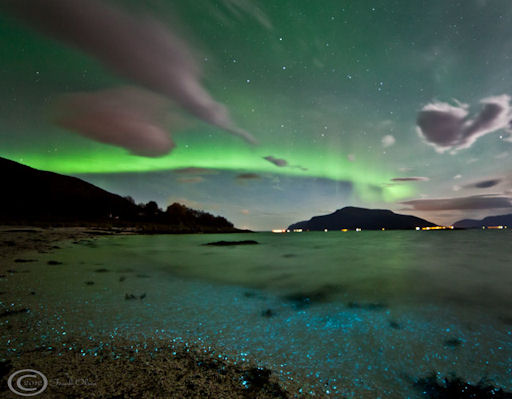
I thought this was a marvelous photograph. It was taken by Frank Olsen in Sortland, Norway. Reference is SpaceWeather.com. The photographer captured an impressive multitude of glowing things in this photo – the stars overhead, the green auroras, and the sparkling, luminescent dinoflagellates on the beach.
Many thanks to Rethoryke, who knows how much I admire a good moustache, for this wonderful slide show highlighting entrants in the recently held 2012 European Beard and Moustache Championships in Wittersdorf near Mulhouse, Eastern France.

I’m a little slow on the uptake, but September 22 was International Observe the Moon Day. Thanks to Lights in the Dark for recommending this amazing video. I’ve got my bags all packed for the next shuttle . . . oh, never mind.
And for stars of a completely different nature, go read Millenium Conjecture.
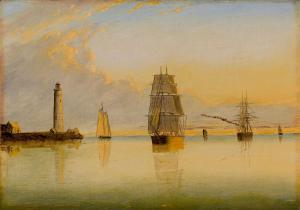
Happy birthday to Boston Harbor Lighthouse – the first lighthouse to be built in what is now the United States of America – it was first lit on September 14, 1716. I was interested to learn that it is the only US lighthouse that still has an official keeper. It was built to guide the way into Boston Harbor – already an important commercial port in the early 1700s – it was financed by a tax on the tonnage arriving at the harbor.
Located on Little Brewster Island in Boston’s outer harbor, it is a National Historic Landmark and an active U. S. Coast Guard aid to navigation.
Ref. Boston Lighthouse History
Firearms, fibers, any news or behaviors that make me say, "hmm, let me take another look at this."
I still miss my man, but my aim is getting better.








 Gunsmoke and Knitting