Posts Tagged ‘history’

h1

Where are my sunglasses?

July 1, 2016

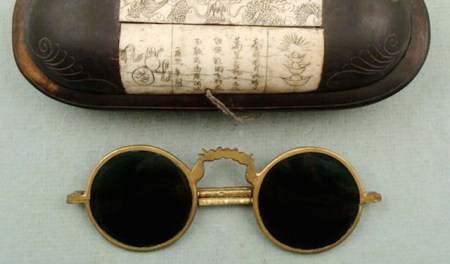
sunglass chinese

July 1 marks the date that the Chinese invented sunglasses in the year 1200.  They were the province of the wealthy and were used not so much for protection from the sun, as for hiding their expressions.

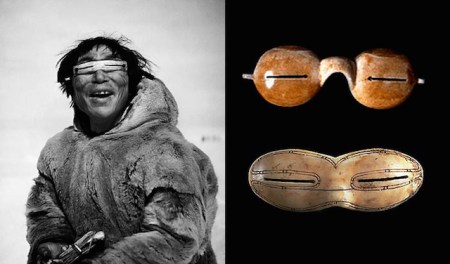
sunglass inuit

Actually, Inuit “sunglasses”, although not made of glass, pre-date the Chinese invention – going back to prehistoric times and were probably very useful against sun glare.

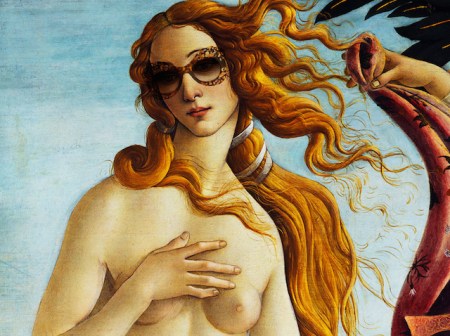
ssungalss venus

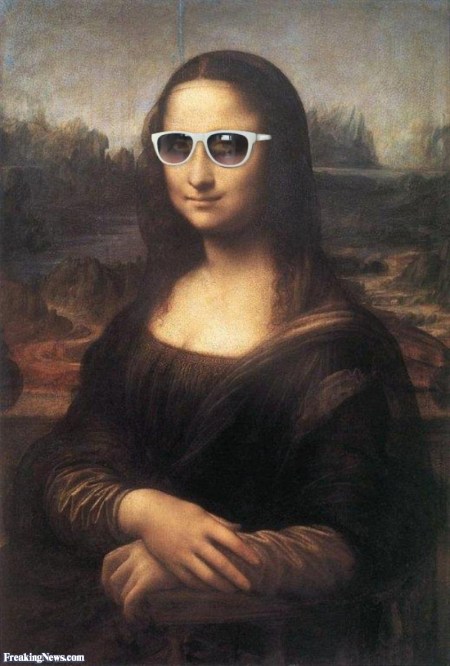
Sunglasses have appeared on famous faces throughout history.

sunglass monaa lisa

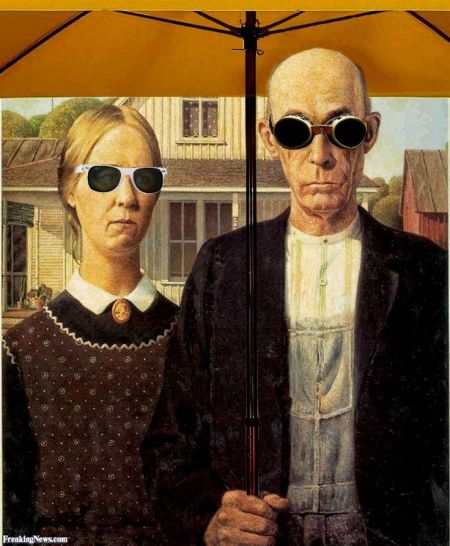
sunglass ameriican gothic

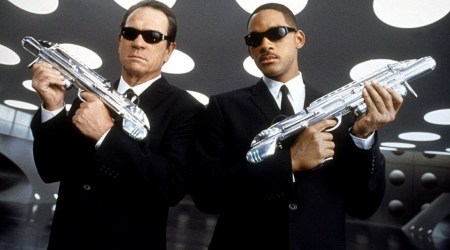
And they have other important uses, as well.

sunglass meen in black


h1

What 95th anniversary am I noting today?

May 11, 2016

SONY DSC

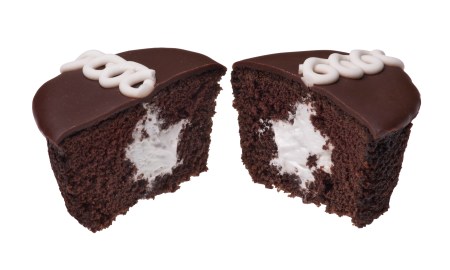
“The Hostess CupCake was first sold on May 11, 1919. According to author Andrew F. Smith, it was the first commercially produced cupcake, originally produced by the Taggart Bakery as the Chocolate Cup Cake.

cupcake2

Originally, two cupcakes were sold for five cents. Different flavors were offered during the early years, including cupcakes topped with vanilla or malted milk flavored icing. During the 1940s, an orange flavored cupcake was developed, with orange cake and icing. [Orange is still one of the standard flavors. I cannot imagine why.] But until 1950, the Hostess CupCake did not have any filling or the white squiggly line across the top.” – Wikipedia

redvelvetcupcake-01

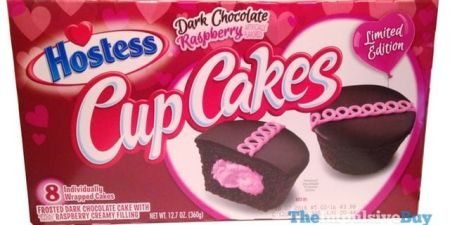
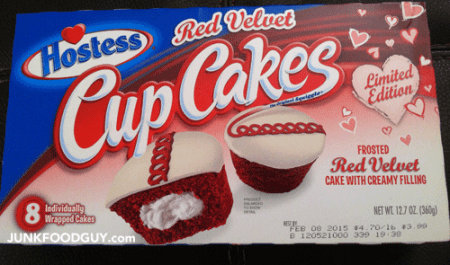
Occasionally Hostess CupCakes are offered in different flavors such as dark chocolate raspberry, chocolate covered strawberry (pink cake), and red velvet, which has become a standard flavor.

How well do you know Hostess CupCakes?  Go here for a quiz about them on PopSugar.

cupcake5

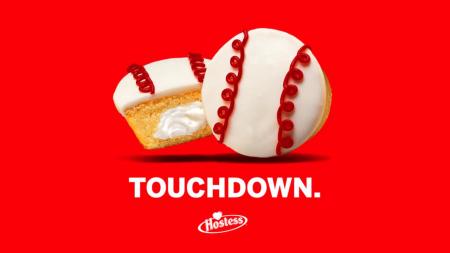
I am at a loss to explain why the word “touchdown” was used to promote baseball cupcakes.

h1

What am I eating?

April 6, 2016

twinkie1

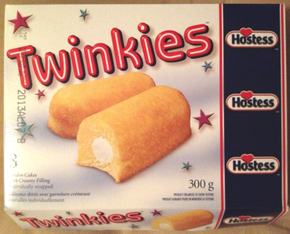
Twinkies introduced April 6, 1930

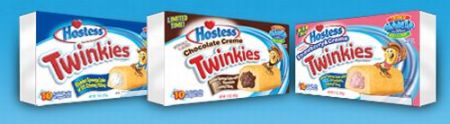
Twinkies were invented in Schiller Park, Illinois on April 6, 1930, by James Alexander Dewar, a baker for the Continental Baking Company. Realizing that several machines used to make cream-filled strawberry shortcake sat idle when strawberries were out of season, Dewar conceived a snack cake filled with banana cream, which he dubbed the Twinkie. The name came from a billboard he saw in St. Louis for “Twinkle Toe Shoes”. During World War II, bananas were rationed and the company was forced to switch to vanilla cream. This change proved popular, and banana-cream Twinkies were not widely re-introduced. The original flavor was occasionally found in limited-time promotions, but the company used strawberry cream for most Twinkies. In 1988, Fruit and Cream Twinkies were introduced with a strawberry filling swirled into the cream. The product was soon dropped. Vanilla’s dominance over banana flavoring would be challenged in 2005, following a month-long promotion of the movie King Kong. Hostess saw its Twinkie sales rise 20 percent during the promotion, and in 2007 restored the banana-cream Twinkie to its snack lineup. – Wikipedia

In addition to vanilla and banana cream filled Twinkies, limited editions have sometimes been found with strawberry, chocolate or blueberry fillings, and even a chocolate covered Twinkie with cherry filling.

twinkie_limited_strawberry_chocolate

h1

What am I celebrating today?

April 5, 2016


First Contact – April 5, 2063

I can’t wait!

h1

What am I reading?

April 4, 2016

shackleton-books-s0000

This story is a reprint of an article by Paul Kerley in the BBC News Magazine

And here is a related article from NPR

When Sir Ernest Shackleton set off for Antarctica on his ship Endurance, he made sure he had plenty of reading material. But details of precisely what books he took have remained hidden in this photograph – until now.

The image from the ill-fated South Pole expedition – taken in early March 1915 by Australian photographer Frank Hurley – has been digitised by the Royal Geographical Society in London.

It is now known that the explorer carried with him dictionaries, encyclopedias and books chronicling other dangerous polar expeditions.

He took established works by Dostoyevsky and Shelley – but also, explains Alasdair MacLeod from the RGS, “newly published fiction by popular authors of the time”.

“The cabin wall on the left also shows a framed print of Rudyard Kipling’s poem ‘If’, which Shackleton carried with him on to the ice floe when the ship sank.”

In January 1915, Endurance and her 28-man crew became trapped in ice in the Weddell Sea. Shackleton and his men would remain there for 10 months – until the ship sank and they moved on to the ice. In April 1916, in three small boats taken off Endurance, the crew left the ice and began an arduous voyage to uninhabited Elephant Island. From there, Shackleton took a small group with him to South Georgia – 750 miles away – where they finally got help.

All members of Endurance’s crew survived.

Scroll down to see the full list of books identified by experts at the RGS – and see more stark images of Shackleton’s struggle for survival.

Books on Shackleton’s bookshelf:

  • Encyclopedia Britannica
  • Seven short plays by Lady Gregory
  • Perch of the devil by Getrude Atherton
  • Pip by Ian Hey
  • Plays: pleasant and unpleasant, Vol 2 Pleasant by G B Shaw
  • Almayer’s folly by Joseph Conrad
  • Dr Brewer’s readers handbook
  • The Brassbounder by David Bone
  • The case of Miss Elliott by Emmuska Orczy
  • Raffles by EW Hornung
  • The Grand Babylon Hotel by Arnold Bennett
  • Pros and cons: a newspaper reader’s and debater’s guide to the leading controversies of the day by JB Askew
  • The Brothers Karamazov by Fyodor Dostoyevsky
  • The Woman’s view by Herbert Flowerdew
  • Thou Fool by JJ Bell
  • The Message of Fate by Louis Tracy
  • The Barrier by Rex Beach
  • Manual of English Grammar and Composition by Nesfield
  • A book of light verse
  • Oddsfish by Robert Hugh Benson
  • Poetical works of Shelley
  • Monsieur de Rochefort by H De Vere Stacpoole
  • Voyage of the Vega by Nordenskjold
  • The threshold of the unknown region by Clements Markham
  • Cassell’s book of quotations by W Gurney Benham
  • The concise Oxford dictionary
  • Chambers biographical dictionary
  • Cassell’s new German-English English-German dictionary
  • Chambers 20th Century dictionary
  • The northwest passage by Roald Amundsen
  • The voyage of the Fox in Arctic seas by McClintock
  • Whitaker’s almanac
  • World’s end by Amelie Rives
  • Potash and perlmutter by Montague Glass
  • Round the horn before the mast by A Basil Lubbock
  • The witness for the defence by AEW Mason
  • Five years of my life by Alfred Dreyfuss
  • The morals of Marcus Ordeyne by William J Locke
  • The rescue of Greely by Commander Winfield Scott Schley
  • United States Grinnell Expedition by Dr Kane
  • Three years of Arctic service by Greely
  • Voyage to the Polar Sea by Nares
  • Journal of HMS Enterprise by Collinson
h1

What am I celebrating today?

March 1, 2016

St_David

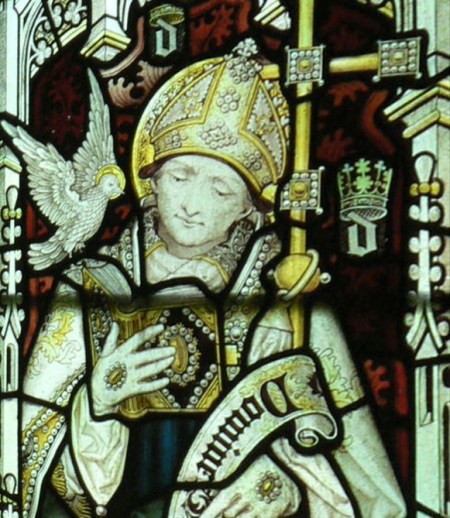
St David is the patron saint of Wales.  March 1 is his feast day.

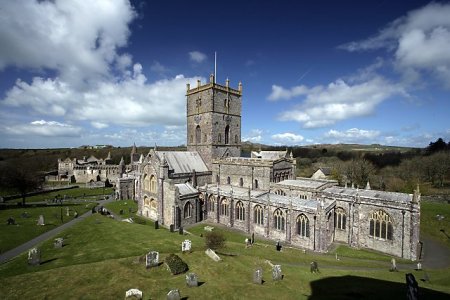
Saint David (Welsh: Dewi Sant) was born towards the end of the 5th century. He was a scion of the royal house of Ceredigion, and founded a Celtic monastic community at Glyn Rhosyn (The Vale of Roses) on the western headland of Pembrokeshire (Welsh: Sir Benfro) at the spot where St David’s Cathedral stands today.

St_David's_Cathedral_and_Bishop's_Palace_-_geograph.org.uk_-_774149

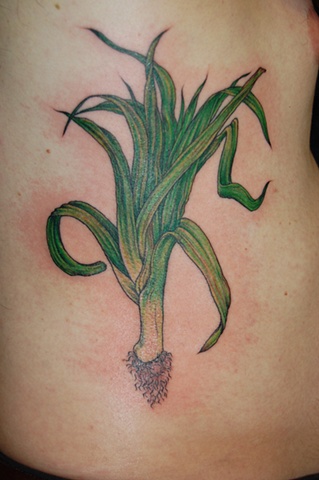
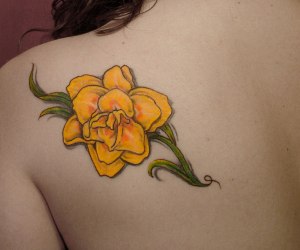
Many Welsh people wear one or both of the National symbols of Wales to celebrate St. David: the daffodil (a generic Welsh symbol) or the leek (Saint David’s personal symbol) on this day. The leek arises from an occasion when a troop of Welsh were able to distinguish each other from a troop of English enemy dressed in similar fashion by wearing leeks.

Source – Wikipedia

It is also tattoo Tuesday . . .

St David leek

St David-double-daffodil


h1

What chapeau am I doffing?

February 24, 2016

hats feature - country life“From Winston Churchill’s homburg to Charlie Chaplin’s bowler, much of Britain’s history can be told through the headgear worn by its best-known politicians, performers and literary characters. Hats have evolved enormously since the days when their primary function was to protect their wearers’ heads from bad weather and weapons.

By Victorian times, they had become part of every self-respecting gentleman’s attire—a man would no more leave the house without a hat than he would without his trousers. Hats became a symbol of class and occupation, from London’s bowler-clad bankers and stockbrokers to the cloth caps worn by the country’s manual labourers on farms and in factories.

Even Britain’s best-loved fictional rogues have trademark hats: the Artful Dodger’s battered top hat, Ebenezer Scrooge’s night cap and Del Boy’s flat cap, to name but a few. Customs such as hat-tipping and launching mortar boards at graduation are deeply embedded in the social and cultural fabric of the country and, although 21st-century wardrobes might contain fewer hats than their predecessors, social occasions such as Royal Ascot and the Henley Royal Regatta ensure that, when it comes to hat heritage, Britain still takes the crown.

Bowler
The first bowler was made in 1849 by James Lock & Co’s chief hatter, Thomas Bowler, for Edward Coke, a nephew of the 1st Earl of Leicester (of the second creation) of Holkham Hall in Norfolk. Coke wanted a close-fitting, low-crowned hat to protect the estate gamekeepers’ heads from low-hanging branches and attacks from poachers. It’s thought that, when he went to London to view the hat, he stamped twice on the crown to determine its durability, nodded in approval and paid 12 shillings for it. The estate’s gamekeepers still wear bowlers on shoot days.

Top hat
There has never been a more sophisticated and dominant design than the top hat, which replaced tricornes and bicornes as a status symbol for gentlemen at the turn of the 19th century. Apparently, when the haberdasher John Hetherington donned the first topper on the streets of London in 1797, children screamed, women fainted and Hetherington was arrested for wearing a hat ‘calculated to frighten timid people’.

Trilby
The difference between a trilby and its big brother, the fedora, comes down to the size of the brim and the nature of the crease at the crown the former has a sharper crown and a narrower brim. It was named after a fictional character the eponymous heroine of George du Maurier’s 1894 novel Trilby. It became a wardrobe staple when men swapped their formal, stiff hats for something lighter and more comfortable.

Fedora
Named after the heroine of a French play written by Victorien Sardou in 1882 and made famous by American icons such as Frank Sinatra and Humphrey Bogart, the soft-brimmed, felt fedora made its way into British men’s wardrobes in the mid 1920s. It was also popularised by Edward VIII, who chose to wear one on royal engagements. Deerstalker/stalker
This two-flapped hat was a vital part of a Victorian gentleman’s country ensemble, worn principally for shooting and especially for deerstalking. Although indelibly associated with Sherlock Holmes, there is not a single mention of a deerstalker in any of Conan Doyle’s stories. It was Sidney Paget who gave the sleuth a hat and cape in his illustrations for The Strand magazine—they first appear in The Boscombe Valley Mystery in 1891.

Panama
Genuine Panama hats are made exclusively in Ecuador, where they’re woven from the straw-like stems of the toquilla palm. Named in honour of the workers who built the Panama Canal and wore them for protection against the sun, the hats became a British summer staple by the early 20th century. The black band around the base is said to originate from 1901, as a mark of respect following the death of Queen Victoria.

Homburg
This distinctive hat, with its curled brim and uniform dent running from back to front, was supposedly popularised by Edward VII, who spied it on a trip to the German town of Bad Homburg in the early 1880s. Winston Churchill was also a big fan and the dapper detective Hercule Poirot rarely left the house without his.”

Read more at Country Life.
h1

What am I eating?

February 9, 2016

640px-Boris_Kustodiev_-_Shrovetide_-_Google_Art_Project

Russian artist Boris Kustodiev’s Maslenitsa (1916)

I never thought about the origin of Lent, so I was interested to read this history on Wikipedia:

“It is probably impossible to know when the tradition of marking the start of Lent began. Ælfric of Eynsham’s “Ecclesiastical Institutes” of about A.D. 1000 includes: “In the week immediately before Lent everyone shall go to his confessor and confess his deeds and the confessor shall so shrive him as he then may hear by his deeds what he is to do [in the way of penance]”.

Some suggest that the Pancake Tuesday was originally a pagan holiday. Before the Christian era, the Slavs believed that the change of seasons was a struggle between Jarilo, the god of vegetation, fertility and springtime, and the evil spirits of cold and darkness. People believed that they had to help Jarilo fight against winter and bring in the spring. The most important part of Maslenitsa week (the whole celebration of the arrival of spring lasted one week) was making and eating pancakes. The hot, round pancakes symbolized the sun. The Slavs believed that by eating pancakes, they got the power, light and warmth of the sun. The first pancake was usually put on a window for the spirits of the ancestors. On the last day of Maslenitsa week some pancakes and other food were burnt in a bonfire as a sacrifice to the pagan gods.”

I read somewhere that housekeepers wanted to use up all of the food that would spoil during the period of Lent and that is how Mardi Gras or Fat Tuesday came to be.  In the time before refrigeration butter, oil and meat might go off during the the 40 days of Lent and so were used up in Mardi Gras feasting.

In the festivals listed on Wikipedia, pancakes, green peas, and general merry making  feature in many cultures on this day before Ash Wednesday.

mardi gras tattoo

h1

Why am I thinking about 1984?

February 3, 2016
h1

What am I celebrating today?

January 26, 2016

up helly aa 2016

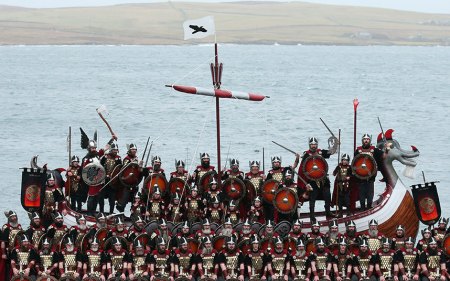
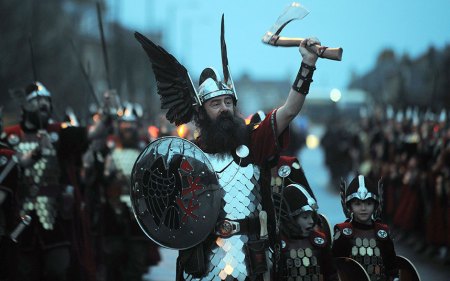
Call back the sun during Up Helly Aa – bonfires and carousing mark the end of the Yule season and a gradual return to longer days and shorter nights.

up hellyVikings_process_in_3559459k

up hellyVikings_queue_to_b_3559456k

Here, Vikings line up for breakfast before the ceremony.

There is a great photo story at the Telegraph.

Join the fun.