Posts Tagged ‘geeky science blogging’

h1

What event am I commemorating?

July 1, 2014

This post is reblogged from Lights in the Dark, with thanks.

Cassini Marks Ten Discovery-Filled Years at Saturn

Cassini by the Numbers: an infographic of the spacecraft's achievements over the past decade (NASA/JPL-Caltech)

Just a week after Curiosity celebrated its first Martian year in Gale Crater and we have yet another milestone anniversary in Solar System exploration: as of 10:48 p.m. EDT tonight Cassini will have been in orbit around Saturn for a full decade!

“There are times when human language is inadequate, when emotions choke the mind, when the magnitude of events cannot properly be conveyed by the same syllables we use to navigate everyday life. The evening of June 30, 2004 was such a time.” 

– Carolyn Porco, Cassini Imaging Team Leader, CICLOPS “Captain’s Log” on June 30, 2014

That’s ten years and over 2 billion miles of discoveries and explorations of our Solar System’s most majestic planet and its incredibly varied family of moons. Over the course of its primary mission and three extended missions, we have been able to get a close-up look at Saturn and its moons like never before, witnessing first-hand the changes that occur as their seasons change. What’s been discovered by the Cassini mission about Saturn has offered invaluable insight into the evolution of our entire Solar System, as well as planets that could be found elsewhere in our galaxy.

“Having a healthy, long-lived spacecraft at Saturn has afforded us a precious opportunity,” said Linda Spilker, Cassini project scientist at NASA’s Jet Propulsion Laboratory in Pasadena, California. “By having a decade there with Cassini, we have been privileged to witness never-before-seen events that are changing our understanding of how planetary systems form and what conditions might lead to habitats for life.”

Launched on October 15, 1997, the Cassini-Huygens spacecraft established orbit around Saturn on June 30, 2004 (July 1, UTC).

Enceladus' icy geysers, one of the most important discoveries by Cassini

From a NASA news release:

After 10 years at Saturn, the stalwart spacecraft has beamed back to Earth hundreds of gigabytes of scientific data, enabling the publication of more than 3,000 scientific reports. Representing just a sampling, 10 of Cassini’s top accomplishments and discoveries are:

The surface of Titan seen by the Huygens probe in 2005 (ESA/NASA/JPL)

• The Huygens probe makes first landing on a moon in the outer solar system (Titan)
• Discovery of active, icy plumes on the Saturnian moon Enceladus
• Saturn’s rings revealed as active and dynamic — a laboratory for how planets form
• Titan revealed as an Earth-like world with rain, rivers, lakes and seas
• Studies of Saturn’s great northern storm of 2010-2011
• Studies reveal radio-wave patterns are not tied to Saturn’s interior rotation, as previously thought
Vertical structures in the rings imaged for the first time
• Study of prebiotic chemistry on Titan
• Mystery of the dual, bright-dark surface of the moon Iapetus solved
• First complete view of the north polar hexagon and discovery of giant hurricanes at both of Saturn’s poles

“It’s incredibly difficult to sum up 10 extraordinary years of discovery in a short list, but it’s an interesting exercise to think about what the mission will be best remembered for many years in the future,” Spilker said.

(Learn more about each of the above discoveries here.)

“Our team has done a fantastic job optimizing trajectories to save propellant, and we’ve learned to operate the spacecraft to get the most out of it that we possibly can. We’re proud to celebrate a decade of exploring Saturn, and we look forward to many discoveries still to come.”

– Earl Maize, Cassini project manager at JPL

Of course, if you’re like me some of the most exciting parts of the Cassini mission have been the pictures! What amazing views of Saturn, its rings, and its moons we’ve gotten from Cassini… each one a glorious gem in its own right, and thanks to the talent and hard work of the Cassini imaging team at the Space Science Institute (SSI) in Boulder, Colo. the entire world has been able to go along for the ride… and very near literally, too.

Mosaic from the Cassini imaging team of Saturn on July 19, 2013… the “Day the Earth Smiled” (NASA/JPL-Caltech/SSI)

If you’d like to relive the experience of Cassini’s ten years at Saturn as a photojournal, visit SSI’s CICLOPS page here and check out the pictures on a month-by-month basis across the entire mission timeline (including some equally incredible images from its previous Jupiter encounter as well!)

You can also see some of the Cassini team’s favorite images from Saturn here, and find out what’s coming up in the next few years as Cassini’s explorations continue!

Here’s to many more discoveries about our Solar System’s very own “lord of the rings!”

h1

What is tattoo Tuesday about?

June 3, 2014


Science Ink / Buchbesprechung /WISSENSCHAFTI thought this was a lovely geology tattoo on a graduate student that celebrates her field of study.

I am reading a book on the geology of the Cleveland region that was published in 1940 and found in a bunch of books that were being discarded (!)

Here are a couple of the figures from that book.  I find interesting the different intersection land forms that make up this area – and the fact that I live on top of the last foothill of the Appalachian Plateau.  Interesting in history, if not in altitude.

EPSON MFP image

EPSON MFP image


h1

What am I Lego-loving?

May 19, 2014

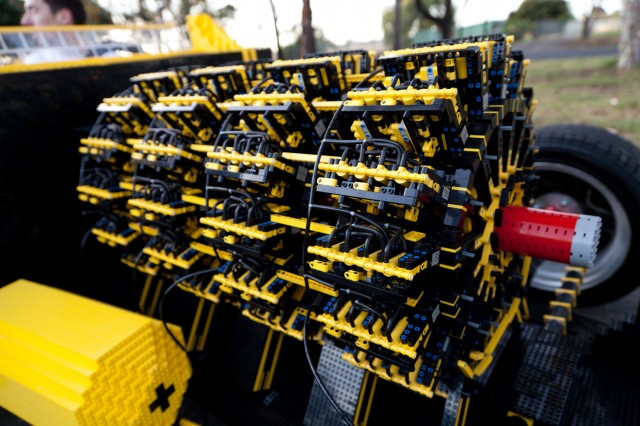
This LEGO car runs on compressed air and was designed by Steve Sammartino and constructed by Raul Oaida.  Read more here.

lego car


lego-engine-front-150x150


lego-engine-up-close-640x426

h1

Why am I saying, “Oooooooo!”?

May 8, 2014


tumblr_mqk9n29BxS1sa4ajqo2_250

From the Daily Timewaster.


h1

What is tattoo Tuesday about?

April 15, 2014

eclipse tattoo

The tattoo this week is about the lunar eclipse.  A lunar eclipse is a fascinating sight.  This time, however, I missed it because this is what I woke up to.

daffs

I hope the daffodils survive.   I was at the beach on Sunday – brought a book and a lawn chair and sat in the sun – temps in the upper 70s at least.  The temperature of the lake?  That is another matter entirely.  It won’t warm up until much later. Too often we go from winter directly into summer (and back again) here is the Connecticut Western Reserve.

I will try to catch another lunar eclipse later in the year.  This information is from NASA:

For people in the United States, an extraordinary series of lunar eclipses is about to begin.

The action starts on April 15th when the full Moon passes through the amber shadow of Earth, producing a midnight eclipse visible across North America. So begins a lunar eclipse tetrad—a series of 4 consecutive total eclipses occurring at approximately six month intervals.  The total eclipse of April 15, 2014, will be followed by another on Oct. 8, 2014, and another on April 4, 2015, and another on Sept. 28 2015.

h1

Why am I shivering?

February 22, 2014

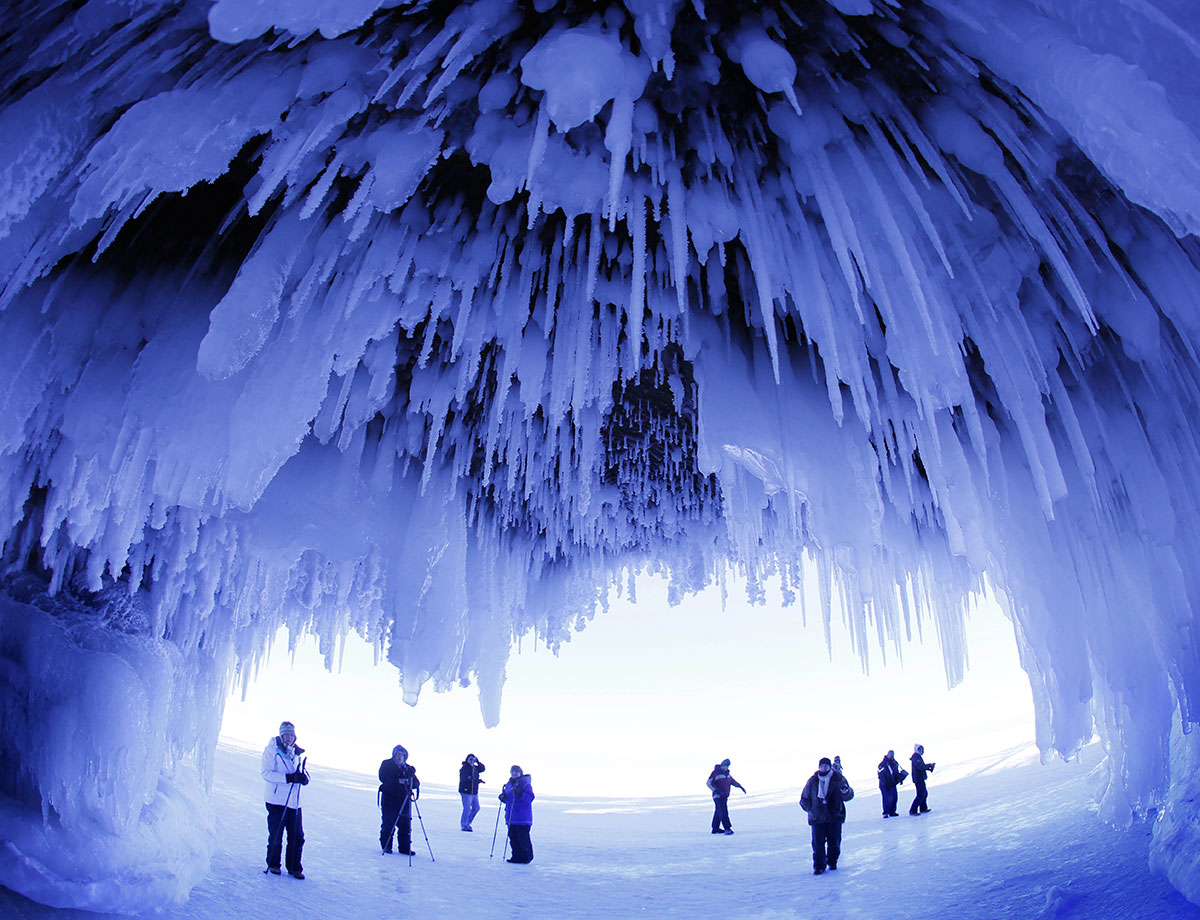
This has been a cold, cold winter for us in the old Western Reserve, and elsewhere along the Great Lakes.  This story is from New Scientist.

icecaves2

Look out below! These people appear doomed by a gigantic overhead explosion. But they’re safe. The firework-like formations are actually icicles formed by huge waves that batter the Apostle Islands sea caves in the south-west corner of Lake Superior, just off the coast of Wisconsin.

The caves are normally inaccessible. But the exceptionally cold weather in the US this year has led to almost record coverage of ice over the Great Lakes, creating a safe route to the caves for the first time since 2009.

icecaves1Frosted Lakes

(Image: NOAA)

An estimated 10,000 visitors have trekked over since the route was declared safe by the US National Parks Service on 15 January.

The Parks Service says that access could remain until as late as March, but warns visitors to take no chances with creaky ice on the lake, and to beware falling ice if they do make it to the caves.

h1

What did I find astonishing?

February 20, 2014

Soul of Science copy

Did you know that 25% of Americans do not know that the earth orbits the sun?  This finding is from a recent NSF survey on scientific literacy.

Ref: Discovery News via Maggie’s Farm.

I could not find that survey, but I did find this one from the PEW Research Center.

How did you do?

h1

What is tattoo Tuesday about?

February 18, 2014

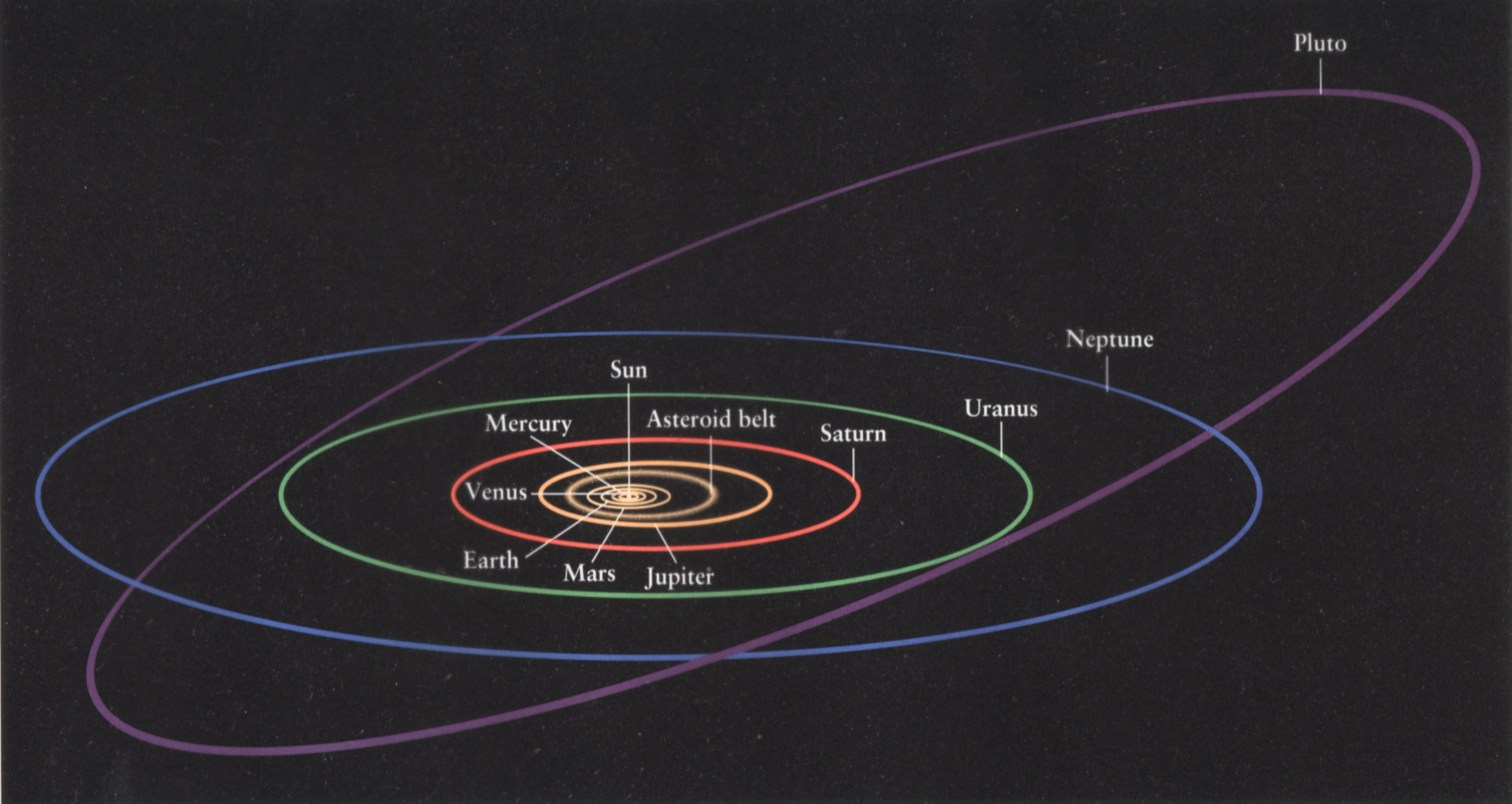
On February 18, 1930, Clyde W. Tombaugh, an assistant at the Lowell Observatory in Flagstaff, Arizona, discovered Pluto. For over seven decades, Pluto was considered the ninth planet of our solar system.

Now we know that is not the case.

This video was made by C G P Grey.

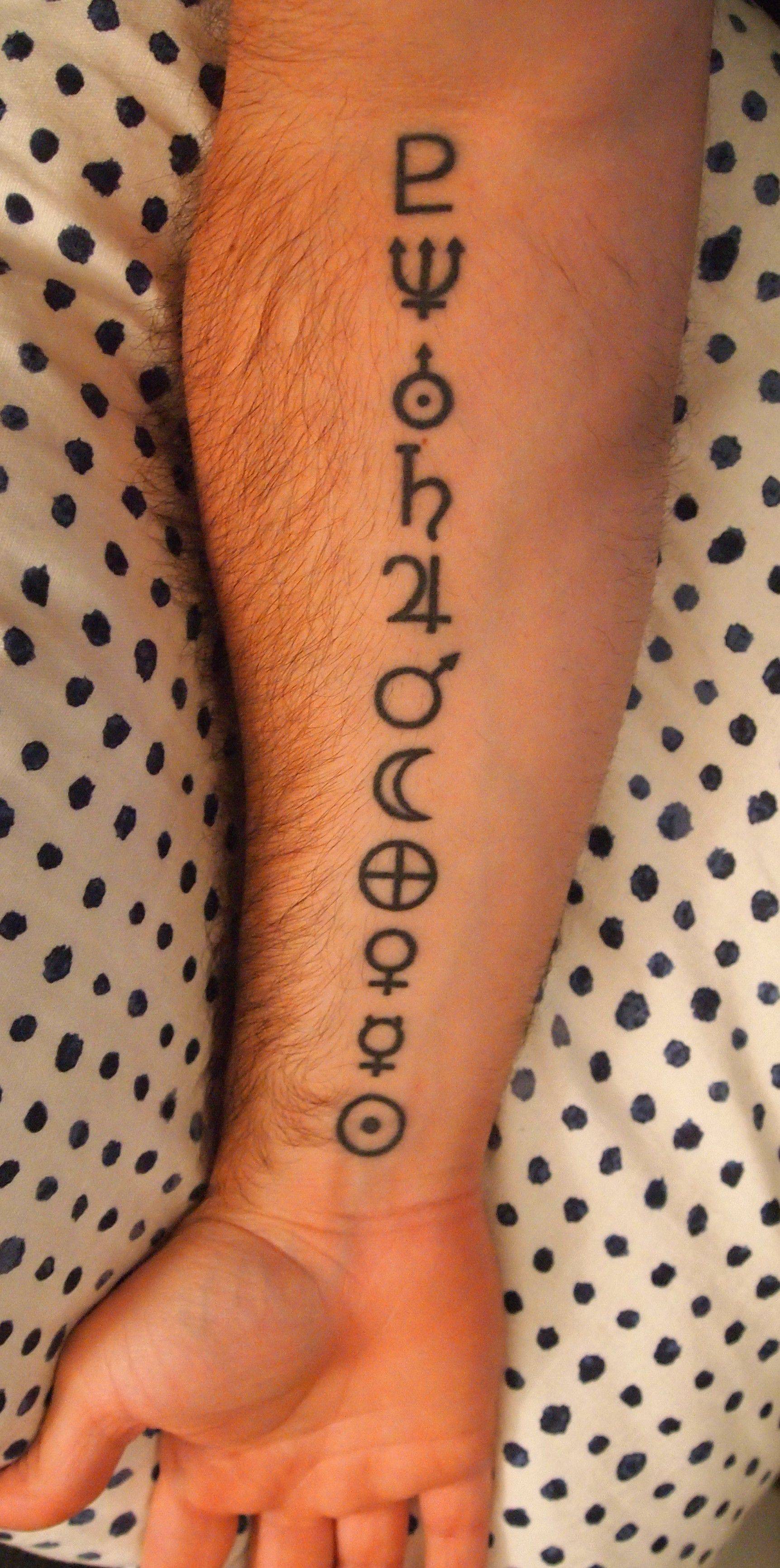
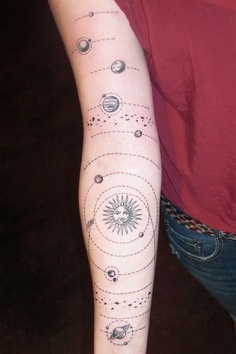
Pluto may not be a planet (one less object to memorize in elementary science class!), but it is the basis for some interesting tattoos:

pluto1

pluto3That’s Pluto up there at the top.

pluto5

pluto4

Still mourning the fact that Pluto is not a planet?  As Neil deGrasse Tyson says, “Get over it!”

h1

Where am I traveling?

February 17, 2014

I love these space-time travelogues and this one by the American Museum of Natural History is particularly well done.

h1

What is tattoo Tuesday about?

January 28, 2014

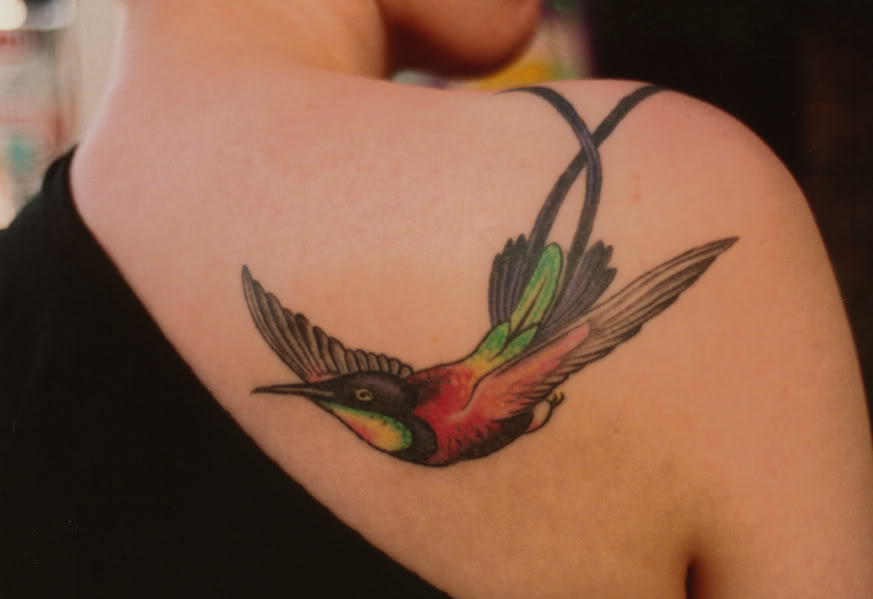
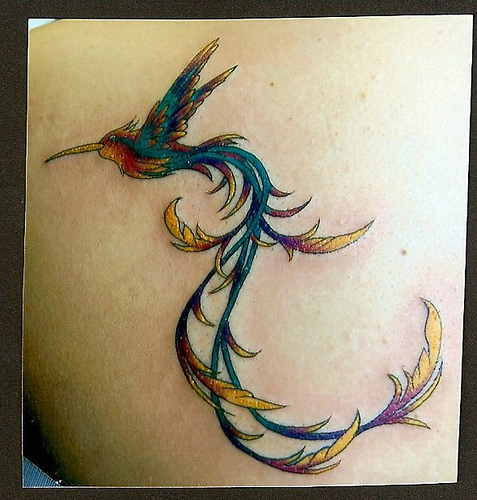
Today is National Kazoo Day, but believe it or not, I could not find a photo of a kazoo tattoo.  So here are some hummingbirds.

humming1

humming 2

humming 3

To make this more interesting, here is a video of baby hummingbirds from the time they hatched to fledging.