The Russian Federal Space Agency released a video that shows how earth could look in the light of other stars.
Many people can’t read Cyrillic, so here are the stars in order of appearance (or you can watch on YouTube and click on the caption option):
Alpha Centauri
Sirius
Arcturus
Vega
Polaris
This is a great visualization of what starlight might be like on other habitable planets. However, these stars couldn’t replace our sun. Sirius and Vega would blind us; Arcturus, Polaris, and Alpha Centauri would burn the planet to a crisp. None of this makes the video any less awesome. Our sun keeps the earth just the right temperature, and that’s good enough for most people.
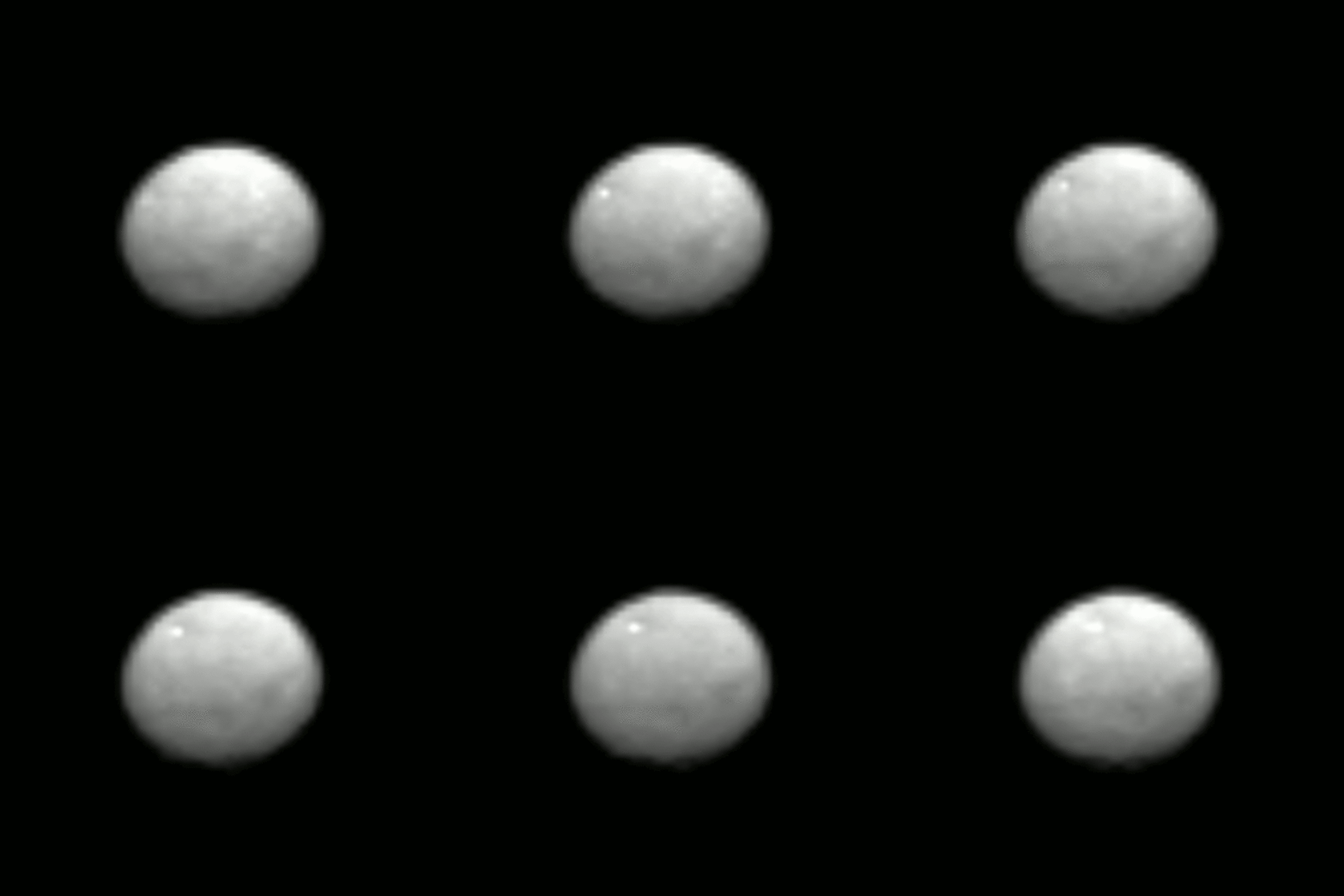
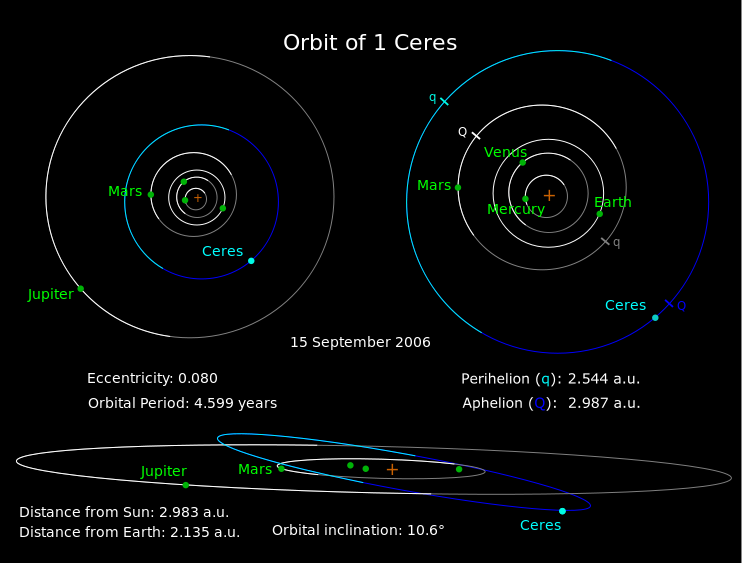
This is where you can find Ceres. It is remarkable for a number of reasons, not the least of which is because scientists suspect there is a significant amount of water present on Ceres under a layer of ice.
“When I turned on the light, I couldn’t quite understand what I was seeing,” Piotr Naskrecki said about his encounter with the Goliath Birdeater Spider in the rainforest of Guyana.
Okay, this is not sappy spider blogging – this is Creepy, Enormous, NIGHTMARE spider blogging. This specimen has a leg span of up to a foot, 2 inch long fangs and a fist-sized body. The Goliath also has hardened feet that make it sound like horses hooves when it walks.
It gets better:
When Naskrecki approached the imposing creature in the rainforest, it would rub its hind legs against its abdomen. At first, the scientist thought the behavior was “cute,” he said, but then he realized the spider was sending out a cloud of hairs with microscopic barbs on them. When these hairs get in the eyes or other mucous membranes, they are “extremely painful and itchy,” and can stay there for days, he said.
I’ll be looking through welder’s glass to see the partial solar eclipse this evening. It will most likely be overcast, but I am hoping to see a bit of it before nightfall. I hope you get a good view.
Take a look at the cool animated graphics at Shadow and Substance. Scroll down to see all the info.
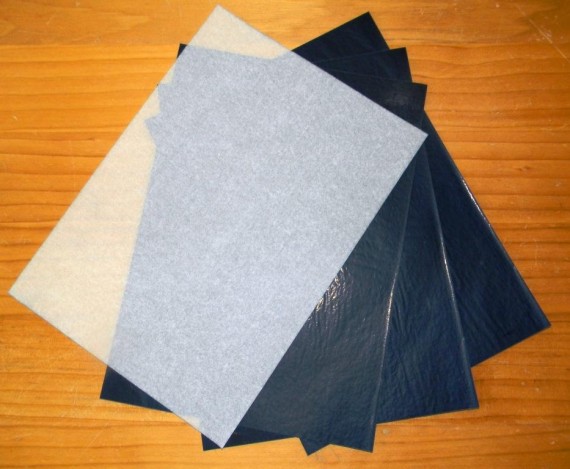
On October 7, 1806, carbon paper was patented by Ralph Wedgewood. According to TopTenZ, carbon paper and 9 other things, have been rendered obsolete by today’s technology.
From Wiki: Ralph Wedgwood (1766–1837) was an English inventor and member of the Wedgwood family of potters. His most notable invention was the earliest form of carbon paper, a method of creating duplicate paper documents, which he called “stylographic writer” or Noctograph.
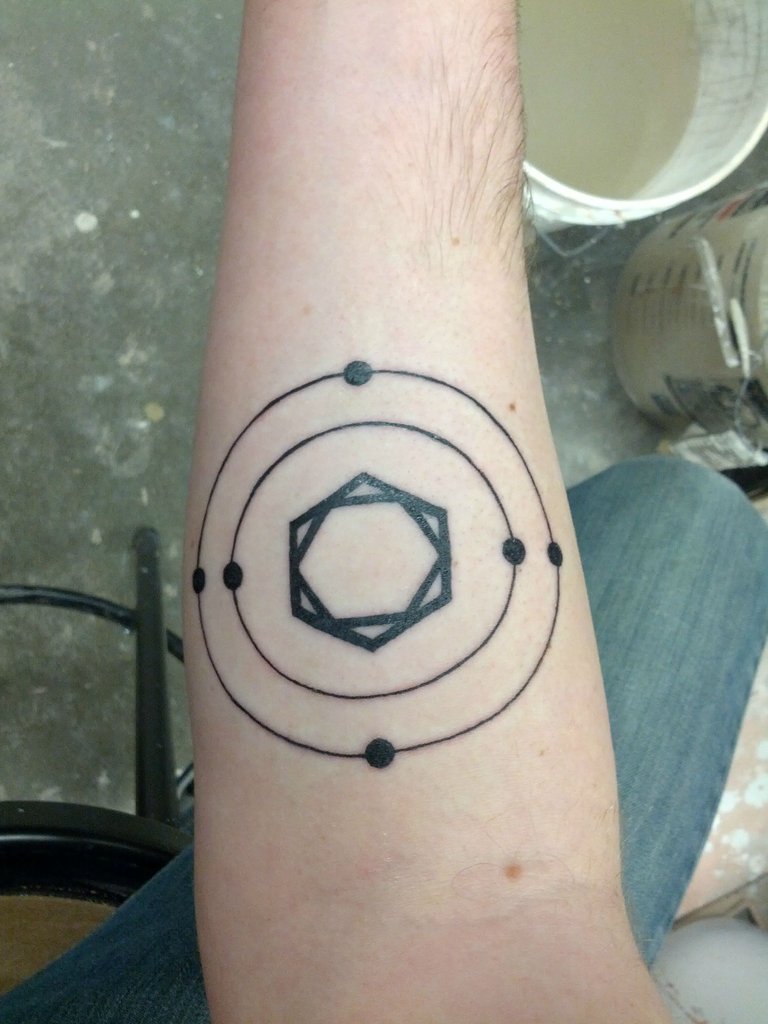
The tattoo above represents a 60 carbon molecule “buckyball” unfolded. Says the tattooee . . .
I didn’t want to choose an ordinary representation of carbon for my…uh…lifetime ink commitment. Behold the carbon 60 molecule, which just happens to fit my idea and look ridiculously cool, especially when “unfolded.” I initially wanted the design to be small and discreet, but my tattoo artist thought it was such a cool design that he insisted I get it bigger. I’m happy I took his advice.
Others have opted for the symbol for the element Carbon . . .
and for a stylized representation of a carbon atom.
Old books have a distinctive smell that can make any book lover’s heart melt. Matija Strlic of University College London described it to The Telegraph as “a combination of grassy notes with a tang of acids and a hint of vanilla over an underlying mustiness, this unmistakable smell is as much a part of the book as its contents.”
The secret to the scent is within the hundreds of volatile organic compounds (VOCs) that make up the book’s paper pages, ink, and adhesive. Over time, the VOCs break down, releasing the chemicals into the air that are picked up by our noses. New books also have a trademark aroma, but it isn’t quite as developed as their older counterparts. Additionally, different materials used in manufacturing the book will alter the VOC profile.
Compound Chemistry reports that hints of almond are created by benzaldehyde, while vanillin emits notes of vanilla. Sweet smells come from toluene and ethyl benzene, and 2-ethyl hexanol produces a light floral fragrance. Additionally, the book can also retain some odors it has been exposed to during its history, such as smoke, water damage, or pressed flowers between the pages.
Knowing why paper smells as it does is more than just a fun fact; it could be used to help libraries “sniff out” which books and papers are in danger of degradation. Identifying these aging manuscripts could allow them to be preserved and protected. Strlic led a study published in Analytical Chemistry in 2009 that found 15 VOCs which break down more rapidly than others.
If you’ve switched to an e-reader but miss the smell of old books while you read, there are many options for candles, perfumes, and air fresheners that will help your room smell like a comfy old library.
NASA’s Scientific Visualization Studio produced this video demonstrating how the earths tides ebb and flow around the world. It doesn’t include narration or annotation because, they explain, ‘The goal was to use ocean flow data to create a simple, visceral experience’.
The visualization shows ocean surface currents around the world during the period from June 2005 through December 2007 – these figures are plotted into a computer that takes in shed loads of data and outputs pretty things like this – I love when computers do that. The computational model is called Estimating the Circulation and Climate of the Ocean, Phase II (ECCO2 for short).
It can calculate ocean flow at all depths but this particular video shows only surface flows. NASA describe it as a ‘high resolution model of the global ocean and sea-ice. ECCO2 attempts to model the oceans and sea ice to increasingly accurate resolutions that begin to resolve ocean eddies and other narrow-current systems which transport heat and carbon in the oceans’.
The dark areas under the ocean show the the undersea bathymetry (basically the opposite of topography). The bathymetry and land topography are exaggerated to enhance the contrast – bathymetry by 20 times and topography by 40 times.
According to UTC (Coordinated Universal Time – or sort of Greenwich Mean Time – also Zulu Time), summer ended and autumn began at 2:29. That would make it 22:29 EDT on Monday, September 22, where I reside. (Why UTC and not UCT or CUT?)
Approximating Earth’s orbit around the sun to be an ellipse with semimajor axis of 1 au and eccentricity of 0.0167, the distance Earth travels in one year is 940 million kilometers (584 million miles). The average speed of the Earth around the sun is 18.5 miles/second. – ref: Wikipedia

















 Gunsmoke and Knitting