This was filmed at my water aerobics class!
Or maybe you can find more information at Colossal.
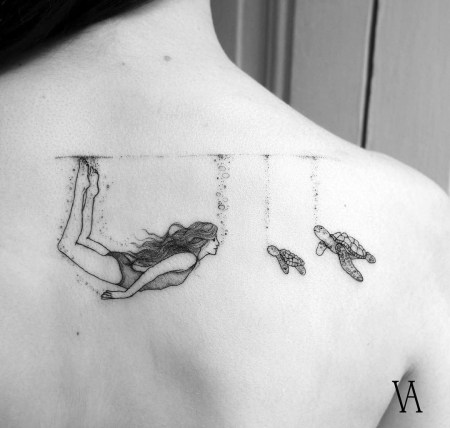
It is tattoo Tuesday . . .

This was filmed at my water aerobics class!
Or maybe you can find more information at Colossal.
It is tattoo Tuesday . . .
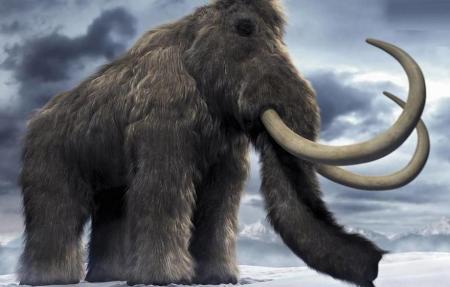
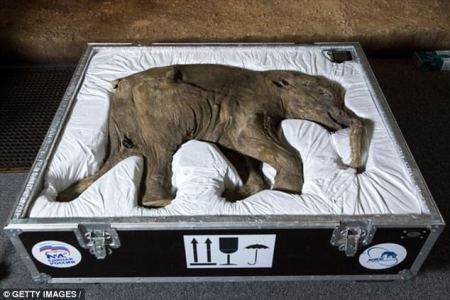
In a story from The Daily Mail . . .
Researchers are planning to modify elephant cells with frozen mammoth DNA and save the Arctic.
Lyuba, the world’s most well-preserved mammoth, went on display at the Natural History museum in 2014
A team of scientists from Harvard are planning clone the mammoths that went extinct more than 10,000 years ago, by modifying elephant cells with frozen mammoth DNA.
In this amazing plan to resurrect long-extinct beasts, scientists are using DNA from a 42,000-year old carcass.
The cloned mammoths would live in a 20,000 hectare Ice Age Safari Park.
I want one.
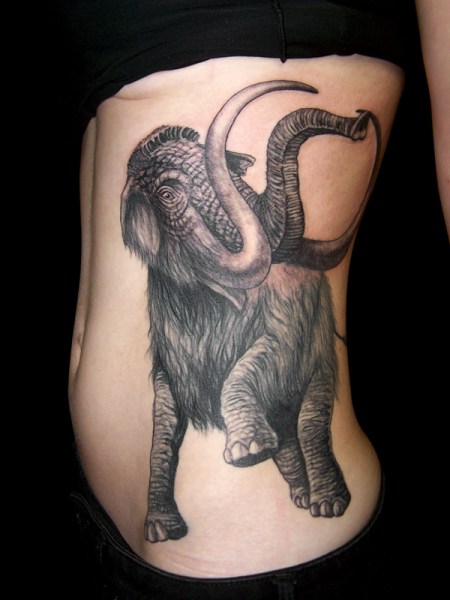
It’s Tuesday . . .
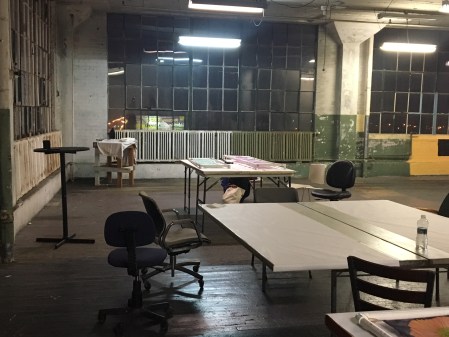
Like medieval monks we hunched over our work benches, carefully laying down black, gilt, silver or copper lines. Carefully copying to work of those who came before us.
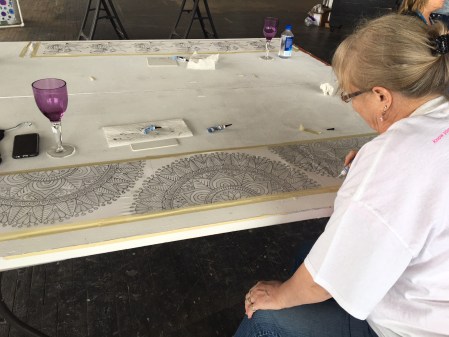
Then came the rich colors, defining and enhancing the design. Laid into the spaces on the silk like enamels on a cloisonne jewel.
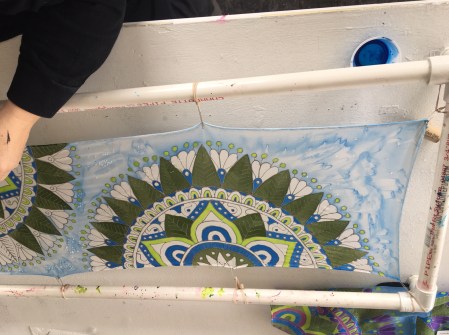
This was our silk painting workshop. Never has an afternoon passed so quickly.
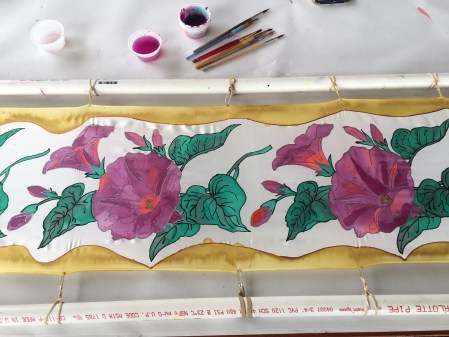
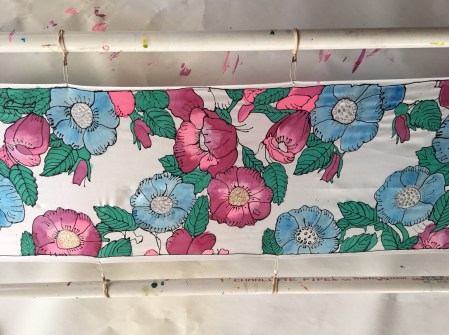
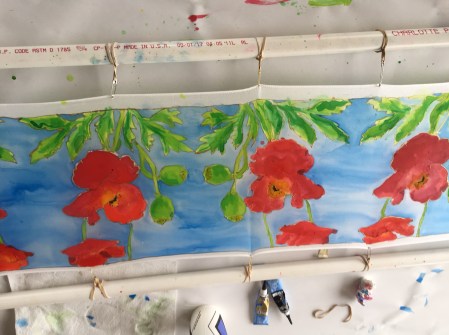
It is difficult to perceive that all three of the following scarves are exactly the same design:


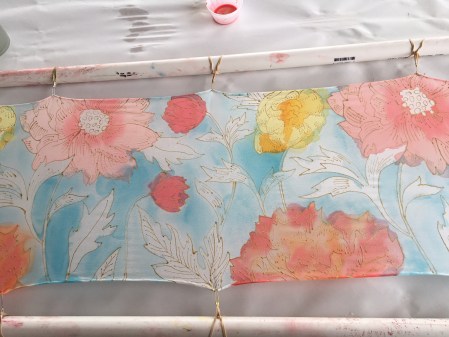
I loved it.

March 31 – beginnings of the 300 bulbs we planted
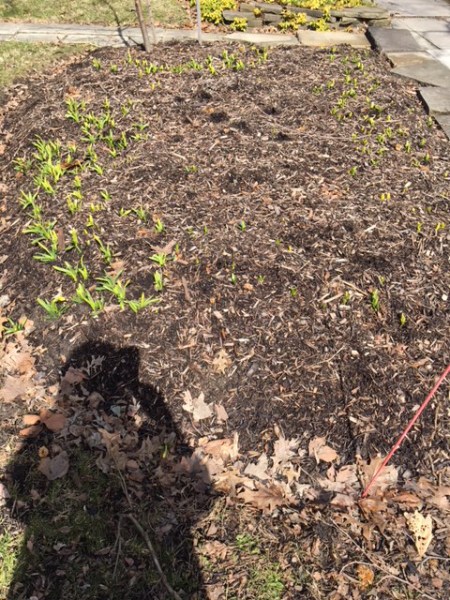
April 7 – Yay! here they come!!!

April 15 – growing by leaps and bounds

April 17 – this morning . . . covered in snow
In the Rheology Bulletin, 83(2) July, 2014, M.A. Fardin from the University of Lyon conducted a study in which he explored the rheological nature of cats concluding that cats can be either liquid or solid depending on their container . . . as described in this excerpt.
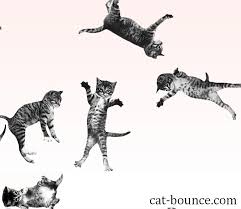

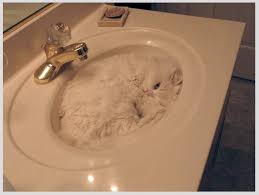
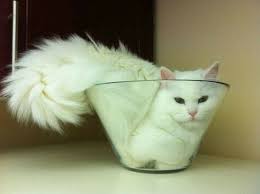
FIG.1:(a) A cat appears as a solid material with a consistent shape rotating and bouncing, like Silly Putty on short timescales. We have De >>1 because the time of observation is under a second. (b)At longer timescales, a cat flows and fills an empty wineglass. In this case we have De <<1. In both cases, even if the samples are different, we can estimate the relaxation time to be in the range τ=1s to 1min. (c-d) For older cats, we can also introduce a characteristic time of expansion and distinguish between liquid (c) and gaseous (d) feline states.[(a)Courtesy of http://cat-bounce.com, (b) http://www.dweebist.com/2009/07/kitten-in-wine-glass/, (c) http://imgur.com/gallery/UuNSR, (d) http://imgur.com/s7JtV%5D
You are currently browsing the archives for the Uncategorized category.
Firearms, fibers, any news or behaviors that make me say, "hmm, let me take another look at this."
I still miss my man, but my aim is getting better.











 Gunsmoke and Knitting