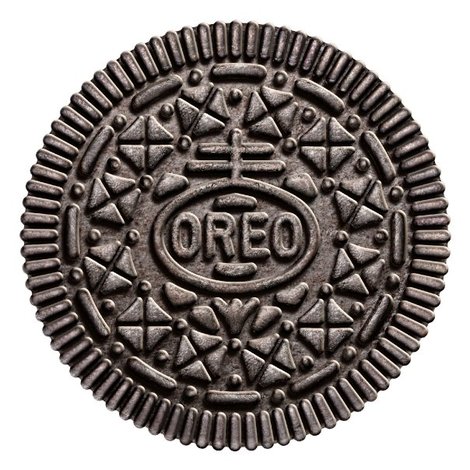
This is another in my series of discoveries on recipes from ingredients that I normally would not consider to be ingredients (such as PopTarts) and now, Oreos.
Preheat oven to 350 degrees. Cream butter and sugars together with a mixer until well combined. Beat in eggs and vanilla.
In a separate bowl mix the flour, salt and baking soda. Slowly add to wet ingredients along with chocolate chips until just combined. Using a cookie scoop take one scoop of cookie dough and place on top of an Oreo Cookie. Take another scoop of dough and place on bottom of Oreo cookie. Seal edges together by pressing and cupping in hand until Oreo cookie is enclosed with dough. Place onto a parchment or silpat lined baking sheet and bake cookies 9-13 minutes or until golden brown. Let cool for 5 minutes before transferring to cooling rack.
Strawberry Milkshake Oreo, introduced in Canada, and sold for a limited time in the United States, is an Oreo cookie with strawberryflavoring.
Strawberry Oreo, introduced in Indonesia and Malaysia.
Green Tea Oreo, introduced in China and Japan.
Lemon Ice Oreo, introduced in Japan.
Organic Oreo, introduced in 2006, are plain Oreo cookies made with organic flavor and organic sugar.
Blueberry Ice Cream Oreo, introduced in Singapore, Indonesia and Malaysia in 2010. Also sold in Thailand.
Orange Ice Cream Oreo, introduced in Indonesia, Malaysia, Singapore and Thailand in 2011.
Golden Oreo, introduced in Indonesia in 2011. Oreo’s chocolate cookies replaced by milk-flavored cookies
Double Stuf Golden Oreo, introduced in late August 2009. As the name indicates they are Double Stuf Oreos with Golden Oreo wafers instead of normal chocolate Oreo wafers.
Golden Oreo series have vanilla biscuits with other fillings like vanilla and chocolate as Uh-Oh Oreo until its rebranding in 2007. Introduced in Indonesia in 2011 with milky cookies and cream.
Oreo Heads or Tails have vanilla creme filling with a chocolate Oreo wafer on one side and a Golden Oreo wafer on the other.
Oreo DQ Blizzard Creme, a limited edition Oreo released in April–May 2010, celebrated the 25th anniversary of the Dairy Queen Blizzard
Double Delight Oreo, introduced in 1987, have chocolate cookies with two fillings, notably peanut butter and chocolate, mint and cream, and coffee and cream flavors.
Also there are ongoing fruit series: orange and mango, raspberry and blueberry, grape and peach in China.
Cool Mint Creme Oreo are a Double Stuf Oreo with a slight minty creme filling.
Peanut Butter Oreo are a Double Stuf Oreo with a peanut buttery creme filling.
Pure Milk Chocolate Covered Mint Oreo are similar to Milk Chocolate Oreo but have a mint-flavored filling.
Banana Split Creme Oreo with a light yellow banana flavor filling, were available for a limited time in 2008.
Berry Burst Ice Cream Oreo were released in April 2011.
Sugar Free Oreo, introduced in 2006, cost over twice as much as regular Oreos, and had only trace amounts of sugar, 10 fewer calories per serving, 0.5 grams more fat and 450% more fiber.
Reduced Fat Oreo, introduced in 2006, cost the same as regular Oreos, had as much sugar, 10 fewer calories per serving, about 35% less fat and the same amount of fiber.
During springtime, around Halloween, and Christmas, special edition “Double Stuf Oreo” cookies are produced with colored frosting reflecting the current holiday (blue or yellow, orange, and red or green respectively).
Chocolate and Dulce de leche Oreo, sold in Chile and Argentina, has chocolate or Dulce de Leche instead of the usual creme.
Birthday Cake Oreos were a limited-edition release in February-July 2012 to celebrate Oreo’s 100th birthday, made up of two chocolate Oreo cookies with a birthday-cake flavored filling and sprinkles inside. This edition replaced the traditional design on one of the two cookies with a birthday candle and the words “OREO 100”.
Candy Corn Oreos were a limited-edition release, made up of two golden Oreo cookies with a flavored filling that was half yellow and half orange.
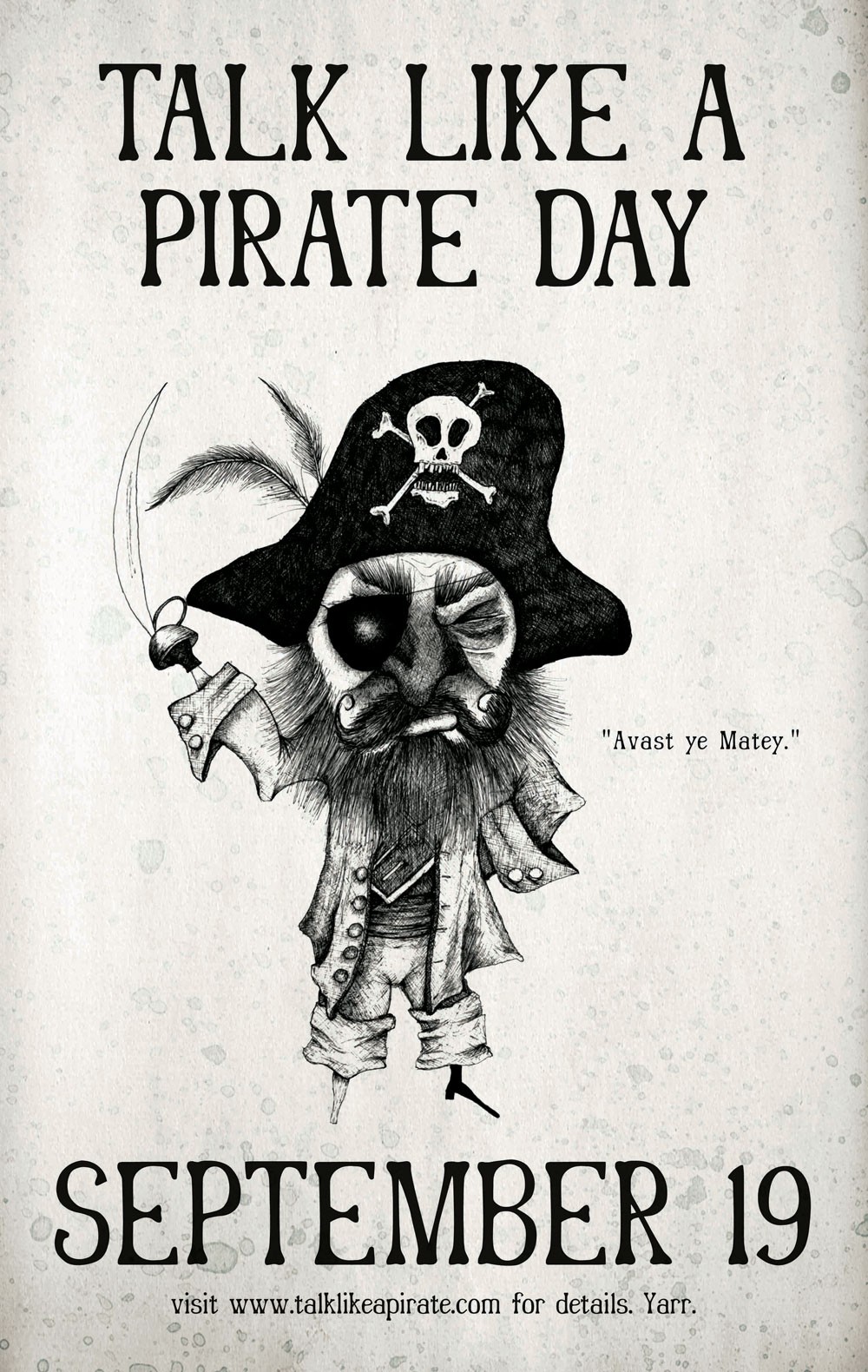
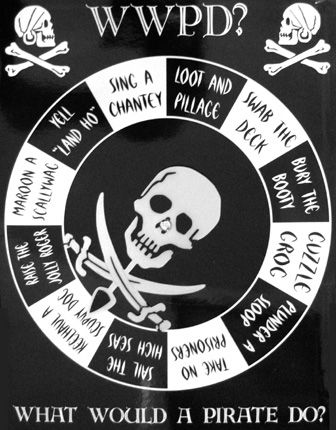
She be Talk Like a Pirate Day and thanks to Artie Smartie-Pants (Black Morty Rackham) for reminding me! Want to find out your pirate name? Take the quiz: http://www.piratequiz.com/
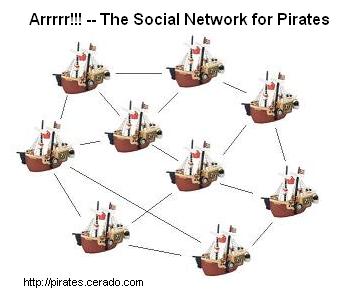
Pirate Social Networking
Recipe for Hard Tack
Mix one teaspoon of salt with one pound of flour.
Add enough water to make a very stiff dough.
Flatten the dough to about 1/2 inch and cut it into about 4 inch circles. Punch holes in each circle with a fork.
Bake in a flat pan at 250 degrees for two or three hours.
If the hard tack should happen to go bad, just remember to choose the lesser of two weevils.
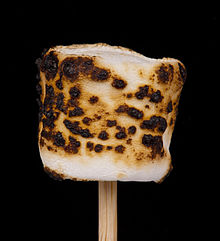
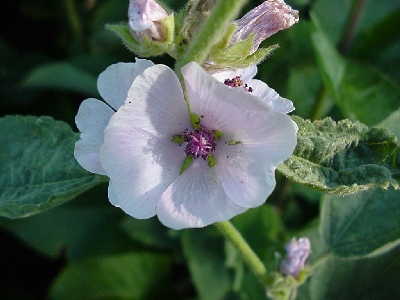
In case you missed it, August 30 was Toasted Marshmallow Day. These days marshmallows are a confection, but they started out as a medicinal product made from the extract of the marshmallow flower, a wildflower with a sticky sap. The concoction was used as a demulcent – a compound that forms a smooth or protective coating over an irritated or inflamed area. This was a time-intensive process, and as industrialization provided commercial gelatin and sugar became more readily available, recipes were developed and marshmallows became easier to create.
I’m not sure they are as good for toasting as the commercial ones, but if you are interested in creating your own marshmallows, this recipe is from Ina Garten via the Food Network. I do know from experience that these are terrific when dipped in Belgian chocolate. There are also lots of places – many of them on the internet – that sell gourmet marshmallows in flavors such as White Russian, Key Lime, and Aztec Chocolate. Don’t forget to save room for s’more.
Marshmallows
Prep Time: 20 min
Prep Time: 8 hr
Cook Time: 10 min
Level: Easy
Yield: 20 to 40 marshmallows
Ingredients
3 packages unflavored gelatin
1 1/2 cups granulated sugar
1 cup light corn syrup
1/4 teaspoon kosher salt
1 tablespoon pure vanilla extract
Confectioners’ sugar, for dusting
Directions
Combine the gelatin and 1/2 cup of cold water in the bowl of an electric mixer fitted with the whisk attachment and allow to sit while you make the syrup.
Meanwhile, combine the sugar, corn syrup, salt, and 1/2 cup water in a small saucepan and cook over medium heat until the sugar dissolves. Raise the heat to high and cook until the syrup reaches 240 degrees on a candy thermometer. Remove from the heat.
With the mixer on low speed, slowly pour the sugar syrup into the dissolved gelatin. Put the mixer on high speed and whip until the mixture is very thick, about 15 minutes. Add the vanilla and mix thoroughly.
With a sieve, generously dust an 8 by 12-inch nonmetal baking dish with confectioners’ sugar. Pour the marshmallow mixture into the pan, smooth the top, and dust with more confectioners’ sugar. Allow to stand uncovered overnight until it dries out.
Turn the marshmallows onto a board and cut them in squares. Dust them with more confectioners’ sugar.
Or, if you prefer, about what did I change my mind? I was revving up to do a language usage rant on pet peeves, when I came upon this video of Stephen Fry on language. Stephen is always fun and the graphics in this video are brilliant.
Thanks to Just English for this reference, and regarding my rant – never mind.
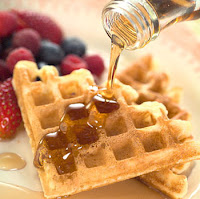
Just when you pancake it any longer, it’s time to celebrate – National Waffle Day. On August 24, 1869, the first waffle iron was patented in the U.S. by Cornelius Swarthout.
13th Century A.C. – Ancient Greeks cook flat cakes between two metal plates. These early waffles were called obleios and were primarily savory in nature, prepared with cheeses and herbs.
1620 – The pilgrims bring Dutch “wafles” to America.
1735 – The word “waffle” – with two “f”s – appears in English print for the first time.
Late 1800’s – Thomas Jefferson returns to the U.S. from France with a long handled, patterned waffle iron.
1869 – Cornelius Swarthout patents the first U.S. Waffle Iron.
1953 – Frank Dorsa’s Eggo Frozen Waffles are sold in Supermarkets for the first time.
1964-65 – Brussels restaurateur Maurice Vermersch brings his wife’s Brussels Waffle recipe to the World’s Fair in New York. The fluffy yeast-infused waffle becomes a huge hit and becomes known as the Belgium waffle.
















 Gunsmoke and Knitting