Reblogged with thanks from Why Because Science.
Ouch.

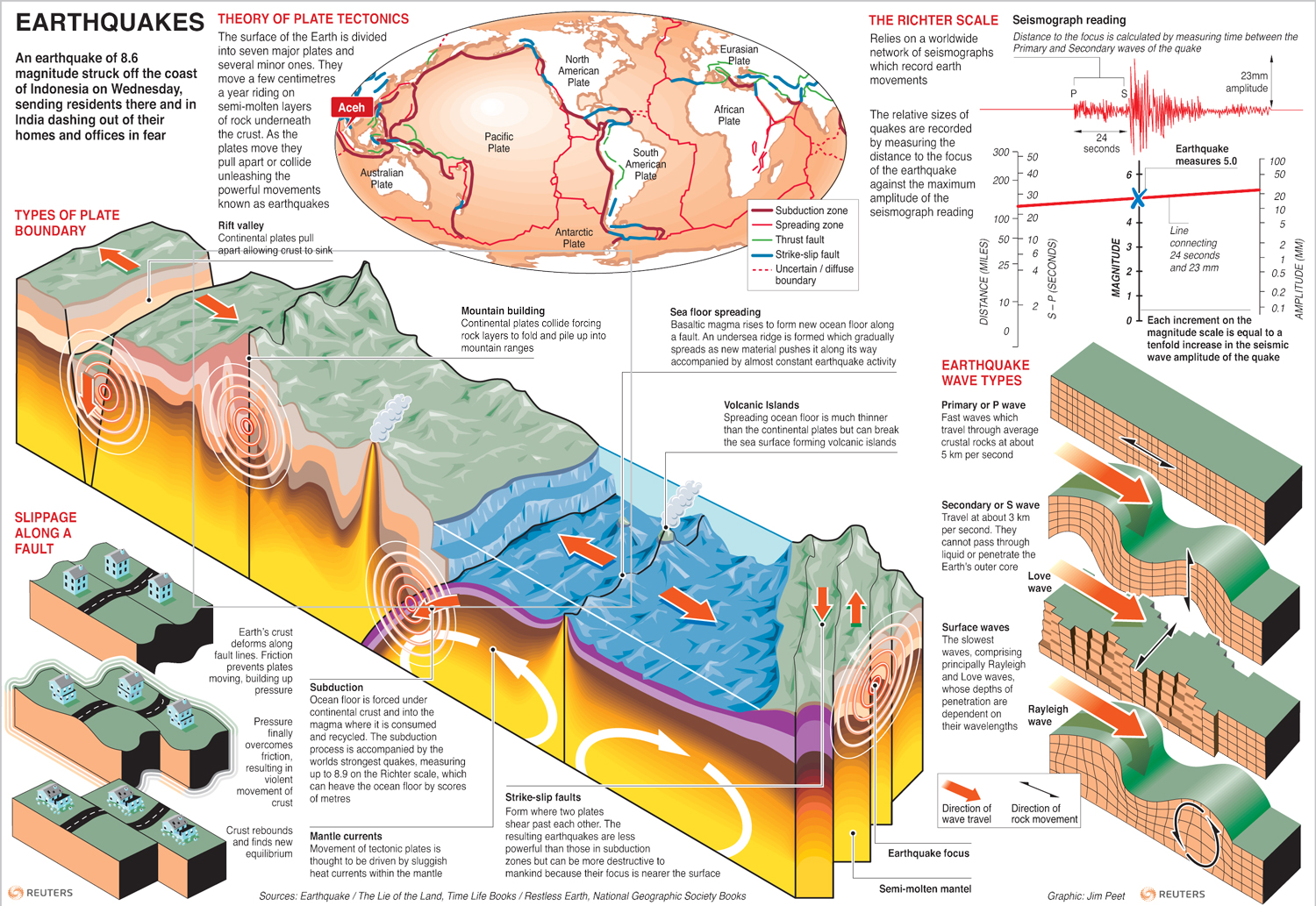
Get ready to rumble – there’s a whole lot of shaking going on because today is Richter Scale Day. April 26 is the birthday of Charles Richter (born in 1900 in Overpeck, Ohio) who developed the eponymous scale for comparing earthquakes. Richter repeated emphasized that there is no upper limit to the scale, however each level of the scale represents a ten-fold increase in magnitude from the previous level. The most powerful earthquake recorded was the 1960 Chilean earthquake that measured 9.5 on the scale.
Magnitude differs from intensity, as explained on the USGS earthquake site:
Magnitude and Intensity measure different characteristics of earthquakes. Magnitude measures the energy released at the source of the earthquake. Magnitude is determined from measurements on seismographs. Intensity measures the strength of shaking produced by the earthquake at a certain location. Intensity is determined from effects on people, human structures, and the natural environment.
For a comparison of magnitude versus intensity, look here.

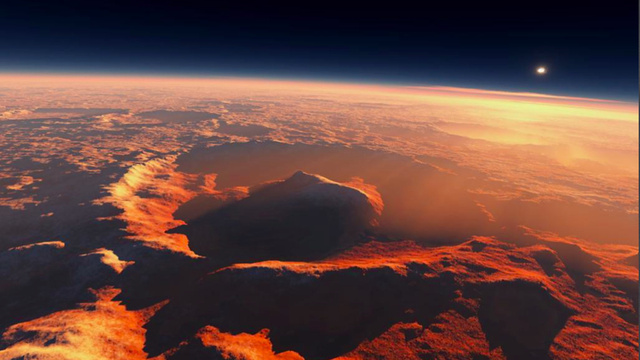
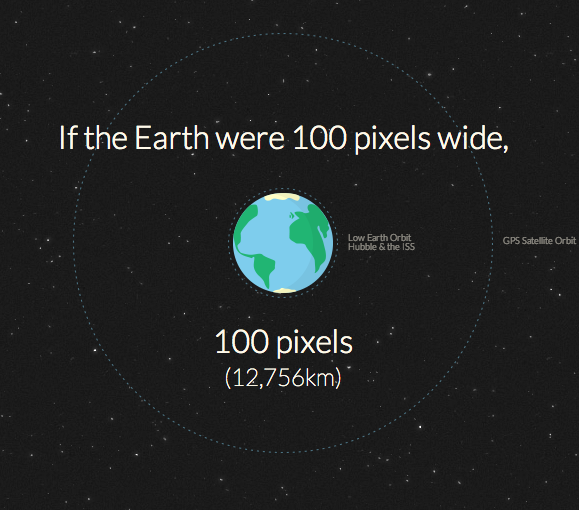
To Mars – at roughly and virtually 3 times the speed of light.
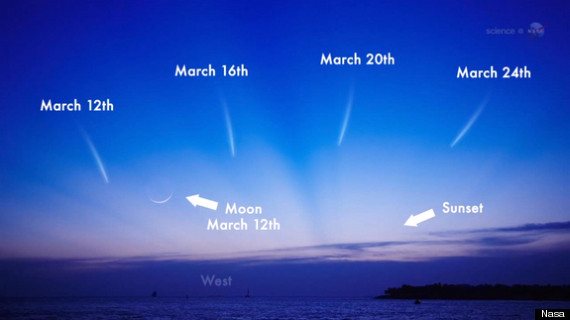
Thanks to HMS Defiant for this link to Comet PANSTARRS that will be visible soon in the northern hemisphere. Visibility here will depend a lot on the weather, but I will be looking for it.
After several days of temps in the unseasonably high 60s, it is snowing again with a 40 degree drop in temperature overnight.
Here is something else to think about – from HMS Defiant.
 The Inuvik Sunrise Celebration – the annual celebration of the return of the sun after an absence of about 28 days. A bonfire and fireworks add to this celebration on the Saturday closest to the sunrise.

More about Inuvik at L’Encyclopedie canadienne.
Reblogged from HMS Defiant
Forecasts are great planning tools. We should make use of them and not just for planning our trips.
I’m taking sunblock 10 billion just in case this is the Virginia Cleveland forecast too.
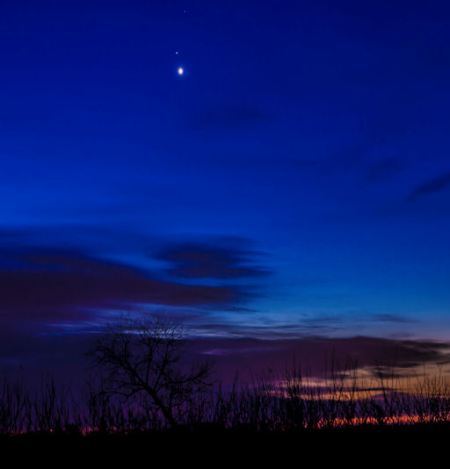
Besides the obvious benefits of a 7:00 am yoga class sometimes I get to see something like this, as I did last Wednesday. This is Venus in the early morning sky.

And on my way home from work that evening, I saw the new moon in the old moon’s arms. It’s a little hazy, but was still quite lovely. The light below the moon is a Lifeflight helicopter heading for the Cleveland Clinic.
Photo credit Venus: Cole Clark on Spaceweather
This post is a re-blog from Lights in the Dark – always a good read!

Suomi NPP satellite image of North and South America at night
In daylight our big blue marble is all land, oceans and clouds. But the night is electric.
This image of North and South America at night is a composite assembled from data acquired by the Suomi NPP satellite in April and October 2012. The new data was mapped over existing Blue Marble imagery of Earth to provide a realistic view of the planet.
The nighttime view was made possible by the new satellite’s “day-night band” of the Visible Infrared Imaging Radiometer Suite. VIIRS detects light in a range of wavelengths from green to near-infrared and uses filtering techniques to observe dim signals such as city lights, gas flares, auroras, wildfires, and reflected moonlight. In this case, auroras, fires, and other stray light have been removed to emphasize the city lights.
Although the view looking down from space is of a sparkling show, the downside of course is light pollution over major metropolitan areas which impede the view of the night sky from the ground. (Find out more at the International Dark Sky Association site.)
Read more (and watch a video of these nighttime images of Earth) below:
“Artificial lighting is a excellent remote sensing observable and proxy for human activity,” says Chris Elvidge, who leads the Earth Observation Group at NOAA’s National Geophysical Data Center. Social scientists and demographers have used night lights to model the spatial distribution of economic activity, of constructed surfaces, and of populations. Planners and environmental groups have used maps of lights to select sites for astronomical observatories and to monitor human development around parks and wildlife refuges. Electric power companies, emergency managers, and news media turn to night lights to observe blackouts.
This video uses the Earth at night view created by NASA’s Earth Observatory with data processed by NOAA’s National Geophysical Data Center and combined with a version of the Earth Observatory’s Blue Marble: Next Generation.
See more images and videos here: http://earthobservatory.nasa.gov/NightLights
NASA Earth Observatory image by Robert Simmon, using Suomi NPP VIIRS data provided courtesy of Chris Elvidge (NOAA National Geophysical Data Center).
During a wander on the web I came across these terrific tattoos, and the book in which they are described, and the author. The book is Science Ink and the author is Carl Zimmer. Zimmer is a renowned and prolific author of books, articles and The Loom, a blog hosted by Discover Magazine.
Tattoos are fascinating to me – running the gamut from “why would anyone do that?” to “oh, look, that is really cool.” As a science geek, I find the tattoos in the book to be wonderful expressions of creativity by their “science obsessed” owners. I liked the story about the woman who works with squids and, ostensibly to help her remember squid anatomy, had one tattooed on her foot and ankle. I am not sure about using it as an aide-memoire, but it is a very cool tattoo of a squid on her foot and ankle.
It also makes me wonder what kinds of tattoos other occupations would inspire. What would an accountant’s tattoo look like?
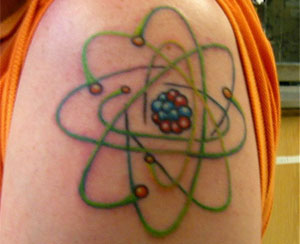
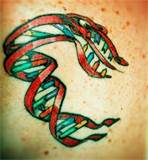

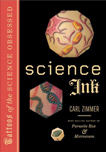
To see more, go buy the book. I did.
Firearms, fibers, any news or behaviors that make me say, "hmm, let me take another look at this."
I still miss my man, but my aim is getting better.








 Gunsmoke and Knitting