This is what they looked like in late May, 2-3 weeks after planting.
This is what they looked like in mid-June, shortly before we went on vacation.
They have produced flowers.
Some of the flowers look as if they are making potato fruit. I’ll have to keep and eye on these.
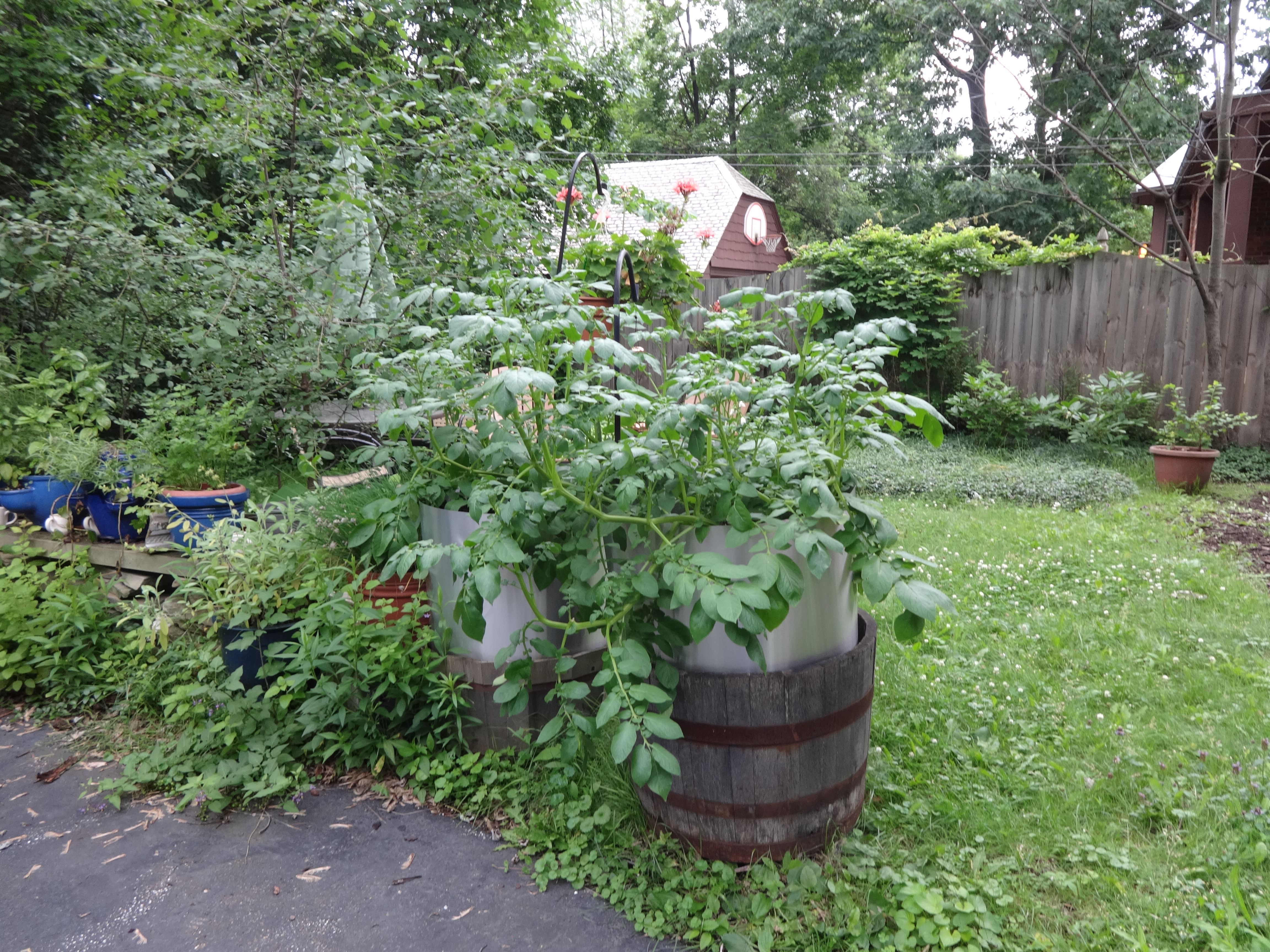
This is what they looked like when we returned at the end of June.
The container potatoes have several advantages the chief one is that since they grow underground, the deer, bunnies, etc., are not eating them. Some little rascals beheaded all of my hosta flower stalks and I have given up on growing tomatoes – the deer eat them.
I am getting a kick out of seeing how potatoes grow.
And they are still growing. I hope we get potatoes and not just vines – but the vines are impressive!
Volcano Calbuco erupted on April 22, 2015, for the first time in four decades. Located close to the cities of Puerto Varas and Puerto Montt in southern Chile. We (Jonas Dengler and Martin Heck) spend the prior couple of days on the neighboring volcano Osorno (~20km linear distance) shooting timelapses. After an amazing night under the nightsky we took the cable car downwards after a delay caused by repairs. Already late we headed south to catch the ferry on Routa 7 down to Patagonia. After 10min on the ferry we noticed a massive, almost nuclear looking cloud boiling upwards just were we left a few hours ago. Frenetically looking for a good outlook we then rushed to the only non-forested place to get a decent view of the show. We quickly put every bit of camera-equipment we could find on the constantly growing mushroom-cloud. We shot timelapses in 8K and 4K with a Pentax 645Z and Canon 6D. On the A7s we shot 4K video to the Shogun using Kingston HyperX SSDs. We filled almost all of our memory cards in the prior night so I had to do backups while shooting all this stuff.
This was for sure the most incredible show I’ve ever seen. I think this is a once in a lifetime event and I am so happy that we were able to capture it in all its glory.
In a lab at the University of Alaska Fairbanks, hibernating arctic ground squirrels pose medical mysteries. The species can lower its body temperature below freezing and avoid serious head injuries while in hibernation, which lasts seven months.
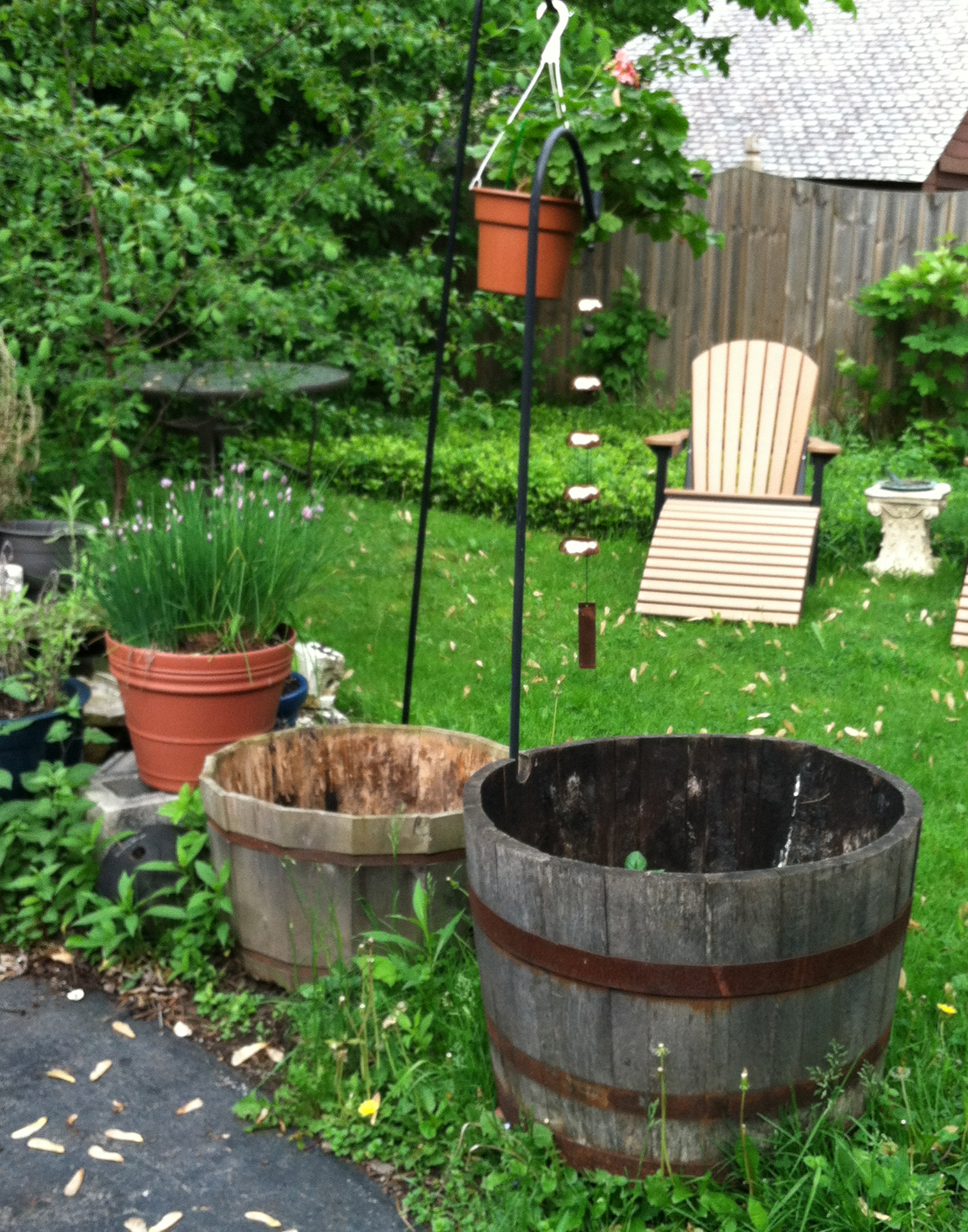
I planted potatoes in these two half barrels. In the smaller one, I planted white potatoes –
In the larger barrel, German butter ball potatoes –
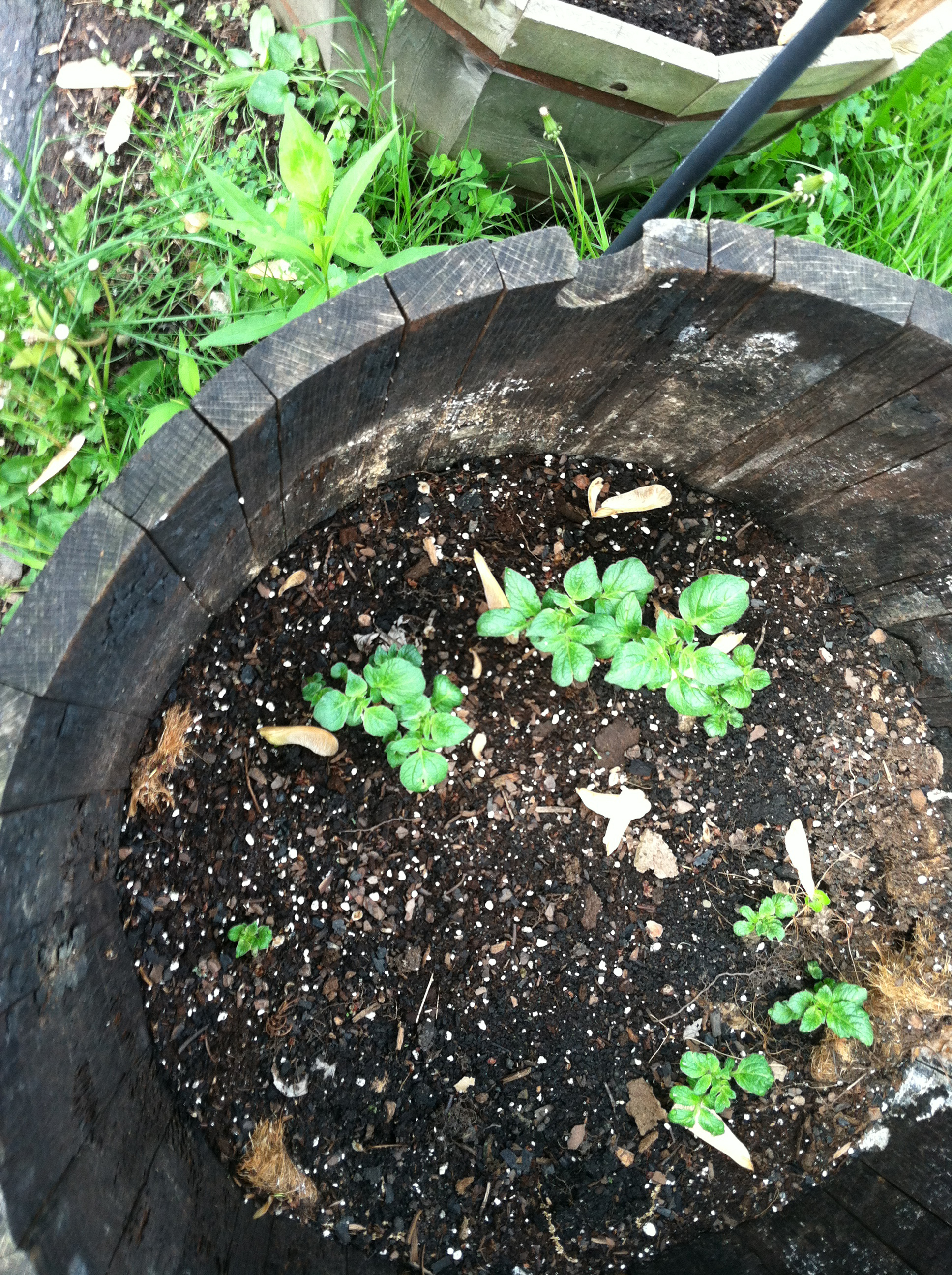
This is what they look like now –
The white potatoes will mature in about 60 days; the German butter balls will take about 130 days. This is the first time I have tried growing potatoes. I am using Happy Frog potting soil. Here’s hoping.
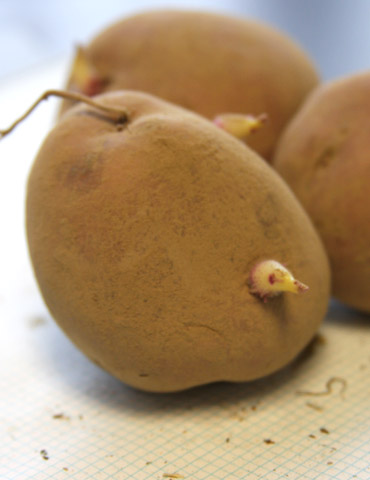
I was surprised to find a number of potato tattoos:
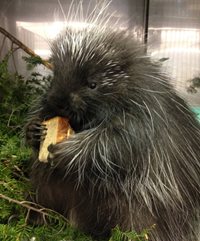
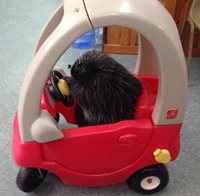
Lancelot , a North American Porcupine, is a recent addition to the Cleveland Museum of Natural History’s live animal program. He is round and cute, but hardly cuddly. And he drives a car!
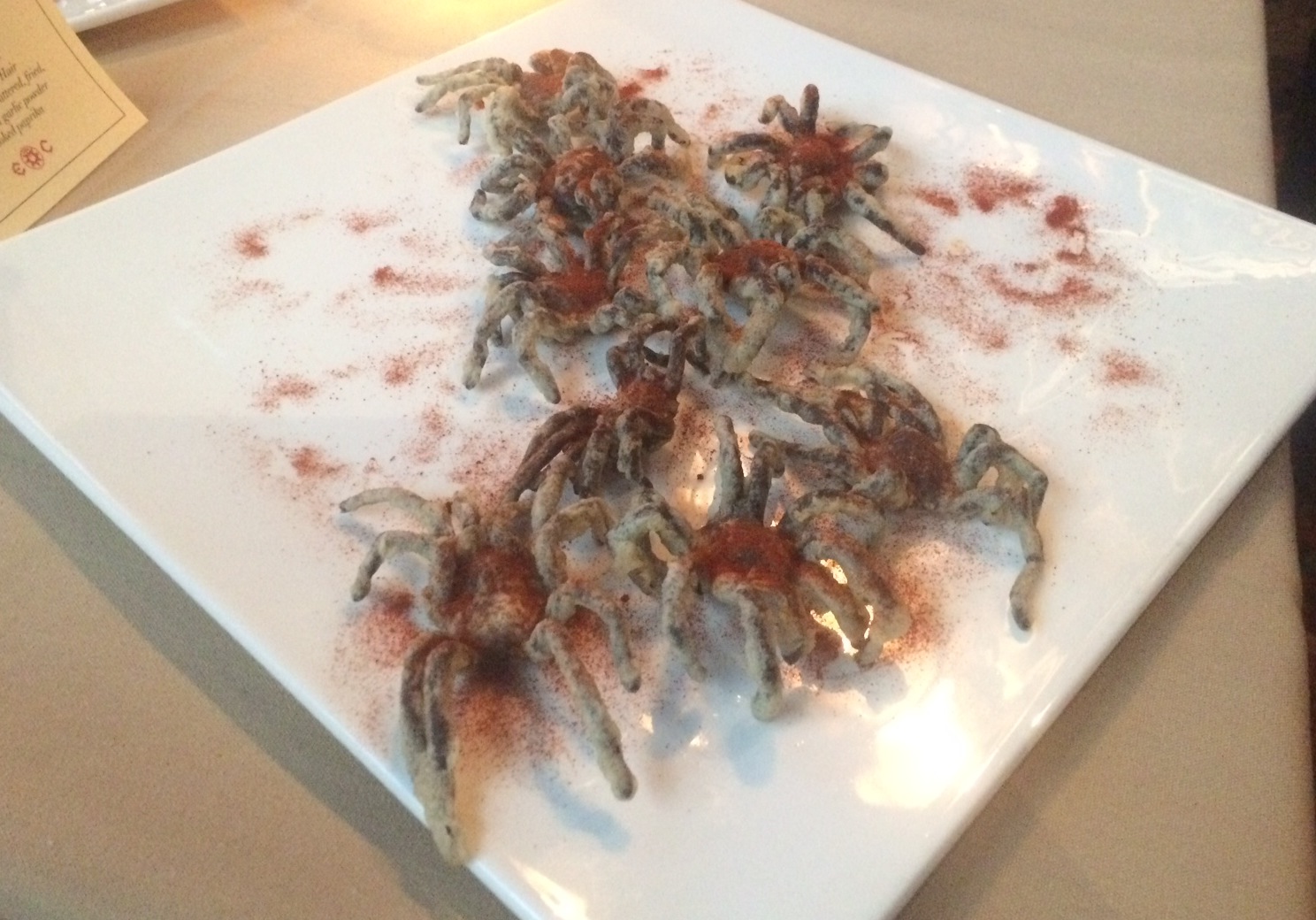
This year, however, I am happy to give the dinner a pass. The menu, always somewhat exotic in nature, this year featured an array of insects and other arthropods.
These are fried tarantulas and the red powder is paprika.
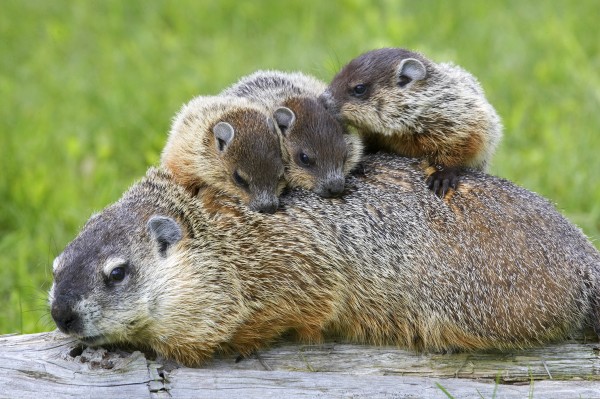
The groundhog (Marmota monax), also known as a woodchuck, whistle-pig, or land-beaver in some areas, is a rodent of the family Sciuridae, belonging to the group of large ground squirrels known as marmots.Other marmots, such as the yellow-bellied and hoary marmots, live in rocky and mountainous areas, but the groundhog is a lowland creature. It is widely distributed in North America and common in the northeastern and central United States and Canada. Groundhogs are found as far north as Alaska, with their habitat extending southeast to Georgia. – Wikipedia
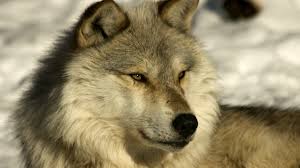
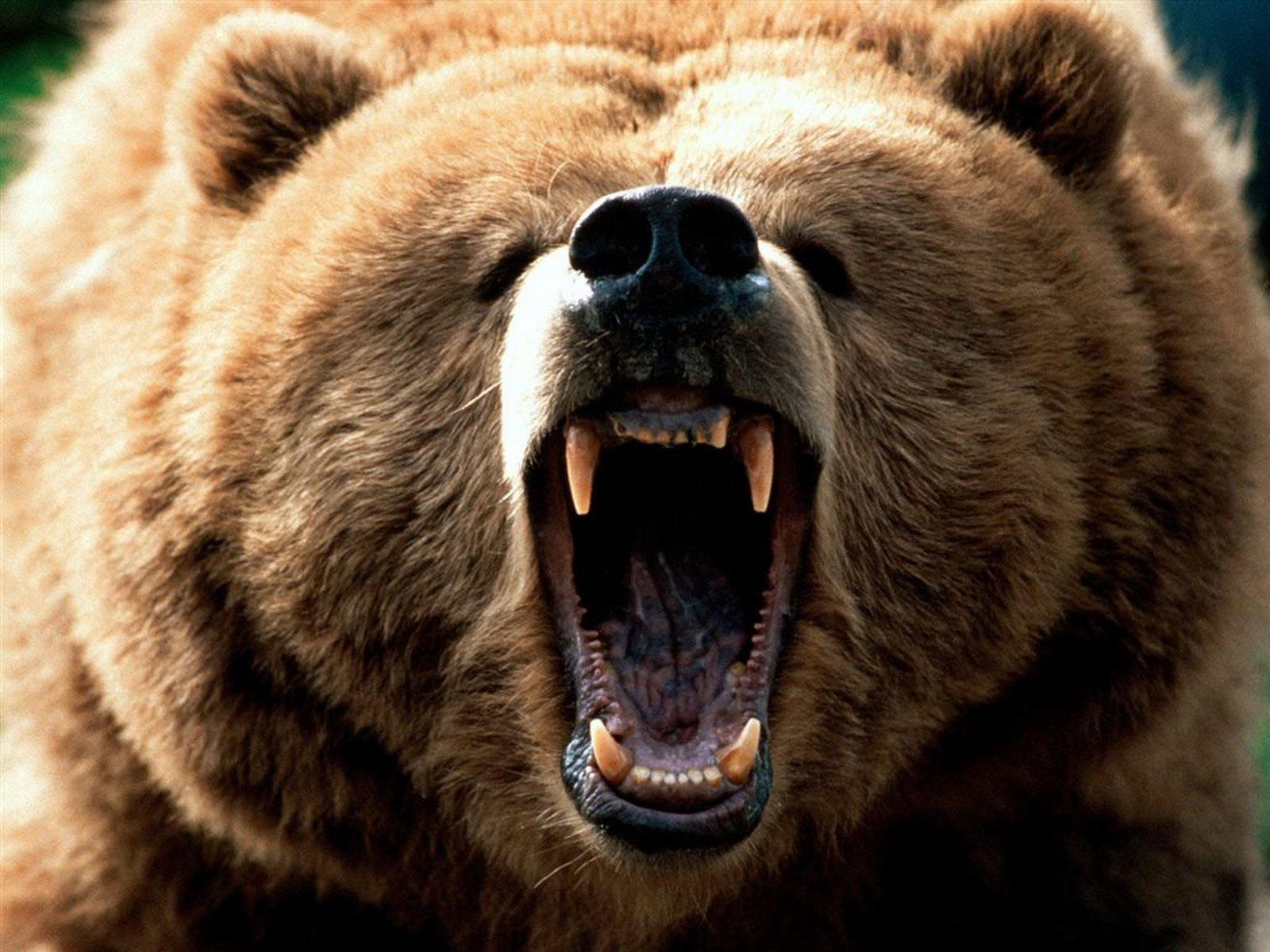
When I was a kid, wolves were the beasts that haunted my nightmares. Recurring nightmares about tricky wolves; wolves that wore blue overalls. I think Looney Tunes has a lot to answer for.
When I got older I realized that the critter above could be the real nightmare. Then I read about this guy.
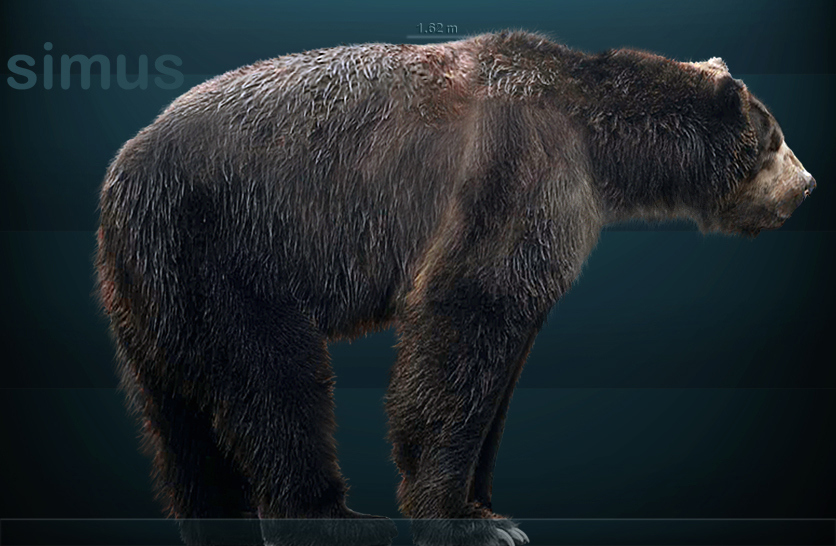
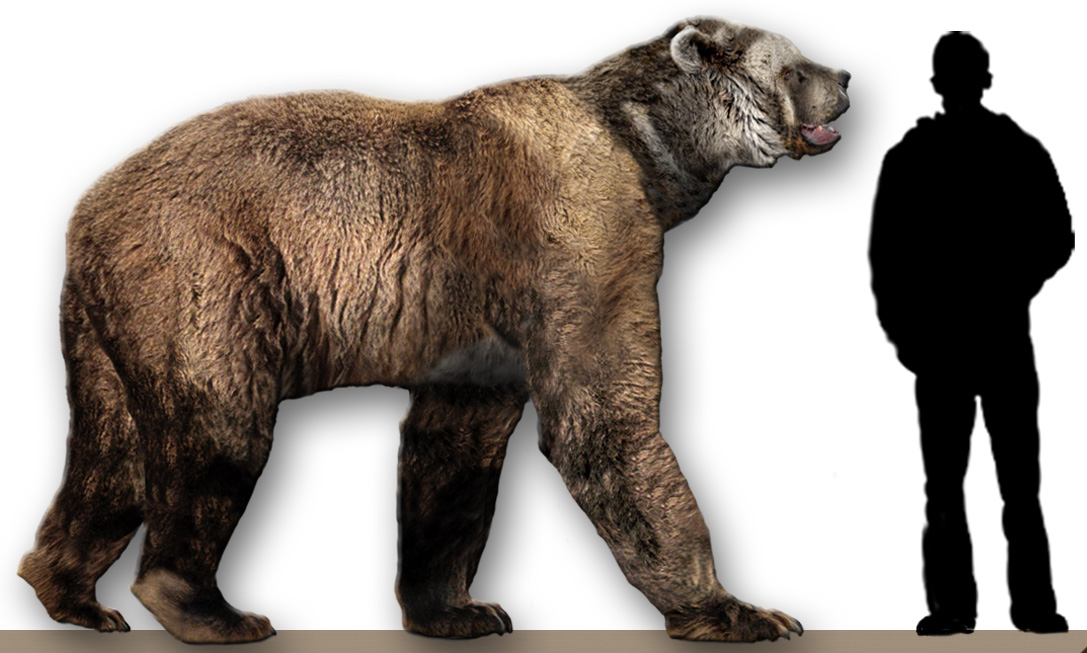
The giant short-faced bear kind of blows any other bears right out of the water. This gigantic bear stood about 6.5 feet while on all four legs and was about 11-12 feet tall when standing upright on its hind legs. Evidence of members of this bear family are found in both North and South America. It was truly an impressive creature. Fossil evidence indicates that humans did not move into this bear’s environment until after its extinction. It also seems to have been the alpha predator because of the lack of fossil evidence for other large carnivores such as lions and scimitar cats in areas where short-faced bear traces are found.
I love bears, albeit with the greatest respect. I would not want to meet this one.

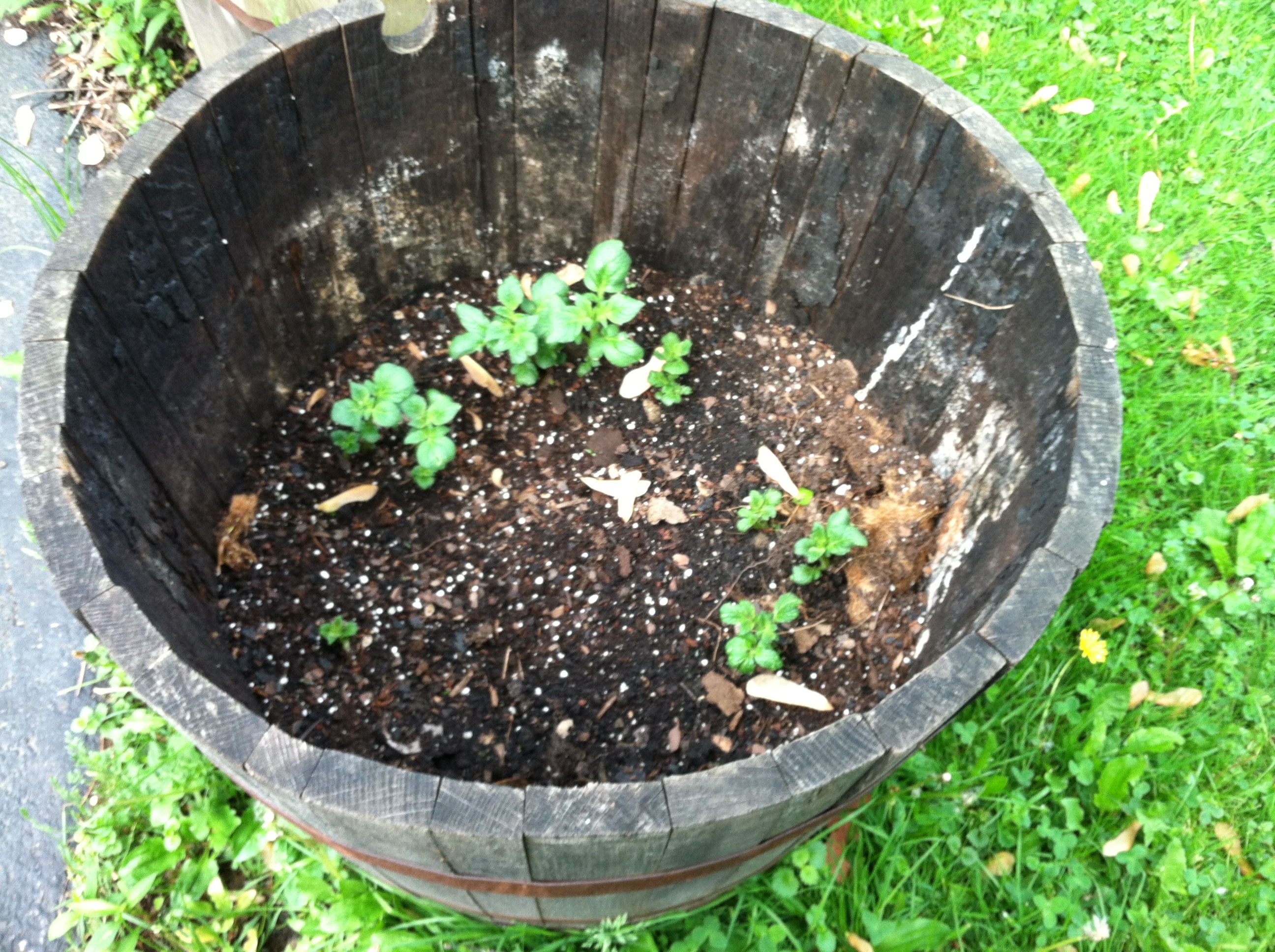 This is what they looked like in late May, 2-3 weeks after planting.
 This is what they looked like in mid-June, shortly before we went on vacation.
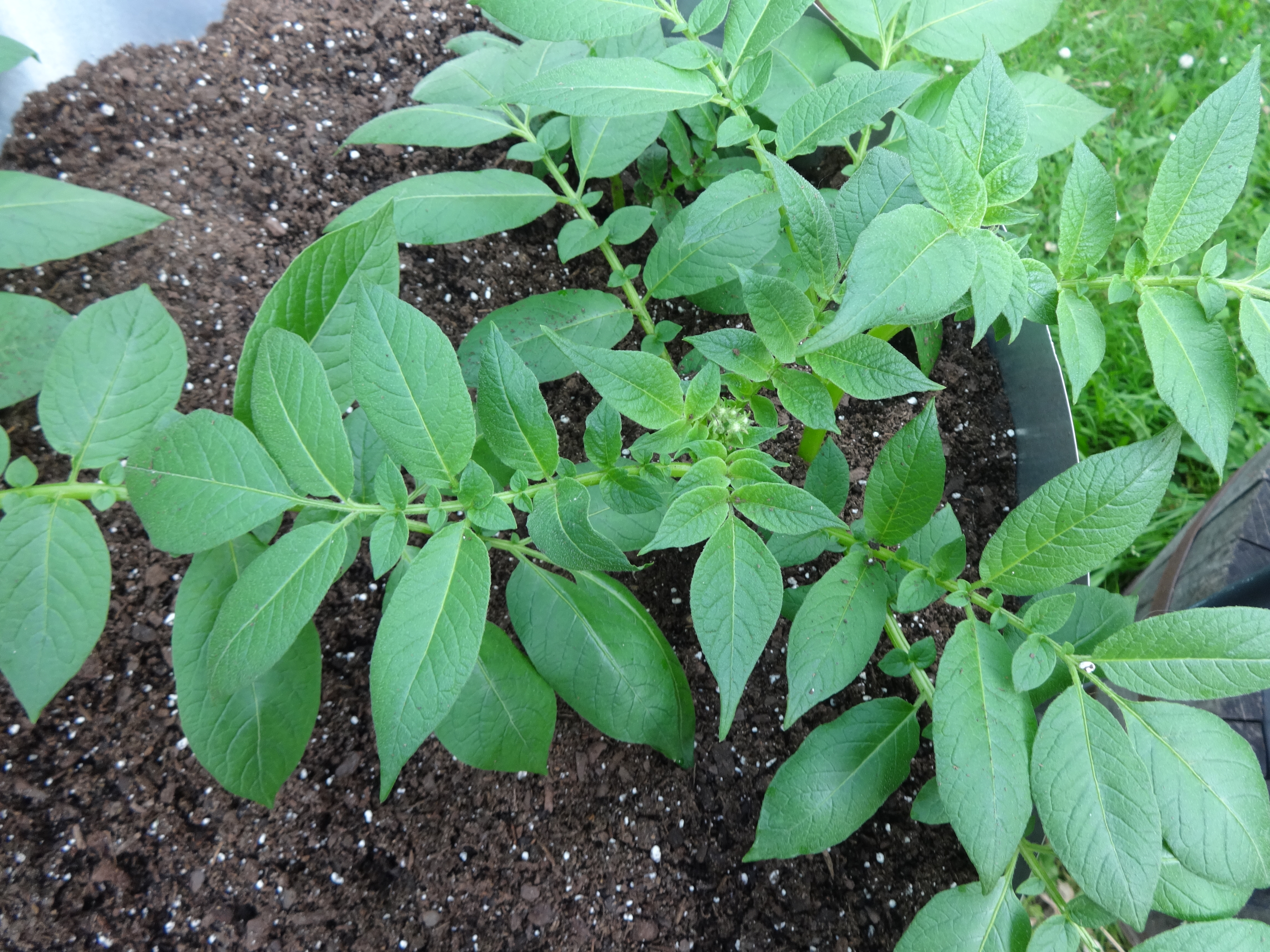 They have produced flowers.
 Some of the flowers look as if they are making potato fruit. I’ll have to keep and eye on these.
 This is what they looked like when we returned at the end of June.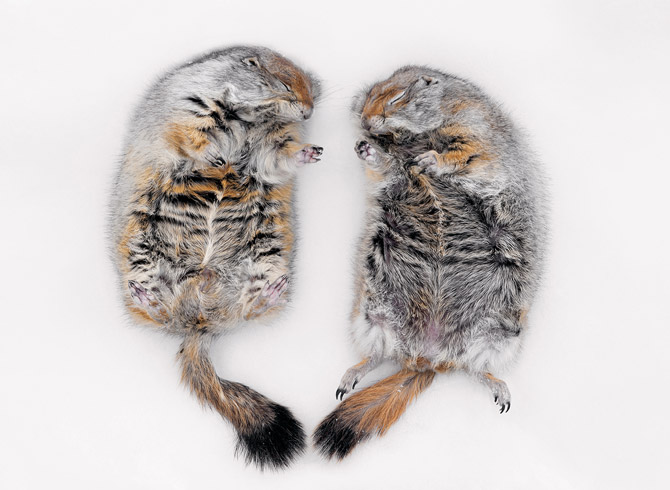


















 Gunsmoke and Knitting
