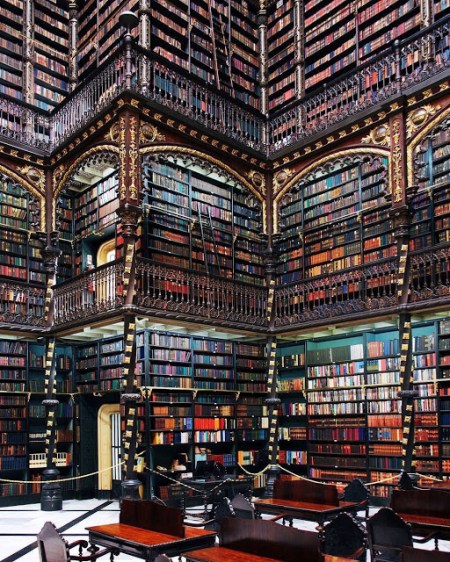
The Royal Portuguese Cabinet of Reading in Rio de Janeiro, Brazil
It’s Tuesday . . .

It’s Tuesday . . .
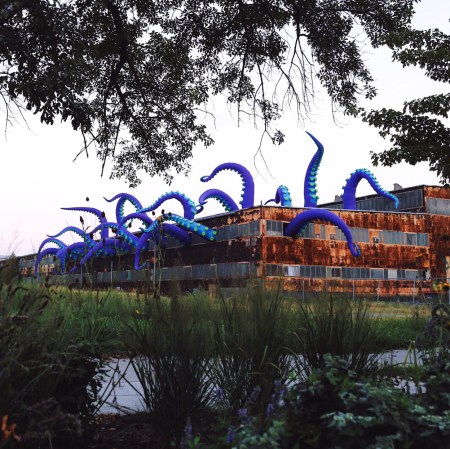
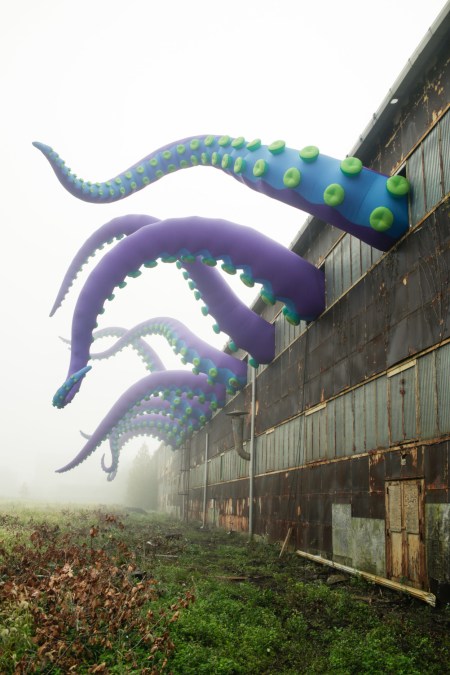
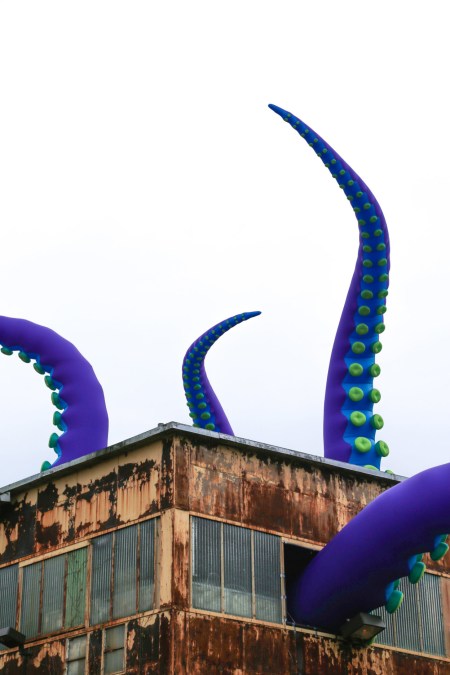
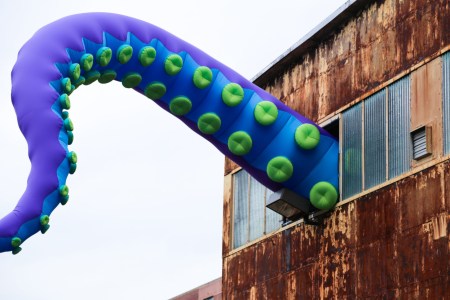
Huge sea monster tentacles protrude from the roof and windows of a warehouse at the former Philadelphia Navy Yard. The installation was perpetrated by UK artists Filthy Luker and Pedro Estrellas. They call it, Sea Monsters HERE. I think it is in a rather fitting location.

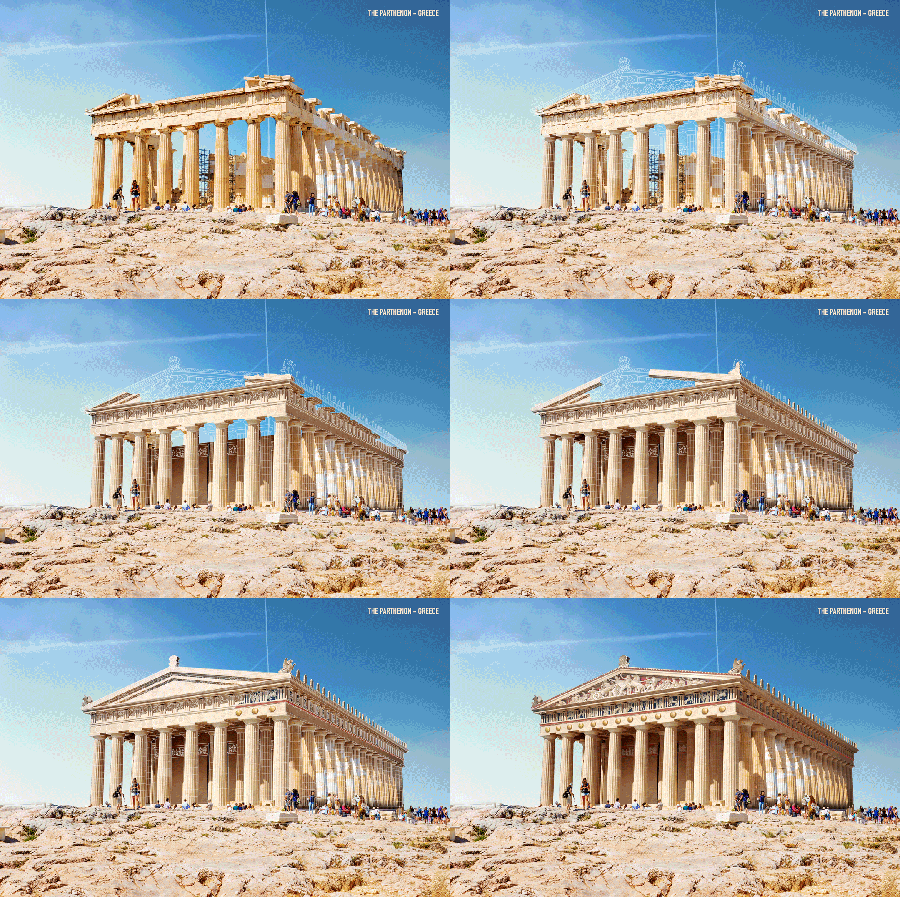
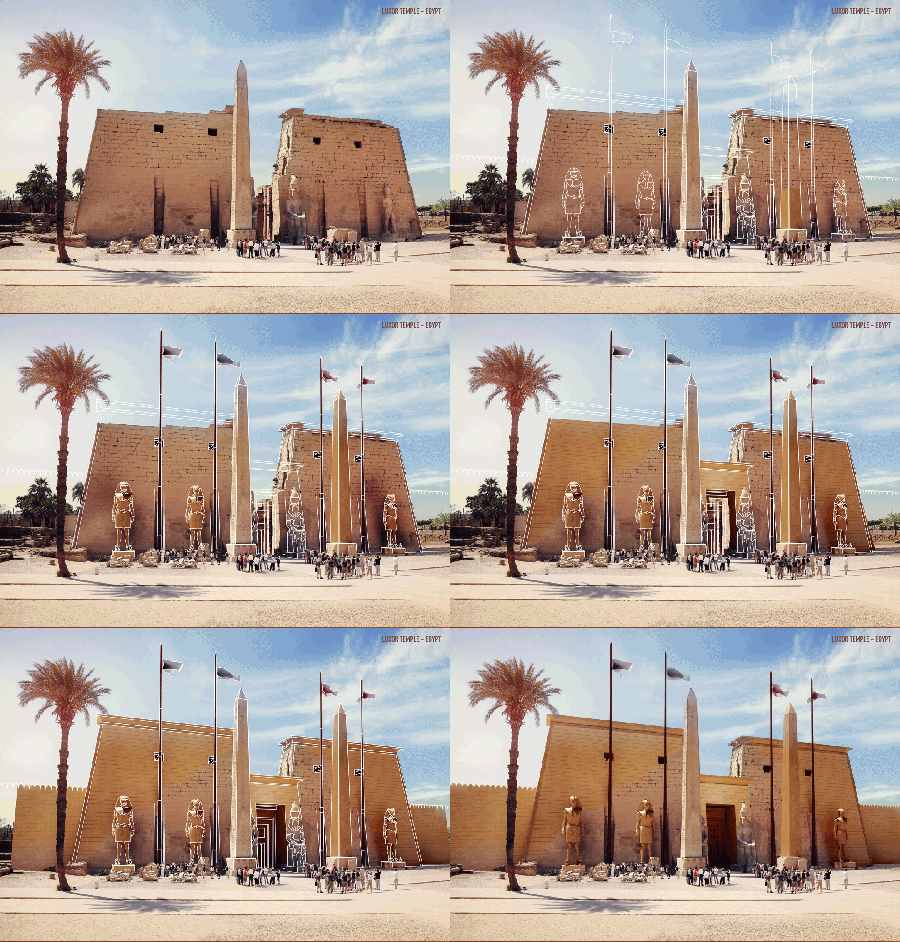
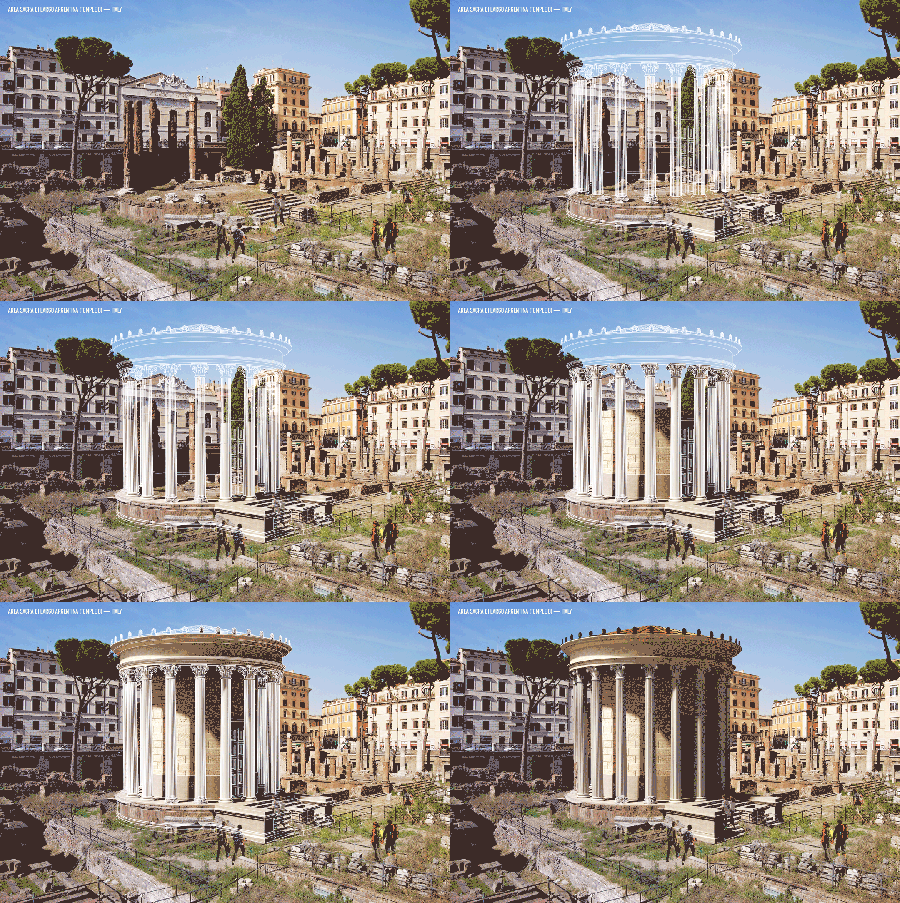
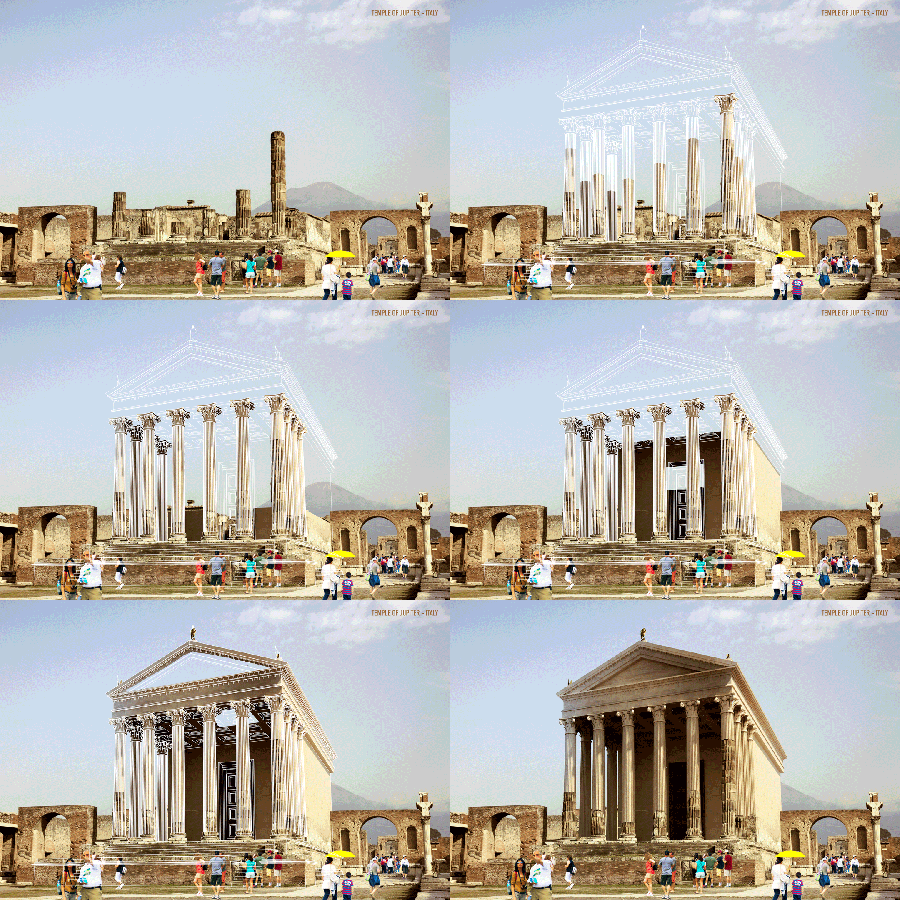
“Today, views of the world’s ancient architectural wonders are firmly based in their current state of ruin, leaving to visitors’ imaginations the original glory of structures like the Parthenon, Pyramid of the Sun, and Temple of Luxor. NeoMam, in a project for Expedia, has resurrected several ancient buildings through a series of gifs. In a matter of seconds, centuries of natural and intentional damage and decay are reversed to reveal a rare glimpse at what the original structures would have looked like. The creative contractors behind the labor-intensive renderings are Maja Wrońska and her husband Przemek Sobiecki, who works as This Is Render.”




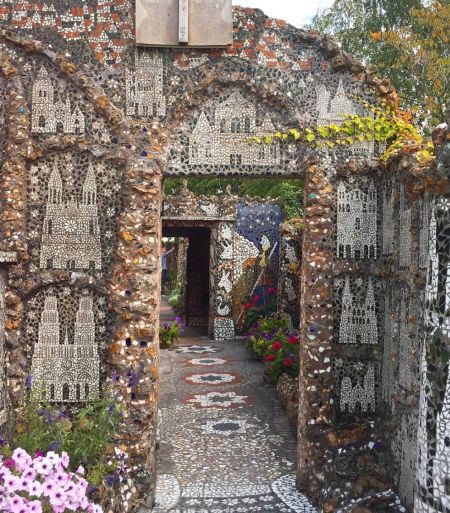
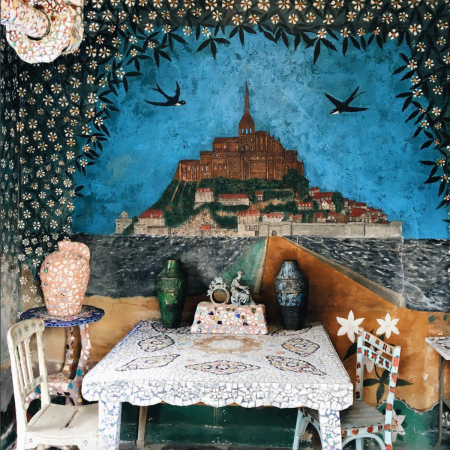
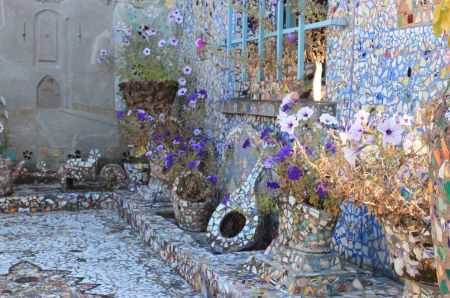
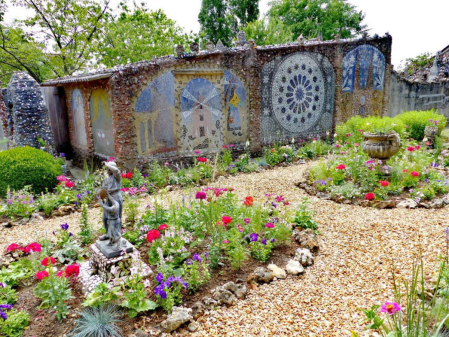
“Raymond Isidore didn’t plan on becoming an artist—let alone a sculptor who would go on to cover nearly every surface of his small home with glittering mosaics. But after a fateful stroll in 1938, when a shiny piece of broken crockery caught his eye, Isidore devoted the majority of the remainder of his life on the outskirts of Chartres, France, to the creation of one of the world’s most unique homes—an ecstatic expression of the untrained artist’s bursting imagination.
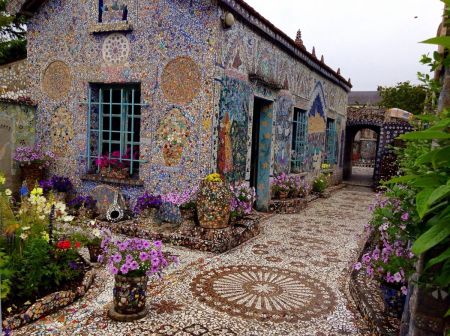
Isidore was born into a humble family in Chartres in 1900, and as a young man landed a position as the caretaker of a local cemetery. By all accounts, he led a provincial life; he married a woman roughly 10 years his senior and bought a humble plot of land not far from the famed Chartres Cathedral. There, Isidore built what began as a simple cottage, but soon transformed into his masterwork, known as La Maison Picassiette, which still stands and is accessible to the public today.”

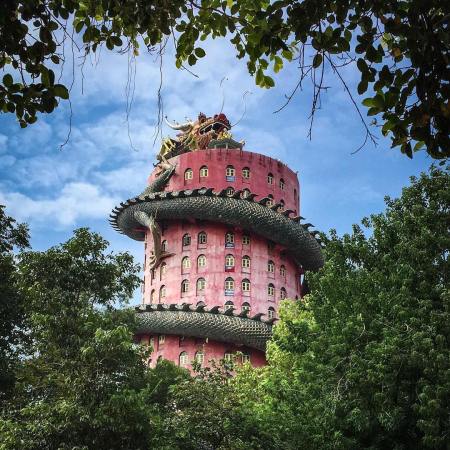
The Samphran district of Thailand holds one of the most unusual Buddhist temples found in the country. The bright pink temple, called Wat Samphran, stands 17-stories high and is wrapped in a scaly green dragon. More here from Colossal.
Reblogged from Last Word on Nothing by Craig Childs
 In caves and rock walls of the southern Utah desert, pictographs have been painted, added to the backs of clamshell-shaped sandstone enclosures. Many are noted to have acoustic properties, meaning these ancient, Indigenous images seem to be correlated with the way sound reflects around them. I’ve spoken in a normal voice back and forth from one sheltered rock art panel to another an eighth of a mile downcanyon. The way sound spreads and is refocused, we could hear each other’s every word.
James Farmer, from the Utah Rock Art Research Association, wrote that panels from the ghostly and enigmatic Barrier Creek tradition in Utah (pictured above) contain what he sees as thunderstorm motifs. At one of these Barrier Creek panels, he witnessed a cloudburst with thunder, waterfalls, and falling boulders. He wrote about the intensification of sound from the storm around the rock art, “it seems inconceivable to me that any ancient archaic hunter-gatherers witnessing a similar event would not have been just as astonished as me, and would have naturally invested the location with divine, supernatural powers.”
The nascent field of “archaeoacoustics” studies the way sound and archaeological sites interact. I look at this as not just an ancient feature, but one that we walk through everyday. Cathedrals and capital domes have been noted for the way they capture and amplify sound. By happenstance or not, resonance is part of the way we relate to architecture, whether human made or carved by nature.
Have you ever walked through an airport or the lobby of a building and noticed a sudden change in the acoustics? Even in a crowd, you hear your own footsteps as if you’d walked across a microphone. Like the acoustics of Barrier Creek panels, this is something I’ve explored in modern human environments. A friend who goes looking for them with me calls them “focalizers.”
Once you start looking and listening, you find them all over, outdoor gardens, entrances to skyscrapers. One of the best I’ve found is a dome of focused sound created by the ceiling of Terminal C of the George Bush International Airport, near the turn to Gates 24-27. It’s like stepping through an invisible veil into a secret space. These are architectural simplicities, a circle or cupola pleasing to the eye, maybe with benches or planters or sculptures. The center is often marked with some small feature, a compass star, an intersection of lines, a mosaic of a circle or globe, or simply a drain pipe if not too fancy.
If you happen to pass over that center, or pause in conversation, the effect is immediate. You’ll hear your own voice reflected back on you with startling and encompassing clarity, louder than any other sound in the vicinity.
A related phenomenon is the “whispering wall” or “whispering gallery.” This is where a curved surface carries the slightest vocalization to another, distant location. Grand Central Station in New York has a famous one. On the lower concourse, just outside of the Oyster Bar, the voice of a person standing in one corner will travel up and over the crowd and land on the ears of a person standing in the opposite corner 30 feet away.
The “focalizer” is slightly different, perhaps more ubiquitous. These are places that broadcast yourself back to you. I’ve taken to calling them “whispering wells.”
Circular is best, though a semi-circle will do. Step into the center and say something or make a hiss. Whatever sound you create, even a clearing of your throat if you don’t want to attract attention, will come back from surrounding walls at exactly the same instant, none of the messy humdrum of baffles and angles, no single echo point any closer or father away than the others.
Tell somebody about it, a stranger walking by. I’ve done this, it generally works once they get past their understandable suspicion. Lead them to the center (many of these are in very public and non-threatening locations) and when they speak to ask what they should do, they shut their mouth instantly, then say something else like hello or echo and look back at you amazed. Some people become giddy with excitement. Try the front of the Transamerica Pyramid in San Francisco, not the finest example, but an easy one to find. It just takes a few seconds. Step into the middle of one of its outdoor circles. An acoustic bubble envelopes you. You can hear the traffic and noise around you, but if you start singing quietly, which generally draws only mild attention, you are singing back to yourself, audience of one.
I move through the city the same way I move through the desert, looking for shaded alcoves that might hold rock art, hissing or clucking my tongue to hear the sound bounce back. Buildings become canyons, and the rounded architecture of lobbies, capital domes, or outdoor sitting areas where professionals eat their lunches, become natural shelters, sites of acoustic reflections. And there I stand humming out loud, apparently imbued with supernatural powers.
Photos: Barrier Creek petroglyphs, Utah; Grand Central Station Whispering Wall, NY; US Capital, Washington DC.
Creations are by Ukrainian architect, artist and pastry chef, Dinara Kasko. See more at her website.
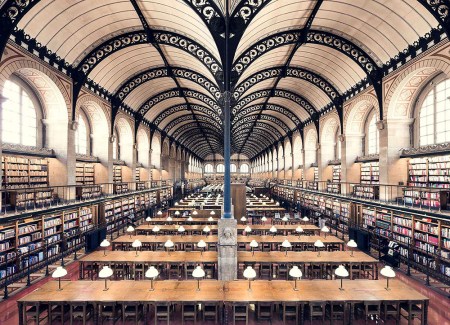
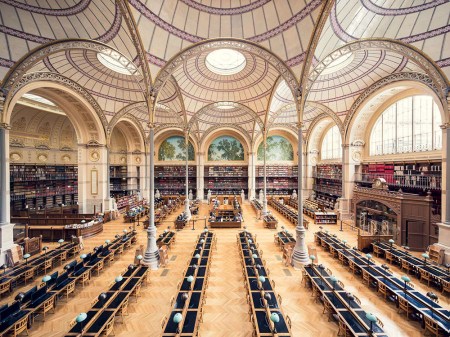
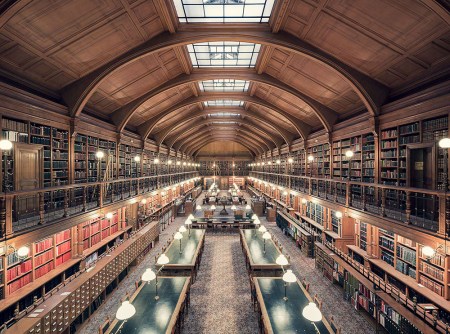
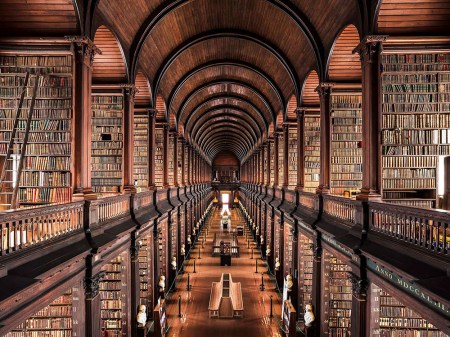 “Over the last year, photographer Thibaud Poirier has traveled across Europe to photograph some of the world’s most incredible libraries. The series includes both historic and contemporary libraries with a special emphasis on the varied designs employed by architects. Poirier captured each image when the buildings were closed and empty of people to focus entirely on structure and layout. From his statement about the project:
Like fingerprints, each architect crafted his vision for a new space for this sacred self-exploration. These seemingly minute details are everywhere, from the balance of natural and artificial light to optimise reading yet preserve ancient texts to the selective use of studying tables to either foster community or encourage lonely reflection. The selection of these libraries that span space, time, style and cultures were carefully selected for each one’s unique ambiance and architectural contribution.”

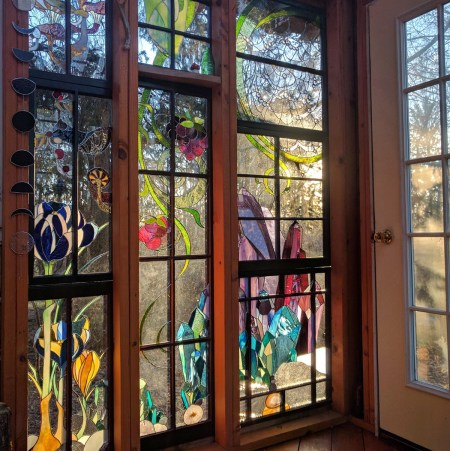
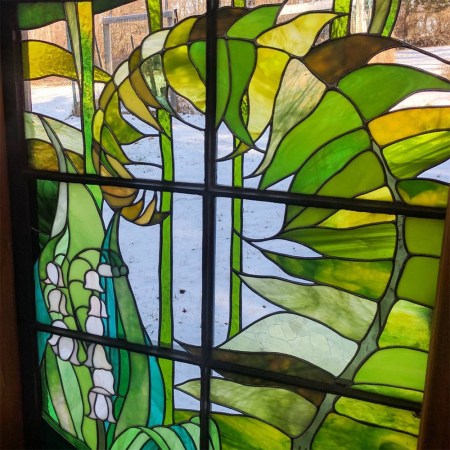
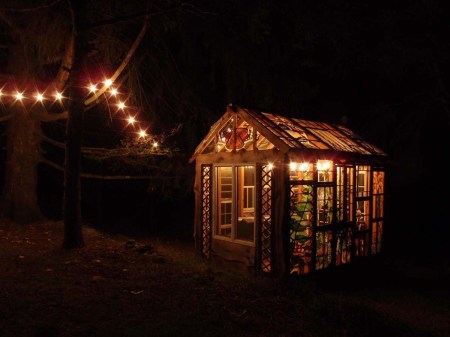
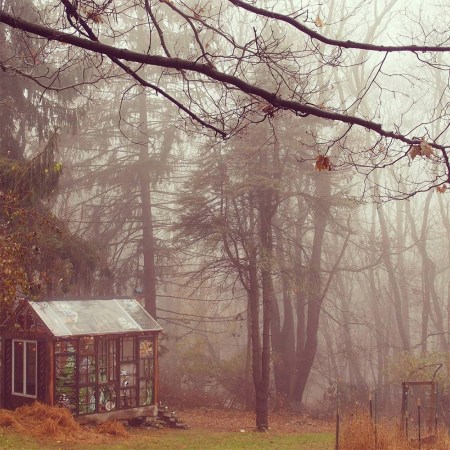
Stained glass artist and jeweler Neile Cooper had a vision for a sanctuary: a small cabin behind her home in Mohawk, New Jersey that would feature her glass designs on every available surface. The result is Glass Cabin, a structure built almost entirely from repurposed window frames and lumber that features dozens of panels of her stained glass work, depicting flowers, birds, butterflies, mushrooms and other scenes from nature. Cooper explores many of these same motifs in her popular jewelry designs. You can see more photos of Glass Cabin on Instagram.




 Castles are usually expansive, grand affairs, but the old adage that good things come in small packages applies even to stone manors. Molly’s Lodge is the tiniest castle in the United Kingdom, and it also happens to be for sale.
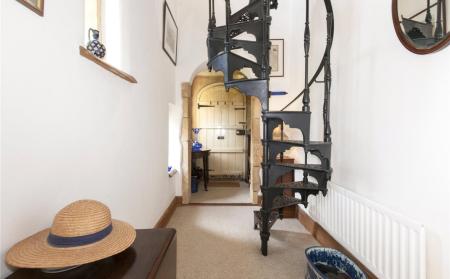
Located on the northern edge of the Cotswolds in the southern tip of Warwickshire, Molly’s Lodge is a Grade II Listed (Britain’s ranking for buildings of historic interest that warrant preservation) property that was built in the 1830s by Edward Blore, the architect that expanded Buckingham Palace under the reign of Queen Victoria. It was originally used as a gatehouse for the Weston Park Estate, but is now a fully functioning home.

The 782 square foot Lodge features a Victorian cast iron fireplace, mullion windows, and a spiral staircase that leads up to the single bedroom. The property is on a .61 acre lot, with lovely gardens and a pond. There’s also a long, gravel driveway leading to the front door, an orchard, vegetable patch, and chicken run, with the idea that Molly’s Lodge could be self sufficient.
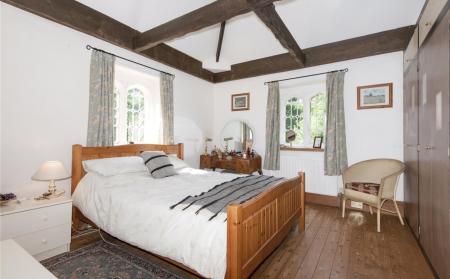
Also on the property is Molly’s Mews, a former stable that’s been converted into living space. The Mews is a bit larger than the Lodge, clocking in at 1,146 square feet. It has two carports, a single car garage, and a home office on the lower level, and an exterior staircase up to the one bedroom apartment with a kitchenette.
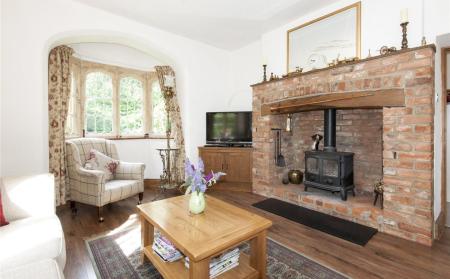
“Molly’s Lodge is certainly a unique Grade II listed home and there really isn’t much else like it in the area,” listing agent Iain Powis told Country Living. “The Cotswolds has a real breadth of architectural styles with everything from pretty thatched cottages through to grand manor houses and rectories, but this Gate Lodge offers something completely different. Interest so far has come from local buyers who are looking to downsize.” This might be the only castle that one could downsize to.

The property is listed for an equally small (considering it’s still a castle and all) £550,000, roughly $627,000. Especially when compared to the $30 million Guinness property.
Firearms, fibers, any news or behaviors that make me say, "hmm, let me take another look at this."
I still miss my man, but my aim is getting better.











 Gunsmoke and Knitting