Whose birthday am I celebrating today?
July 22, 2014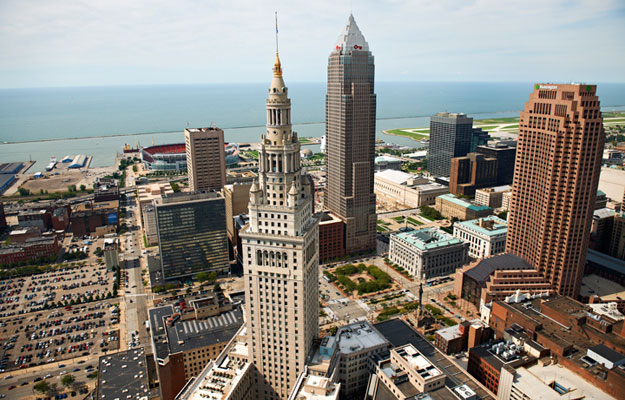 Cleveland and its three tall(ish) buildings
Cleveland obtained its name on July 22, 1796 when surveyors of the Connecticut Land Company laid out Connecticut’s Western Reserve into townships and a capital city they named “Cleaveland” after their leader, General Moses Cleaveland. Cleaveland oversaw the plan for what would become the modern downtown area, centered on Public Square, before returning home, never again to visit Ohio. The first settler in Cleaveland was Lorenzo Carter, who built a cabin on the banks of the Cuyahoga River. The Village of Cleaveland was incorporated on December 23, 1814. In spite of the nearby swampy lowlands and harsh winters, its waterfront location proved to be an advantage. The area began rapid growth after the 1832 completion of the Ohio and Erie Canal. This key link between the Ohio River and the Great Lakes connected the city to the Atlantic Ocean via the Erie Canal and later via the St. Lawrence Seaway and the Gulf of Mexico via the Mississippi River. Growth continued with added railroad links.Cleveland incorporated as a city in 1836. More here.
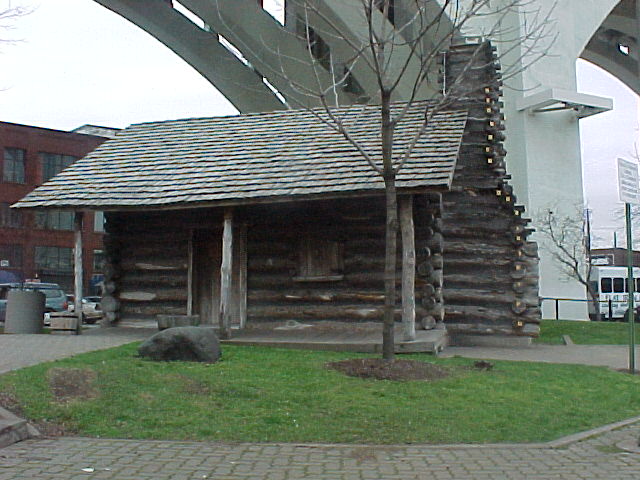 Reproduction of Lorenzo Carter’s cabin nestled under the Detroit-Superior (Veteran’s Memorial) Bridge
The Connecticut Western Reserve was an area in the Northwest Territory held, sold and distributed by the State of Connecticut in the years after the American Revolution.
Connecticut was one of several states that had land claims in the Ohio Country going back to the colonial period. Connecticut gave up most of its claims to the federal government so that the Northwest Territory could be created. However, it reserved the northeast corner of the territory for itself. This area came to be known as the Connecticut Western Reserve. More here.
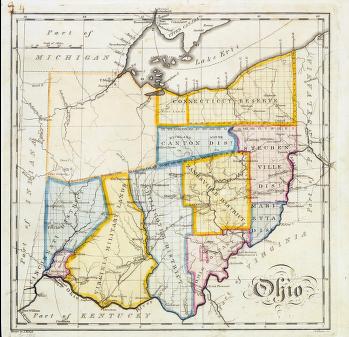 Putting Ohio together.

What am I having nightmares about?
July 22, 2014California: Giant Snails Seized at Airport
Customs inspectors at Los Angeles International Airport seized 67 live giant African snails, considered a delicacy in Nigeria but also voracious pests that can eat paint and stucco off houses, officials said Monday. Weighing nearly two pounds each, including their shells, and measuring about six inches in length, the snails arrived from Lagos, Nigeria, in two plastic baskets with paperwork describing them as being for human consumption, Customs and Border Protection said. They were destined for an address in San Dimas, an agency spokeswoman said. According to Customs and Border Protection, the snails can consume more than 500 types of plants and will even feast on the exterior of homes if fruits or vegetables are not available. They also can carry parasites harmful to humans, including one that can lead to meningitis.
So, so glad they did not include a photo with the story – ewch
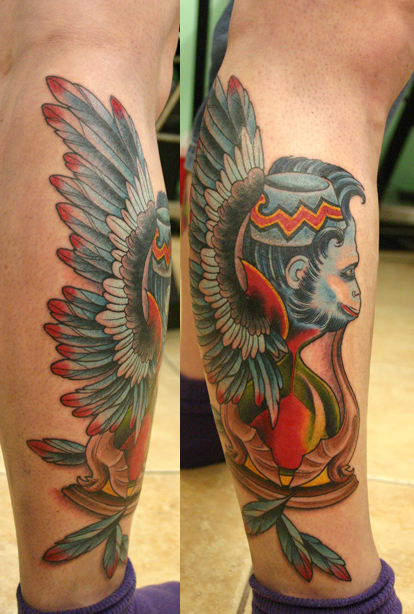
But this is tattoo Tuesday, so here –

What am I finding?
July 21, 2014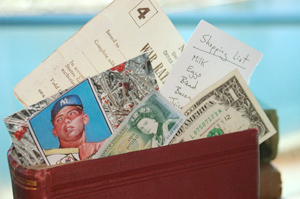
I found this article about the things people find in books. I thought it was interesting. I wonder what I may have left in a book – surely not bacon.
You’d be amazed at what people use for bookmarks… and then forget about. Our booksellers have seen everything from money to a marriage certificate and even a baby’s tooth. Dried flowers are commonplace but a strip of bacon is not. You could be in for a surprise the next time you open a used book. MORE
What am I celebrating today?
July 18, 2014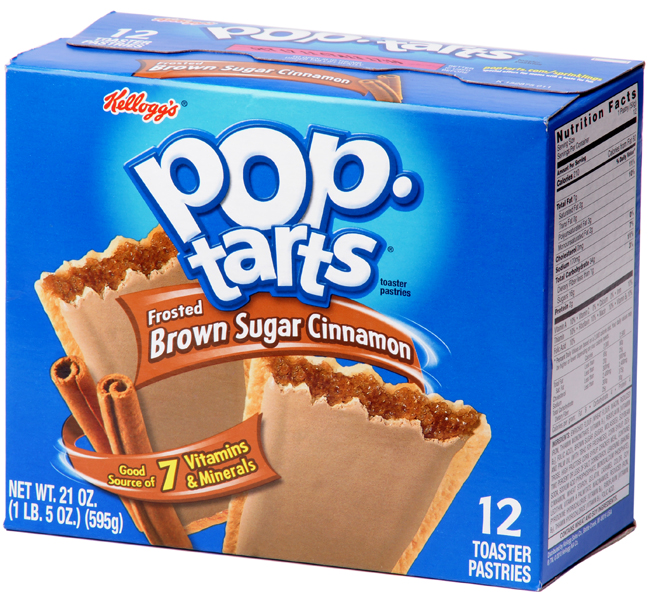
Today is the 50th birthday of Pop-Tarts.
A little history from Wikipedia:
Originally not frosted when first introduced in 1964, it was later determined that frosting could withstand the toaster, and the first frosted Pop-Tarts were officially released in 1967. The first Pop-Tarts came out in four different flavors: strawberry, blueberry, brown sugar cinnamon, and apple currant. Today, there is a wide variety of Pop-Tart flavors, including chocolate chip, s’mores, raspberry, and French toast.
In 1992, Thomas Nangle sued Kellogg for damages after his Pop-Tart got stuck and caught fire in his toaster. The case gained wider notoriety when humor columnist Dave Barry wrote a column about starting a fire in his own toaster with Pop-Tarts. In 1994, Texas A&M University Corpus Christi professor Patrick Michaud performed an experiment showing that, when left in the toaster too long, strawberry Pop-Tarts could produce flames over a foot high. The discovery triggered a flurry of lawsuits. Since then, Pop-Tarts carry the warning: “Due to possible risk of fire, never leave your toasting appliance or microwave unattended.”
Another note of CAUTION – please tell your kids not to nibble their Pop-Tarts into the shape of a gun if they are eating them in school. Zero Tolerance. Some other shapes to be avoided are:

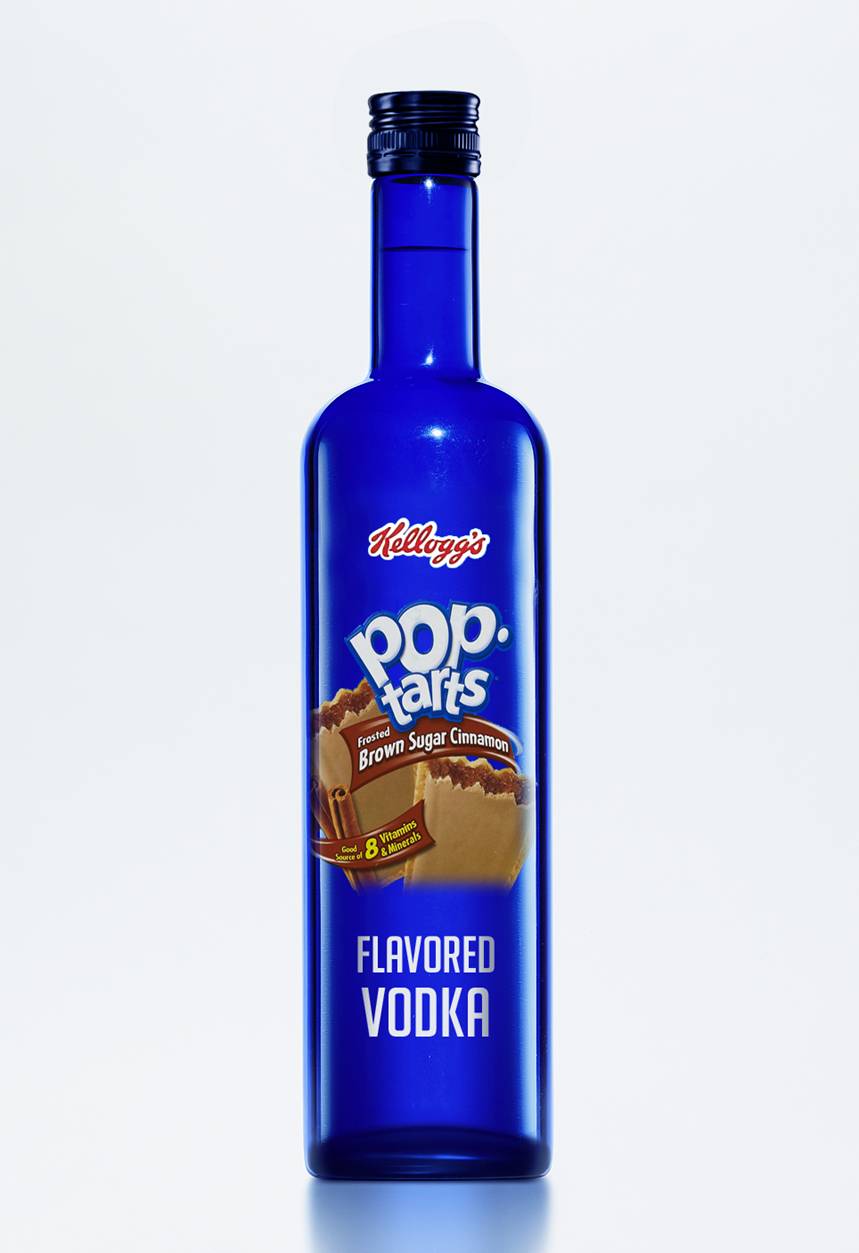
It is enough to make you turn to . . .
Where am I hiding?
July 17, 2014


In her series ‘Landscapes’ – Peruvian artist Cecilia Paredes has mastered the art of camouflage and by using body paint is able to disappear into her surroundings. With the help of her assistants, she paints herself into the background of floral wallpapers. Her dark hair and the whites of the eyes are often the only thing that shows there’s a person hiding.
However, her series called “Landscapes” doesn’t just create a disappearance illusion, it also shows Paredes’ quest for belonging.
“The theme behind all is re-location after displacement and migration and how one has to adjust in order to belong. Tough it is, but it has to be done, without forgetting our origin. The theme behind all is re-location after displacement and migration and how one has to adjust in order to belong. Tough it is, but it has to be done, without forgetting our origin.”
Reblogged from Hovercraft Doggy.
What is tattoo Tuesday about?
July 16, 2014
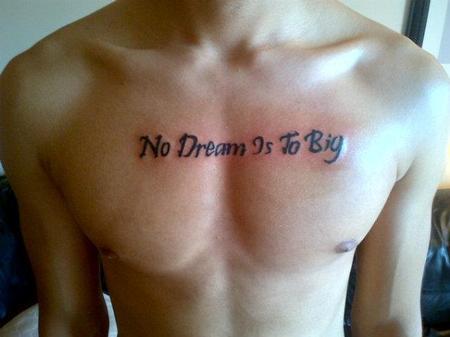

Bad spelling; bad punctuation? They are going to be with you for a while, particularly when you tattoo them on your body.
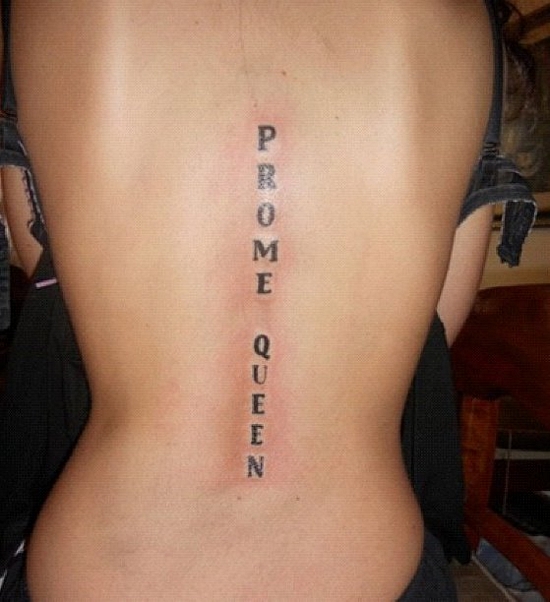
Just ask the Prome Queen.
What am I eating?
July 9, 2014

Today is Sugar Cookie Day
To celebrate, this is one of my favorite recipes and is from the Betty Crocker Picture Cookbook that belonged to my mom.

Ingredients
- 1 1/2 cups powdered sugar
- 1 cup butter softened
- 1 teaspoon vanilla
- 1/2 teaspoon almond extract
- 1 egg
- 2 1/2 cups Gold Medal™ all-purpose flour
- 1 teaspoon baking soda
- 1 teaspoon cream of tartar
- Cream the butter and sugar together. Add the egg and flavorings.
- Whisk together the flour, soda and cream of tartar.
- Add gradually to the butter and sugar mixture, combining well.
I admit that I am too lazy to roll and cut out shapes, so I form the dough into a log on a piece of waxed paper. I sprinkle sparkling sugar on the waxed paper and roll up the dough so that it is covered with the sparkling sugar all around the outside. Chill the dough for a couple of hours. Slice (3/8″ thick) and bake on a silpat covered baking sheet (or lightly greased, or on a sheet of parchment paper) for 7 to 8 minutes at 375 degrees.
If you don’t have silpat sheets, sparkling sugar, or baking parchment, take a look at King Arthur Flour’s website. They have everything. My baking sheets are made by Chicago Metallic, large, commercial grade, uncoated. I bought them at Amazon.
A little history from What’s Cooking in America: The earliest cookie-style cakes are thought to date back to 7th century Persia A.D. (now Iran), one of the first countries to cultivate sugar (luxurious cakes and pastries in large and small versions were well known in the Persian empire). According to historians, sugar originated either in the lowlands of Bengal or elsewhere in Southeast Asia. Sugar spread to Persia and then to the Eastern Mediterranean. With the Muslim invasion of Spain, then the Crusades and the developing spice trade, the cooking techniques and ingredients of Arabia spread into Northern Europe.
What am I watching?
July 8, 2014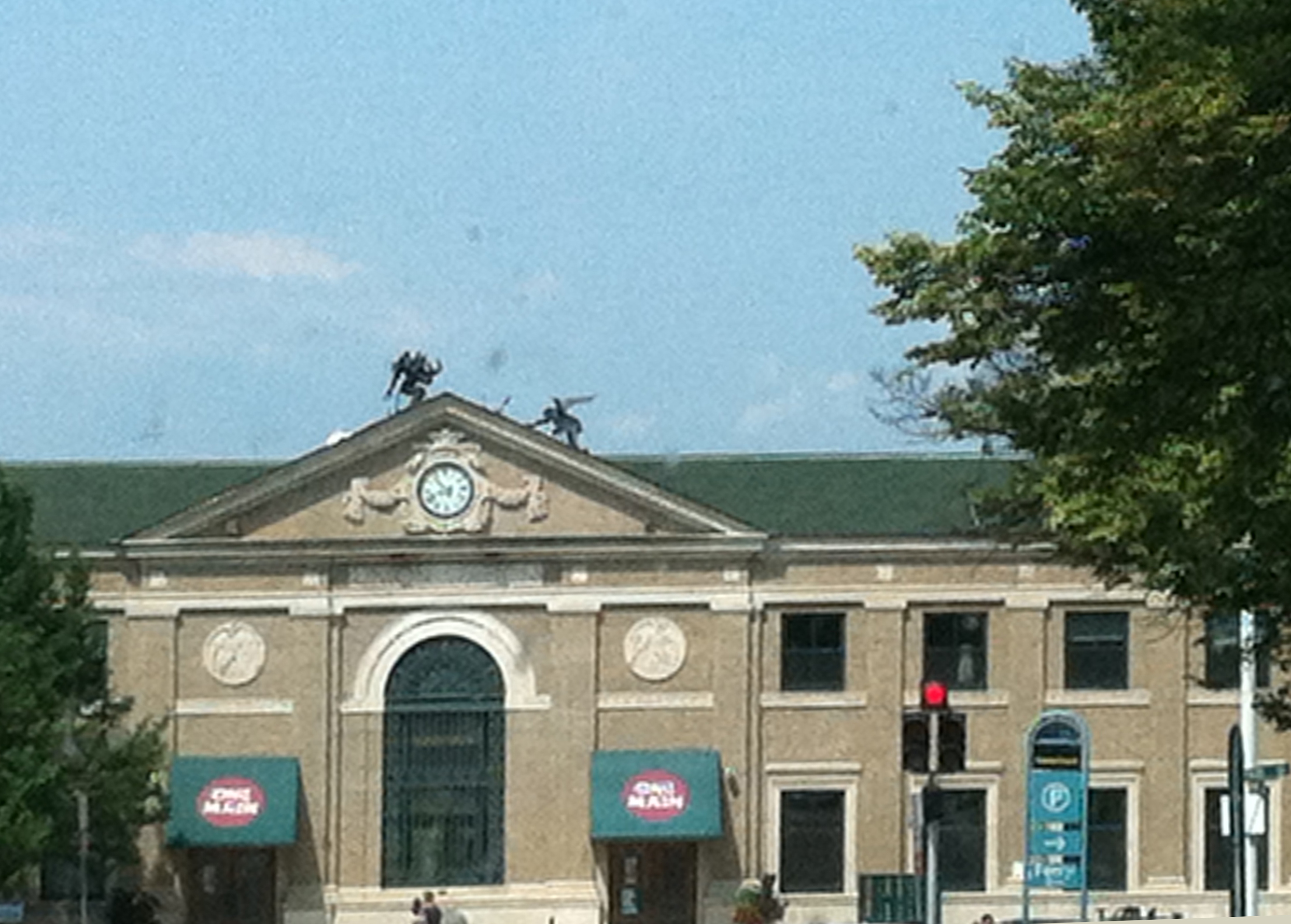
Seen in Burlington, Vermont, on the way to the ferry dock. These are some of the flying monkeys of Burlington.
A few more:
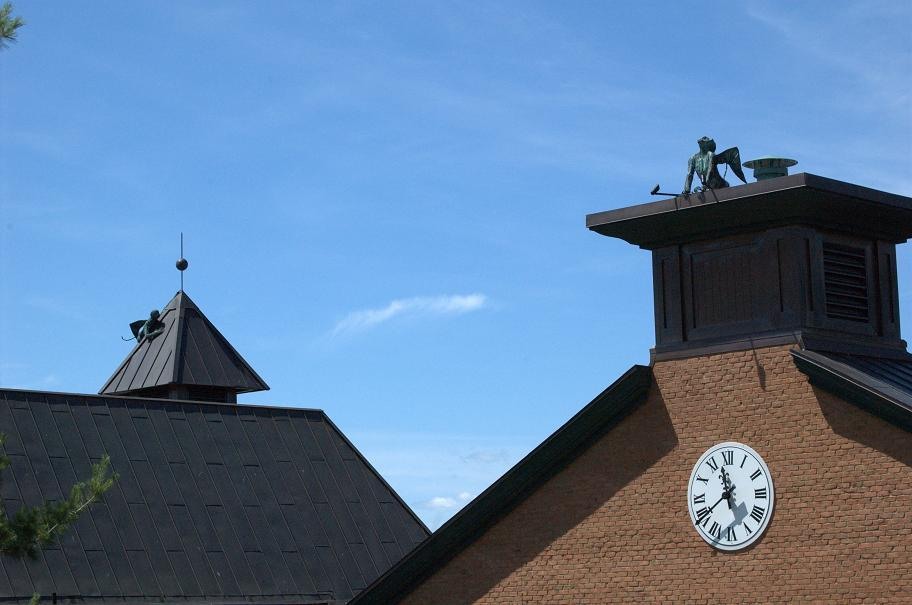

Created by sculptor, Steve Larabee, to augment a Burlington business called the Emerald City, these iconic statues have found a home on top of the building One Main, other flying monkey statues have been added to several other Burlington edifices over the years.
The best place to see them is on the approach to the Burlington-Port Kent ferry against the backdrop of Lake Champlain and the Adirondack Mountains. They are a landmark I always look for when making the trip to and from Maine.
More information here at Kuriositas.
It’s Tuesday – is there a tattoo to go along with this post? But, of course!