Thanks, Why, Because Science

 “From Winston Churchill’s homburg to Charlie Chaplin’s bowler, much of Britain’s history can be told through the headgear worn by its best-known politicians, performers and literary characters. Hats have evolved enormously since the days when their primary function was to protect their wearers’ heads from bad weather and weapons.
By Victorian times, they had become part of every self-respecting gentleman’s attire—a man would no more leave the house without a hat than he would without his trousers. Hats became a symbol of class and occupation, from London’s bowler-clad bankers and stockbrokers to the cloth caps worn by the country’s manual labourers on farms and in factories.
Even Britain’s best-loved fictional rogues have trademark hats: the Artful Dodger’s battered top hat, Ebenezer Scrooge’s night cap and Del Boy’s flat cap, to name but a few. Customs such as hat-tipping and launching mortar boards at graduation are deeply embedded in the social and cultural fabric of the country and, although 21st-century wardrobes might contain fewer hats than their predecessors, social occasions such as Royal Ascot and the Henley Royal Regatta ensure that, when it comes to hat heritage, Britain still takes the crown.
Bowler
The first bowler was made in 1849 by James Lock & Co’s chief hatter, Thomas Bowler, for Edward Coke, a nephew of the 1st Earl of Leicester (of the second creation) of Holkham Hall in Norfolk. Coke wanted a close-fitting, low-crowned hat to protect the estate gamekeepers’ heads from low-hanging branches and attacks from poachers. It’s thought that, when he went to London to view the hat, he stamped twice on the crown to determine its durability, nodded in approval and paid 12 shillings for it. The estate’s gamekeepers still wear bowlers on shoot days.
 Top hat
There has never been a more sophisticated and dominant design than the top hat, which replaced tricornes and bicornes as a status symbol for gentlemen at the turn of the 19th century. Apparently, when the haberdasher John Hetherington donned the first topper on the streets of London in 1797, children screamed, women fainted and Hetherington was arrested for wearing a hat ‘calculated to frighten timid people’.
 Trilby
The difference between a trilby and its big brother, the fedora, comes down to the size of the brim and the nature of the crease at the crown the former has a sharper crown and a narrower brim. It was named after a fictional character the eponymous heroine of George du Maurier’s 1894 novel Trilby. It became a wardrobe staple when men swapped their formal, stiff hats for something lighter and more comfortable.
 Fedora
Named after the heroine of a French play written by Victorien Sardou in 1882 and made famous by American icons such as Frank Sinatra and Humphrey Bogart, the soft-brimmed, felt fedora made its way into British men’s wardrobes in the mid 1920s. It was also popularised by Edward VIII, who chose to wear one on royal engagements. Deerstalker/stalker
This two-flapped hat was a vital part of a Victorian gentleman’s country ensemble, worn principally for shooting and especially for deerstalking. Although indelibly associated with Sherlock Holmes, there is not a single mention of a deerstalker in any of Conan Doyle’s stories. It was Sidney Paget who gave the sleuth a hat and cape in his illustrations for The Strand magazine—they first appear in The Boscombe Valley Mystery in 1891.
 Panama
Genuine Panama hats are made exclusively in Ecuador, where they’re woven from the straw-like stems of the toquilla palm. Named in honour of the workers who built the Panama Canal and wore them for protection against the sun, the hats became a British summer staple by the early 20th century. The black band around the base is said to originate from 1901, as a mark of respect following the death of Queen Victoria.
 Homburg
This distinctive hat, with its curled brim and uniform dent running from back to front, was supposedly popularised by Edward VII, who spied it on a trip to the German town of Bad Homburg in the early 1880s. Winston Churchill was also a big fan and the dapper detective Hercule Poirot rarely left the house without his.”
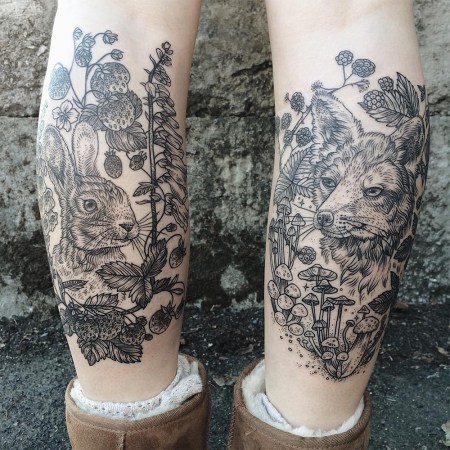 Tattoo artist Pony Reinhardt creates delicate collisions of plants, animals, and elements of space and alchemy in her black line tattoos reminiscent of vintage woodcut etchings. Studies of anatomy mingle with constellations and crystals, while woodland creatures right out of a storybook are wreathed in densely illustrated greenery. Reinhardt graduated from the Maryland Institute College of Art with a BFA degree in fibers and her artwork has been exhibited in the Smithsonian National Gallery of Art as well as earning a number of awards and accolades. She founded an appointment-only tattoo studio in Portland called Tenderfoot Studio, and you can see many more of her pieces on Istagram. (via Illusion)

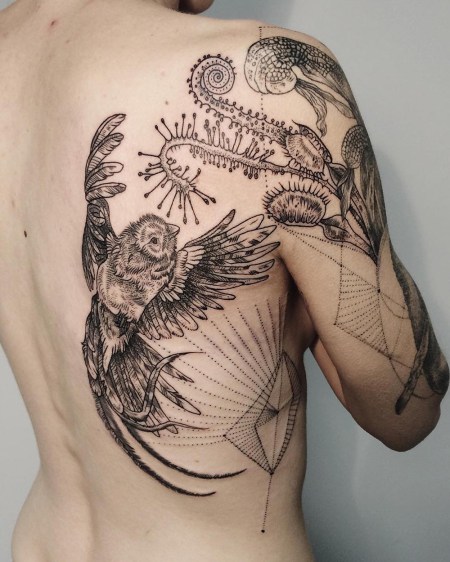
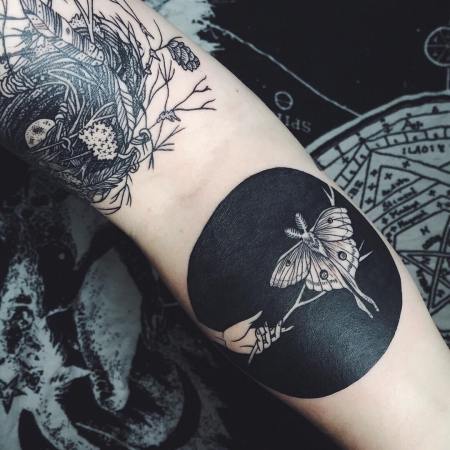
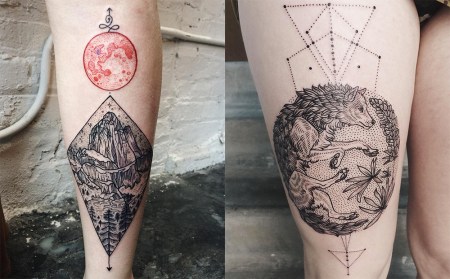
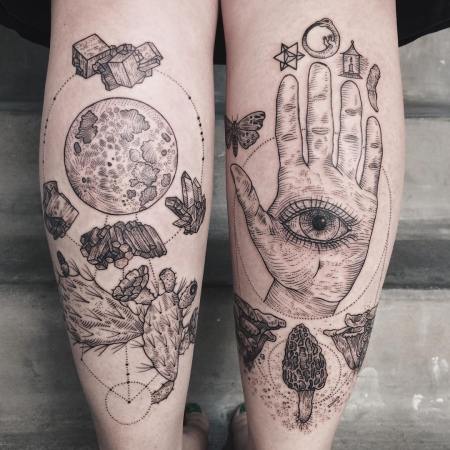
Story by Christopher Jobson at Colossal
The mesmerising scenes were caught on film by aerial photographer and qualified pilot Tim Whittaker, from New Zealand. Incredi-baa-le!
There’s no night without stars.
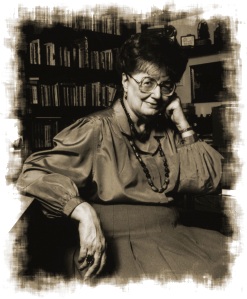
Andre Norton was born February 17, 1912 in my fair city. Born Alice Mary, she began writing when she was still a student at Collinwood High School. At Western Reserve University she was training to become a teacher. The Great Depression derailed those plans and she entered employment in the city’s public library system. I can’t help but think all those books in the young adult section had a formative influence on her prolific output. She initially wrote historical fiction, but her later works include fantasy, science fiction and even crime fiction.

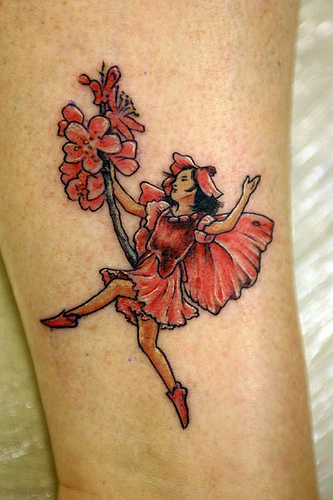
This is the Almond Fairy and today is Almond Day.
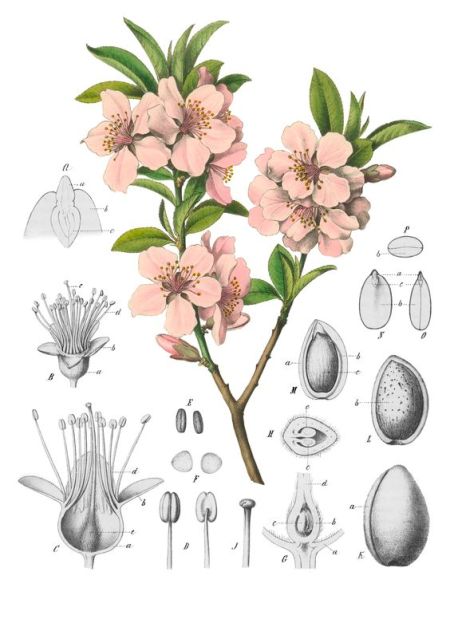
Almonds are native to the Middle East and South Asia. They are actually a seed rather than a nut and are relatives of peaches, plums, apricots and other drupes.
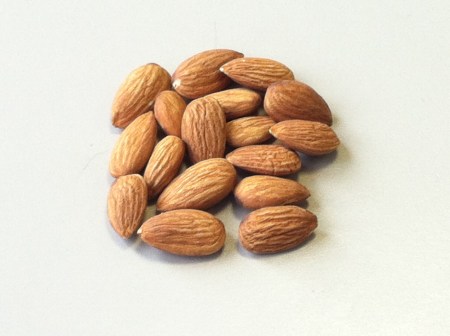
In addition to being tasty on their own, they are the basis for marzipan, orgeat, frangipane, moisturizing almond oil, almond butter, almond milk, and of course, the scent of bitter almonds.
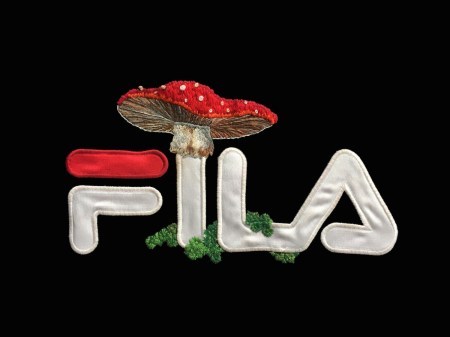


Artist James Merry cannot stop doodling. In this case he doodles beautifully embroidered flowers integrated into company logos on apparel. I admire the skill – all hand-done – not machine embroidery.
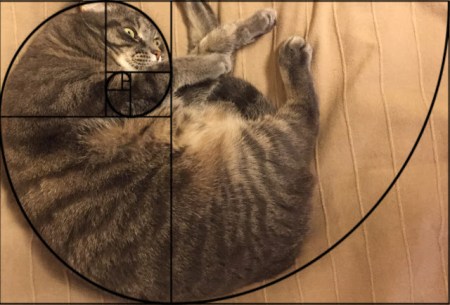 Fibonacci Cat
ref. Daily Timewasterhttp://dailytimewaster.blogspot.com/2016/02/fibonacci-cat.html
Firearms, fibers, any news or behaviors that make me say, "hmm, let me take another look at this."
I still miss my man, but my aim is getting better.