Posts Tagged ‘geeky science blogging’

h1

How do I fly?

August 28, 2016

Ornitographies-majestic-images-of-birds-5

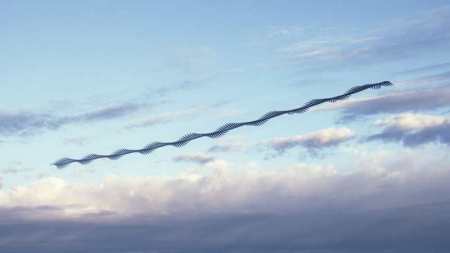
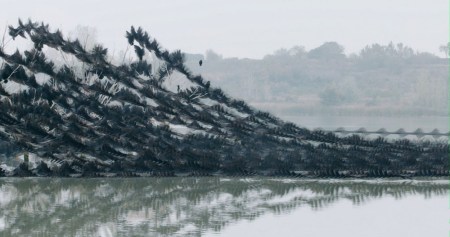
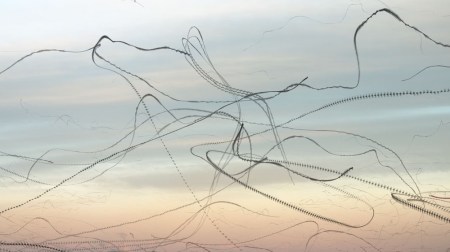
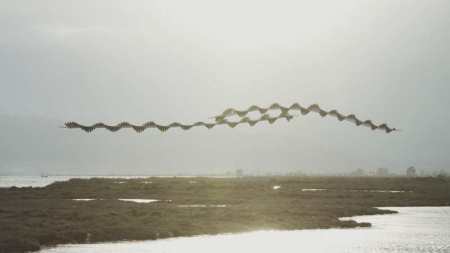
These photographs are a project of Spanish photographer Xavi Bou.  Called chronophotographs, they capture a series of images of birds in flight, showing the net result of the motion – think Eadweard Muybridge and his photographs of human and animal motion that were taken 150 years ago.

Ornitographies-majestic-images-of-birds-1

orrnitholgraphiesXaviBou_10

I love this one of ducks lifting off from a lake.

ornithographiesXaviBou_08

Ornitographies-majestic-images-of-birds-3

more at Colossal

h1

Why am I looking up?

August 10, 2016

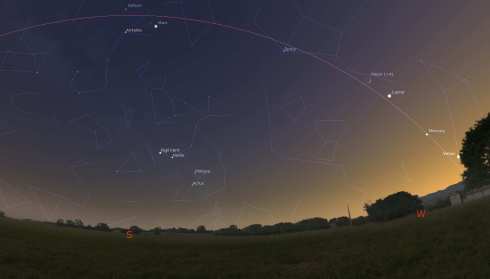
A-rare-5-planets-alignment-1“Watch all the 5 bright planets in a rare alignment, just after sunset.”

I walked outside last night to view this phenomenon and was greeted by a thunderstorm…much rain which was appreciated…and a power outage that is still going on (not so much appreciated.)

If your skies are clear, read on:

“Venus, Mercury, Jupiter, Mars and Saturn, all the 5 planets will be visible just after sunset, during the first few weeks of August.

Venus and Mercury, aren’t so easy see. They are to close to the Western horizon.

This month, there will be conjunctions between the moon and Venus on August 3, the moon and Mercury on August 4, and the moon and Jupiter on August 5. Jupiter and Mercury come closest together for the month on August 19, and then Venus and Jupiter stage a very close conjunction on August 27.

Alan Duffy, an astronomer at Swinburne University of Technology in Australia, explains:

“The fainter planets that lie closer to the Sun, such as Mercury and Venus, will be difficult to see so it is best to wait until after sunset for the twilight to fully fade, but before the planets set.

The planets stretch across the sky, anchored to the horizon following the setting Sun.

This is because the entire Solar System is flat like an old vinyl record with the planets moving along these grooves of the record. Looking out from the Earth we will see this as a straight line, known as the ecliptic plane, tracing across the sky.”

from WordlessTech

h1

Why am I crabby?

July 27, 2016

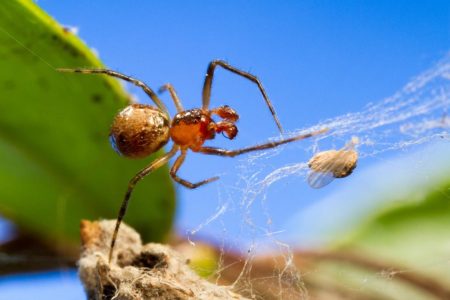
spider-1024x683

“… a new study from researchers at the University of North Carolina (UNC) at Chapel Hill has discovered a connection between spider personalities and temperature changes, potentially bringing us closer to answering these questions.”

It seems that even within the same species of spider – some individuals have a difficult time thriving in higher temperatures, while others have difficulty with lower temperatures.

Apparently my spider genes come from the heat insensitive spiders because I, too, am crabbier with higher temperatures, such as the one I recorded on my phone as I left my office at Fancy Pants University last Friday.

photo 3

I cannot vouch for the accuracy of this reading – but it was hot.

More about this story at ZME Science.

spider photo credit: Alex Wild

h1

How am I noting Global Bird Day?

May 14, 2016


“It takes a big painting to do justice to the phenomenal history and diversity of birds. It also takes an artistic process that is as much about the science as it is about the aesthetics. Get a behind-the-scenes view of how artist Jane Kim brought all 270 species to life on this ambitious natural history mural in this short film narrated by Cornell Lab of Ornithology Director John Fitzpatrick.”


From Cornell Lab of Ornithology

h1

What am I photographing?

May 9, 2016

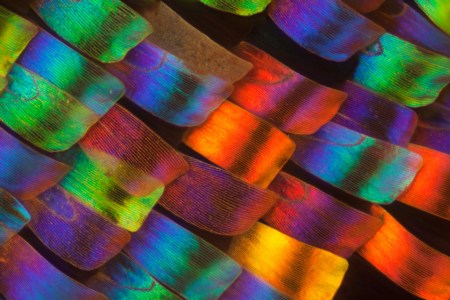
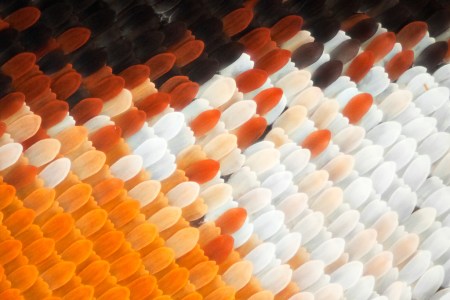
butter-7

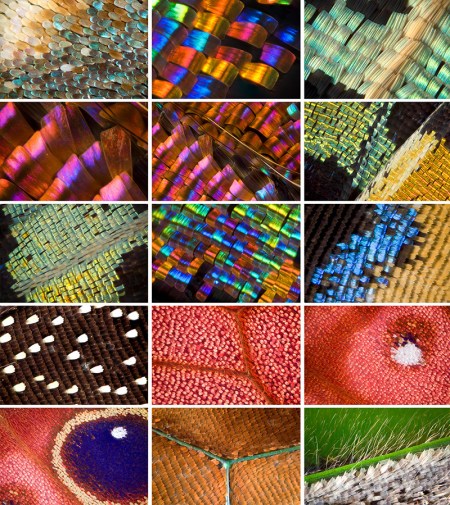
I’m not really taking these photographs – be sure to click on the links in the story.

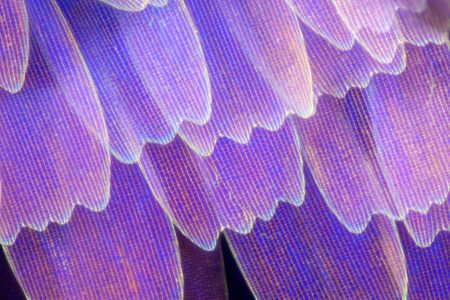
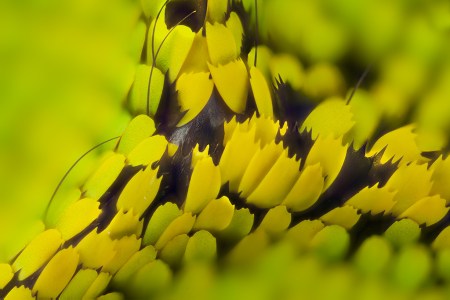
“A biochemist by training, photographer Linden Gledhill is fascinated by the beauty of infinitesimally small aspects of nature and science, from capturing the flight of insects to exploring the beauty of magnetic ferrofluid. Among his most jaw-dropping images are macro photographs of butterfly wings that reveal complex patterns that look like perfectly organized flower petals. These tiny protrusions are actually scales, similar to what you would find on reptile, though extremely small and fragile. Gledhill’s photography recently inspired an episode of Smarter Every Day where Destin Sandlin learns how to shoot similar photos. ”

butter-3

butter-6


butter-2

butter-9

butter-10

from Colossal

h1

How am I planting my garden?

May 4, 2016


My favorites are the poisonous squirting cucumbers.

h1

How am I coloring my world?

April 27, 2016

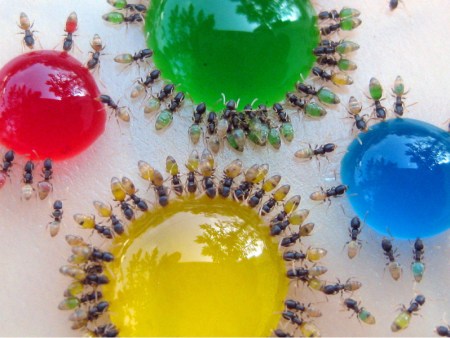
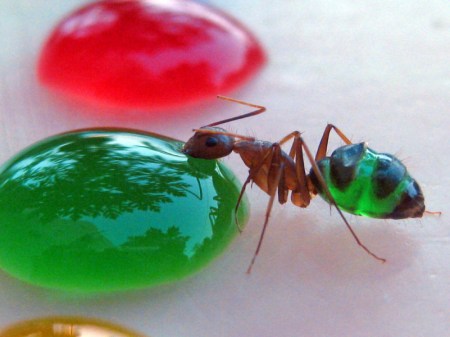
ants-2

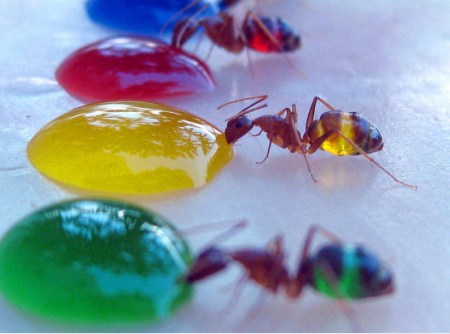
“Scientist Mohamed Babu from Mysore, India captured beautiful photos of these translucent ants eating a specially colored liquid sugar. Some of the ants would even move between the food resulting in new color combinations in their stomachs. Read more over on the Daily Mail.”

ants-3

ants-1


From Colossal

h1

What am I celebrating ?

April 26, 2016

richter Moment Magnitude Chart


richterToday is Richter Scale Day when we commemorate the birth of Charles Richter.  In 1935, the seismologists Charles Francis Richter and Beno Gutenberg, of the California Institute of Technology, developed the (future) Richter magnitude scale, specifically for measuring earthquakes in a given area of study in California, as recorded and measured with the Wood-Anderson torsion seismograph. Richter derived his earthquake-magnitude scale from the apparent magnitude scale used to measure the brightness of stars.

Richter’s scale (which has been replaced by the Moment Magnitude Scale) measures the magnitude of an earthquake.  The magnitude value is proportional to the logarithm of the amplitude of the strongest wave during an earthquake.

This very cool video explains magnitude . . .

Adapted from Wikipedia


h1

What am I celebrating today?

April 25, 2016


April 25 is National DNA Day
. So put on your best genes and celebrate!

It commemorates the day in 1953 when James Watson, Francis Crick, Maurice Wilkins, Rosalind Franklin and colleagues published papers in the journal Nature on the structure of DNA. Furthermore, on that day in 2003 it was declared that the Human Genome Project was very close to complete, and “the remaining tiny gaps [we]re considered too costly to fill.” – Wikipedia

People do lots of interesting things with the double helix concept . . .

dnaGenome walk in Alabama

dna3

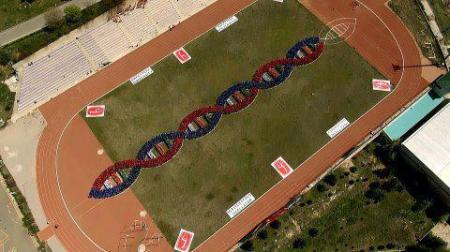
World’s largest DNA depiction made up of humans

dna2

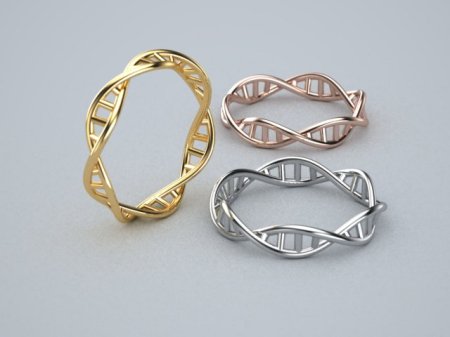
Cool jewelry

dna5Tattoos, of course

h1

What am sappy bearcat blogging?

April 22, 2016

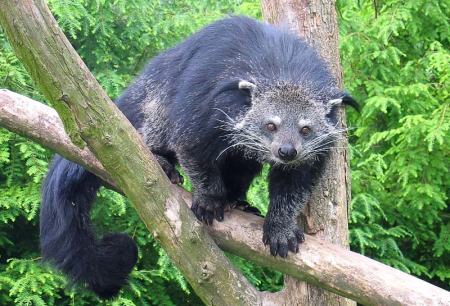
bearcat2

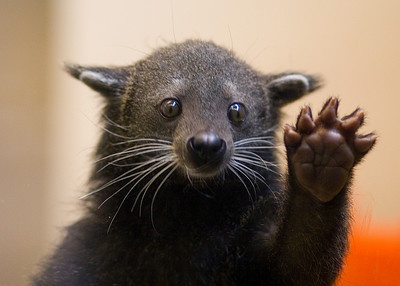
Arctictis binturong

Smells like buttered popcorn

“When nature employs smell, they’re either really nice or really bad, and it happens for a good reason: to lure things or to repel them away. But for bearcats, it’s quite a peculiar case, as their smell is rather… intriguing.

A joint team from several universities gave 33 bearcats routine physical examinations at the Carolina Tiger Rescue, a wildlife sanctuary in North Carolina. They took samples from the animals, including urine samples. The urine was analyzed with gas chromatography-mass spectrometry, an instrumental technique through which complex mixtures of chemicals may be separated, identified and quantified.

They distinguished 29 compounds, and one of these compounds was 2-acetyl-1-pyrroline (2-AP) – the very same chemical that gives buttered popcorn its unique smell. Just to make it clear, it’s not something that smells the same as buttered popcorn – it’s the same thing as buttered popcorn!

Researchers are not really sure how this happens without the very hot temperatures, but they have a hunch it could be caused by the bacteria the mammals have on their fur. As to why they’re doing this… it’s anyone’s guess.

Bearcats are mammals native to South and Southeast Asia. They spend most of their time in the foothills and hills with good tree cover. So if you find yourself in that area and feel a sudden smell of buttered popcorn… you’re probably surrounded by urine. I love nature.”

Story from ZME Science by Mihai Andrei

bearcat

Photo by TassiloRau