Posts Tagged ‘geeky science blogging’

What am I celebrating on tattoo Tuesday?
April 25, 2017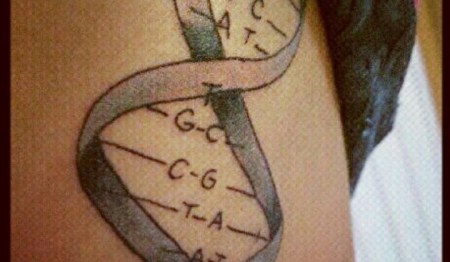
Don’t get your knickers in a twist –
Today is National DNA Day
On April 25 we commemorate the day in 1953 when James Watson, Francis Crick, Maurice Wilkins, Rosalind Franklin and colleagues published papers in the journal Nature on the structure of DNA. Furthermore, on that day in 2003 it was declared that the Human Genome Project was very close to complete, and “the remaining tiny gaps [we]re considered too costly to fill.” – Wikipedia
What am I McNaming?
March 6, 2017NASA asks people to suggest names for their newly discovered exoplanets — hilarity ensues
Learning nothing from the Boaty McBoatface incident, researchers have again come to ask the public to name things. This time, it’s NASA asking people for suggestions on how to name the newly discovered 7 planets of the Trappist system. Still, the Internet has come up with a wonderful mix of suggestions ranging from trollish or tongue-in-cheek, all the way to some that might actually get picked by the agency.
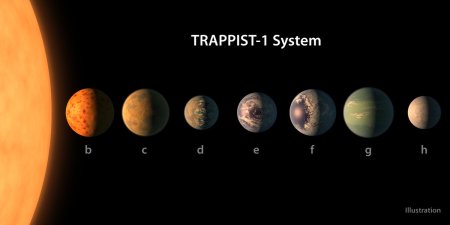 Image credits NASA.
The Internet doesn’t have the best track record when it comes to naming things. Just last March, UK’s Natural Environment Research Council (NERC) invited people to vote on what name their newest arctic research vessel should be christened with. NERC went with RRS Sir David Attenborough in recognition to the world famous UK naturalist and broadcaster — but that’s not what the public voted for. Oh no.
After former BBC Radio Jersey presenter James Hand jokingly suggested the council should go with Boaty McBoatface, the suggestion picked up a huge number of votes, quickly becoming the most popular name. Thankfully for the NERC, they announced from the beginning that the poll was non-binding in nature so they could opt for what they considered a “more appropriate” name.
Now, NASA is the one to call upon the collective creativity of the Internet to name the seven exoplanets whose discovery they announced in February. As of now, they’re known by their placeholder names of Trappist-1b to h.
It was a simple request, but one bound to run into the same problems as NERC’s vote. Some suggestions were simply funny, we’ve seen some nods to cultural references, and some suggestions that might actually make it. And surely enough, “Planet McPlanetface” made it in the suggestions.
Planet McPlanetface
Moonie McMoonface
Rocky McRockface
Icy McIceface
Dusty McDustface
Gasy McGasface
Wanda
__________________
Earth 2
Earth 2s
Earth 2s Plus
Earth 2s Plus 128GB
Earth 2s Plus 128GB Black
Earth 2s Plus 128GB Rose Gold
Earth 3
Rumors say the new planets will have universal docking ports. We’ll have to wait and see. And, talking about planets that NASA says aren’t ‘really’ planets:
Planet Fitness
Planet Hollywood
Captain Planet
Planet of the Apes
Planet Coaster
Pizza Planet
Pluto
There’s also a lot of cultural referencing going on, with the names of great houses from Game of Thrones being suggested, the dwarfs’ names in Snow White, as well as nods to the Harry Potter books. But this one I enjoyed the most:
A New Hope
Empire Strikes Back
Return of the Jedi
The Force Awakens
then routinely deny the other three exist
Some users have also pointed out the connection to Belgian beers of the same name, suggesting the planets be named after the Trappist breweries.
As the original Trappists, easy!
Achel, Chimay, La Trappe, Orval, Rochefort, Westmalle and Westvleteren
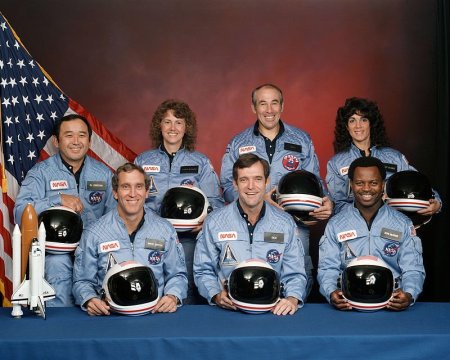
Some users view the christenings as an opportunity to those who have sacrificed in humanity’s efforts to reach for the stars — several tweets call for the planets to be named for the seven astronauts who lost their lives aboard the Challenger in 1986.
Seeing the generally light-hearted way and humorous these suggestions are being suggested on Twitter, it’s unlikely that NASA will actually go with any of them. Ultimately however, the decision lies with the International Astronomical Union, and it may still surprise us in the end. Which means there’s still a tiny hope for Pluto.
Why am I glowing?
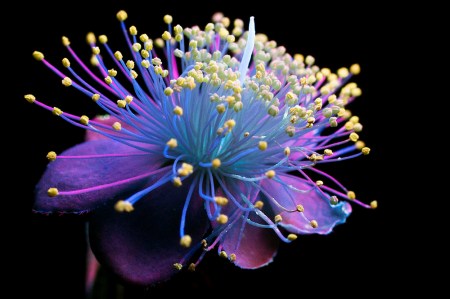
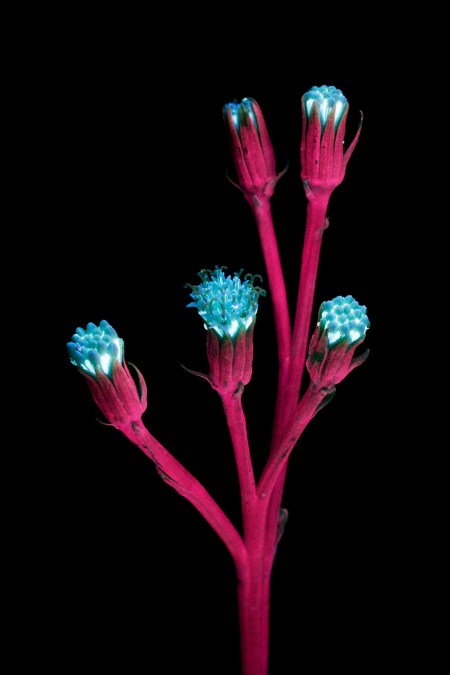
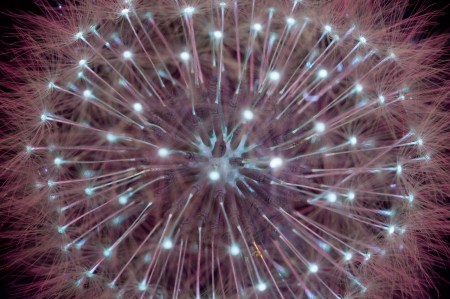
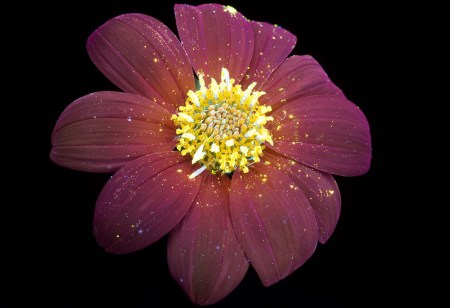
January 26, 2017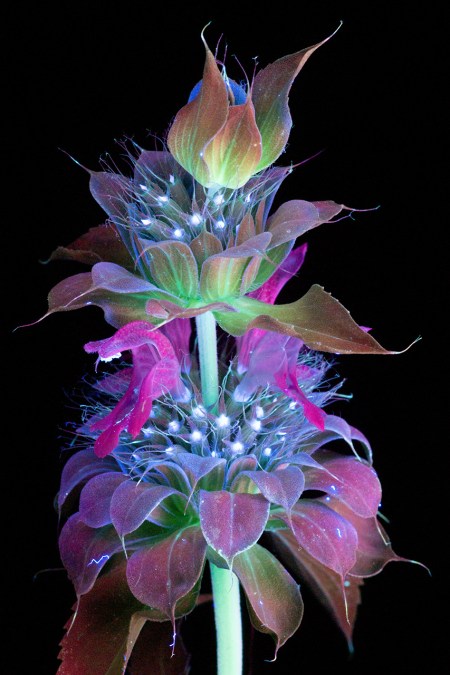 “Photographer Craig Burrows photographs plants and flowers using a type a photography called UVIVF or “ultraviolet-induced visible fluorescence.” If you haven’t heard of it, that’s not a surprise, as it is a relatively unknown process which brings out the glowing fluoresce in plant matter through the use of high-intensity UV lights.
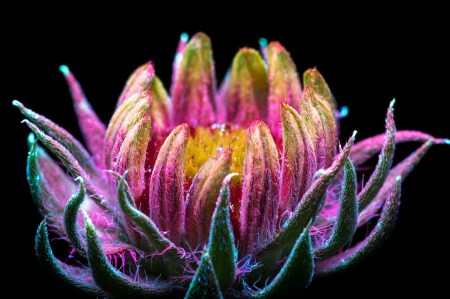
Typically UV is removed through a camera’s lens, however Burrows photographs with a 365nm LED light which is passed through a filter to transmit only UV and infrared light. The dazzling plant life Burrows’ photographs absorbs this UV light and releases visible light at different wavelengths, which allows him to capture colors far more vivid than those seen in a typical viewing condition.

Although Burrows has limited his photography to singular flowers and small arrangements, his next step is aimed at illuminating entire scenes, like gardens, glades, and greenhouses, with 100-watt floodlights. You can see more of the Southern California-based photographer’s glowing plant portraits on his Flickr and portfolio site. ”

Why am I looking up?
October 6, 2016I thought this video about the Hubble space telescope was pretty cool.
via WordlessTech
Who did we say goodbye to today?
September 30, 2016
This morning, Sept. 30, 2016, just after 10:39 UTC (6:39 a.m. EDT) ESA’s Rosetta spacecraft ended its mission with an impact onto the surface of the comet 67P/Churyumov-Gerasimenko. The descent, begun with a final burn of its thrusters about 14 hours earlier, was slow, stately, and deliberate, but even at a relative walking pace Rosetta was not designed to be a lander like its parter Philae and thus ceased operation upon contact with the comet.
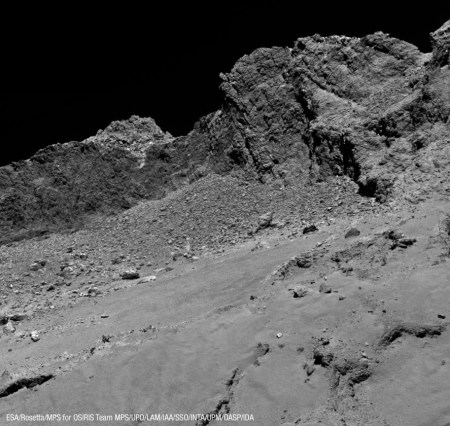
Rosetta will now remain on the surface of 67P not far from the location of Philae, which landed in November 2014 and was just recently identified in an OSIRIS image after nearly two years of speculation about its final landing place.
All in all, an amazing job by Rosetta, Philae, ESA, and all of the flight, instrument, and science teams that made the mission an incredible success. Thanks to their hard work and dedication over the years we now know more about our Solar System and comets especially than we ever did before, and the data Rosetta and Philae have provided us will be used for decades to come.
Rest well, little travelers.
What am I noting today?
September 22, 2016
Today is the autumnal equinox in my neck of the woods.
This little gif is on Google’s search page today.
However, if you are in New Zealand – happy spring!










 Gunsmoke and Knitting