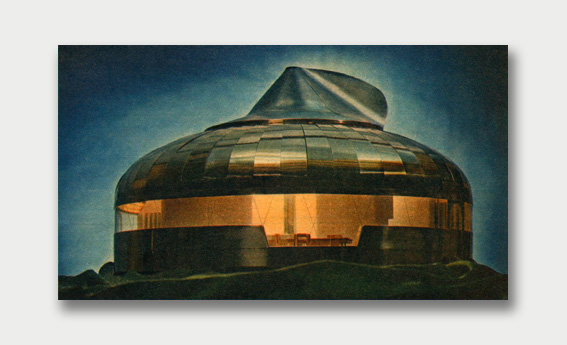
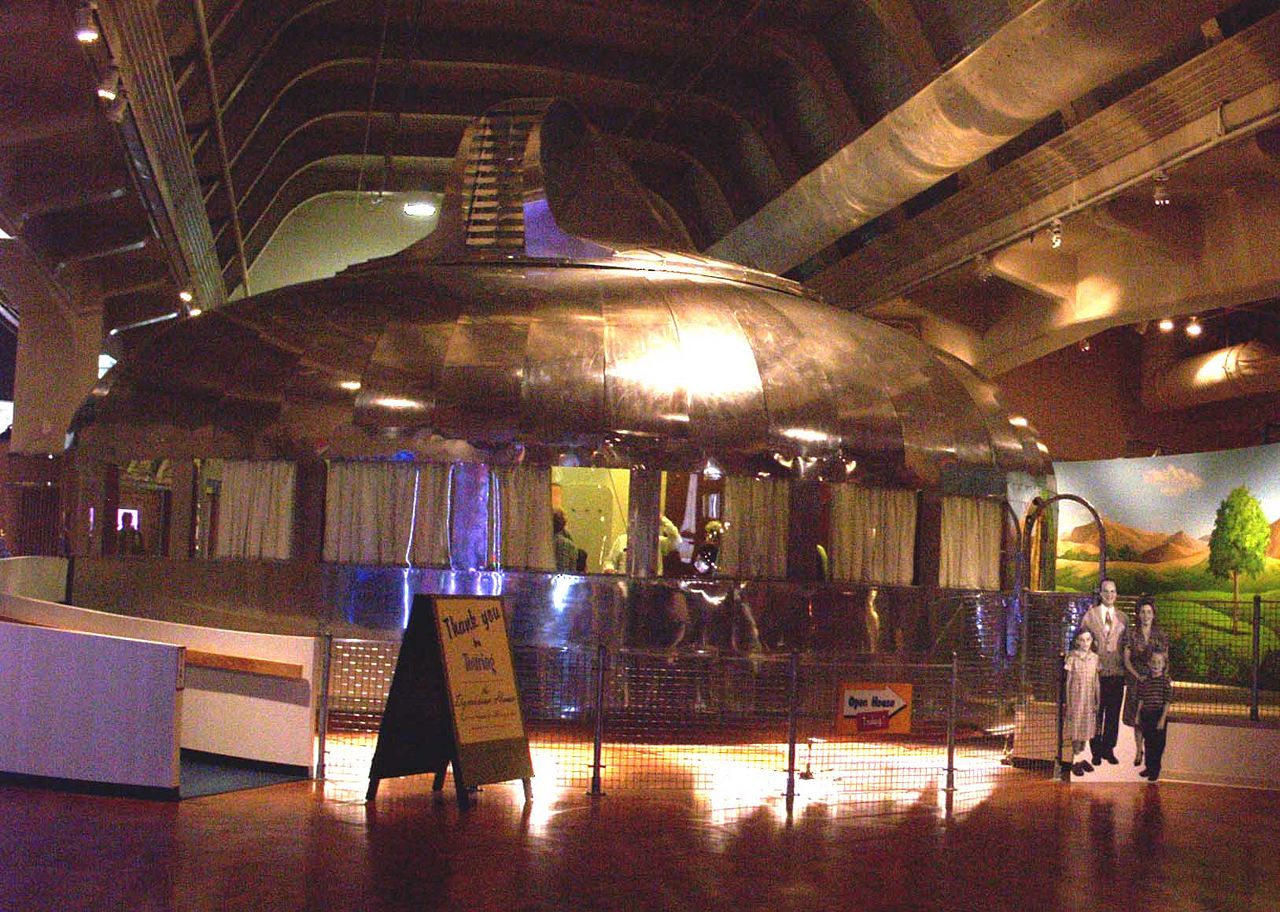
When I think of Buckminster Fuller, I think of geodeisic domes, Bucky balls, and things like that. In 1920, however, he entertained the idea of entering the housing market with what he called the Dymaxion House. The benefits of this thoughtfully designed structure have appeal – easy to heat, dust is drawn down through the baseboards almost eliminating that noxious chore, rotating closets that bring the clothes to you (this was repeated in an episode of Tool Time). A full description is here at the Fuller Institute.
Although the design was conceived in 1920, it was not until 1945 that one of the dymaxion homes was actually built. In spite of all of its benefits, the idea did not take off. The one dymaxion home that was built, was dismantled in 1991 and was eventually reassembled as part of the Henry Ford Museum in Dearborn, Michigan.
I was searching for something else entirely when I came across these photographs of the building of the Empire State Building. The post was about corporate negligence about safety issues. That aside, I think the photos are interesting and beautiful. These is something so lovely about fine grained, black and white photos with high contrast. These are attributed to sociologist and photographer, Lewis Wickes Hines.
Empire State Building Being Built in 1930
No such thing as OSHA back then! Amazingly, it is believed only 5 people died during the construction and one of them was hit by a truck. Interesting photos taken during construction of the Empire State Building.
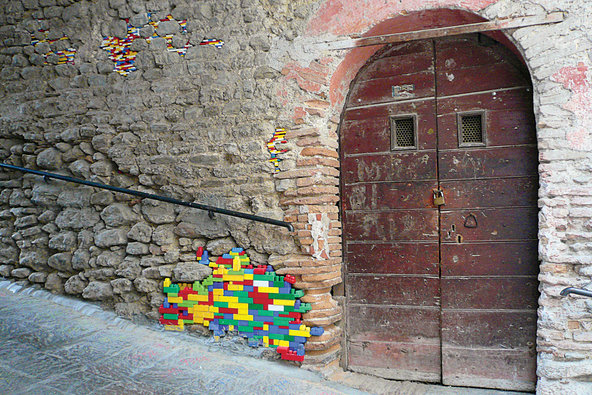
“For a certain set of artists and thinkers, Legos are not mere child’s play, but objects of both abstract and formal perfection.”
When Bjarke Ingels, the visionary leader of the Danish architectural firm BIG, first heard about the competition to build the Lego House, a museum and activity center near the toy company’s headquarters in Billund, Denmark, he gathered his staff. “If there was one building that BIG was founded to build,” Ingels announced, “this is it.”
For Ingels, Lego proportions have a mystical perfection that “borders on the Da Vinci code.” Like most enthusiasts, Ingels refers to them as “bricks,” not “Legos”; he doesn’t see them as toys, but as tools for “systematic creativity.'”
Some LEGO history:
“When Ole Kirk Kristiansen founded Lego in 1932, the company made wooden toys, but after World War II, it switched to plastic. The Lego brick as we know it today was developed in the mid-1950s. From the start, it was a feat of classic Scandinavian design: clean, practical, reliable and somewhat revolutionary with its “clutch power,” which made it easy to snap and unsnap. Today, Lego enthusiasts marvel that those first Legos still fit perfectly with the current ones, and that six identical eight-studded bricks can be combined in more than 900 million ways. “The human condition is, sadly, divisive,” the British television host James May said on an episode of his show “Toy Stories,” on which he explored a full-size house he built entirely out of Lego bricks. “But there are simple spiritual experiences that unite all of humanity in unqualified communal joy: sex, the dance, foot massage — and to those I would add the simple sensation of pressing Lego bricks together.””
I don’t think I posted this video of James May’s Toy Story that shows how a battalion of volunteers built him a LEGO house. Here is a short clip of the results.
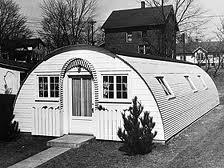
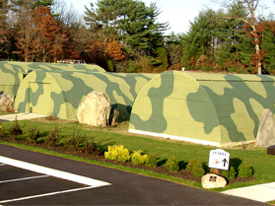
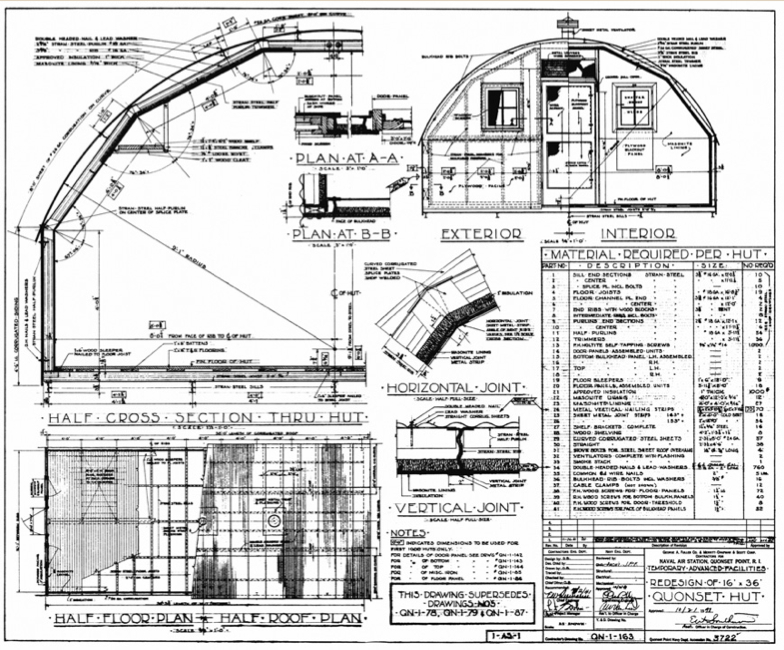
Once in a while, a really good design surfaces — robust, simple, and enduring. The DC-3, the Jeep, and the Quonset hut are all examples of good design. Many are still standing throughout the United States, primarily as commercial buildings.
The quonset hut, whose semi-cylindrical form was copied from the British Nissen hut, by the end of the war differed considerably in construction from its prototype. The original quonset hut was framed with arch-rib members of steel, T sections, 2 inches by 2 inches by 1/4 inch. The hut was 16 feet by 36 feet in plan. The members were formed to a radius of 8 feet and covered with corrugated steel sheets, borne by wood purlins.
The principal improvements over the Nissen type were an interior pressed wood lining, insulation, and a tongue-and-groove wood floor. Innumerable detail problems were encountered in the development of the original T-rib huts, principally because of the necessity for 48 different needs, such as galleys. shower-latrines, dental offices, isolation wards, and bakeries.
Each type required individual drawings and layouts for the interior setup, and in many cases it was necessary to develop special interior equipment, such as special ovens and beds, to fit the quonset hut form. All huts were designed and detailed, using the original T- rib design.
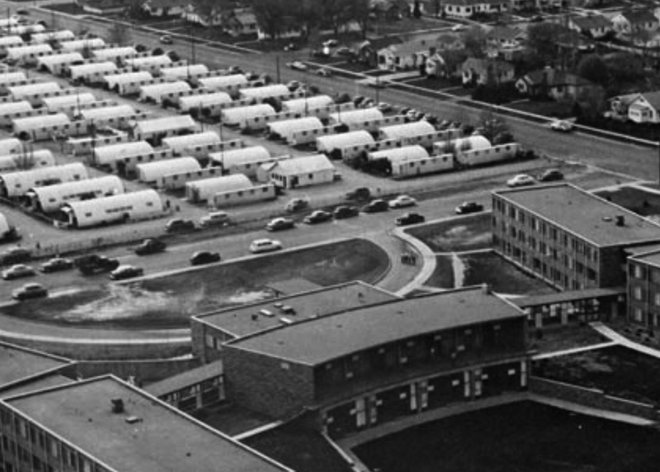
The photo above shows student housing at the University of Colorado in the 1950s.
To meet the growing demand, a number of other companies produced variations of the Quonset Hut for the Military during the Second World War:
The Pacific Hut Company was formed to produce an all-wood hut for Arctic use.
Butler Manufacturing made a squat hut with U-shaped arch ribs.
Jamesway Manufacturing made a hut with wooden ribs and insulated fabric covering.
Armco International made heavy-weight arched bunkers to store ammunition.
Cowan and Company made semicircular warehouses for the Air Corp.
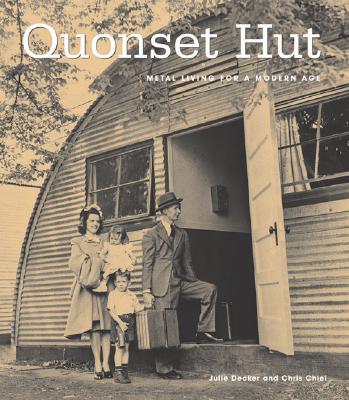
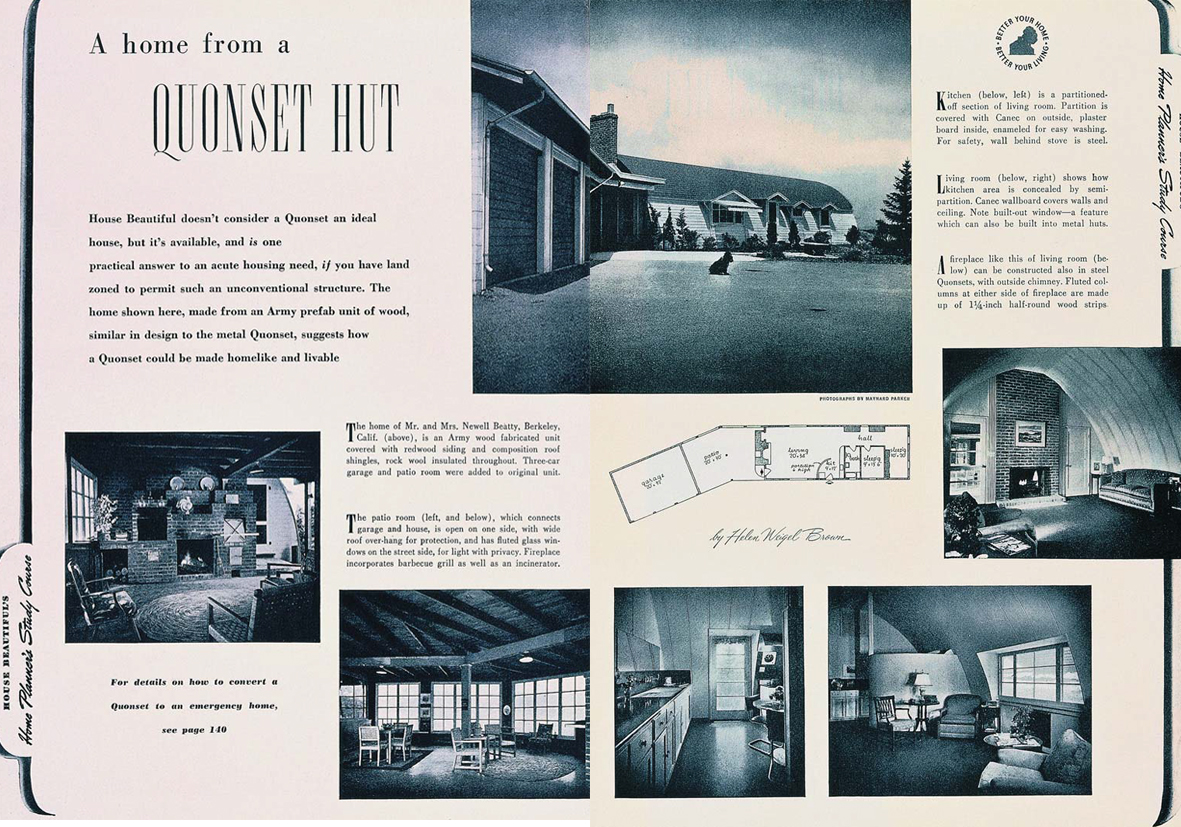
When the war ended, Quonset Huts were too good a resource to throw away. So the military sold them to civilians for about a thousand dollars each. They made serviceable single-family homes. Universities made them into student housing and returning veterans occupied Quonset huts by choice. Robert Winton even wrote play about them titled Tents of Tin.
Finally, here’s a little animation about putting a Quonset hut together.
There are still a number of Quonset huts around and in use as commercial buildings in the Connecticut Western Reserve area where I live. I am going to go out with my camera to capture them.
It was jury duty all week, which I was talking about earlier. The long lunch hours broke up the day that was mainly spent waiting to be called for a jury panel. Regarding jury duty, I think this is a privilege that our system of government affords and that everyone should have a chance to experience. I have been on juries previously; just sorry I did not get chosen this time.
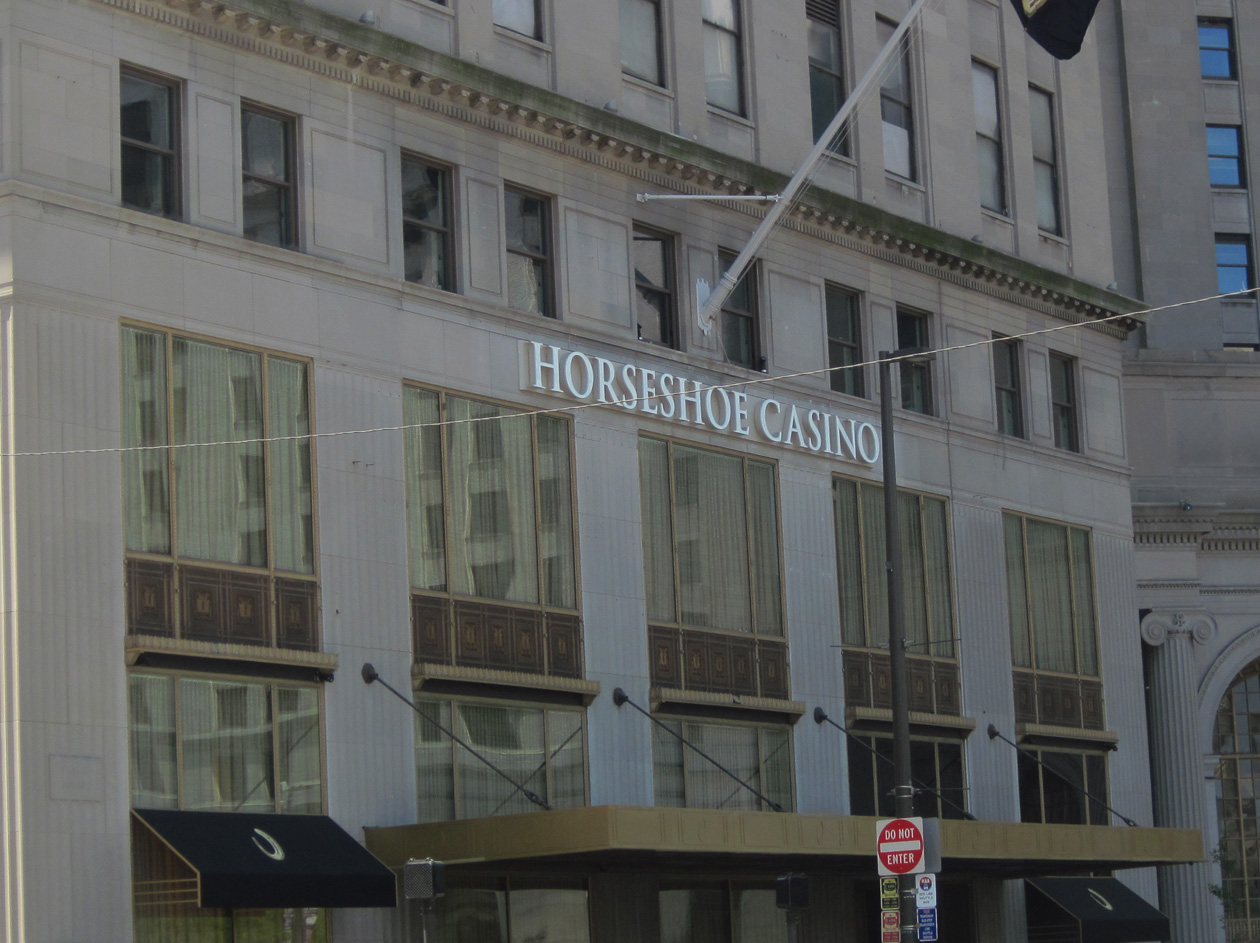
During the lunch breaks I was able to see the new Horseshoe Casino in the former Higbee’s department store building. Higbee’s was a beautiful store and the structure has been preserved by the Casino, albeit given over to the slots and the tables. I did not spend a lot of time there because of the noise, but in the middle of the week, in the middle of the day, it was quite full of people.
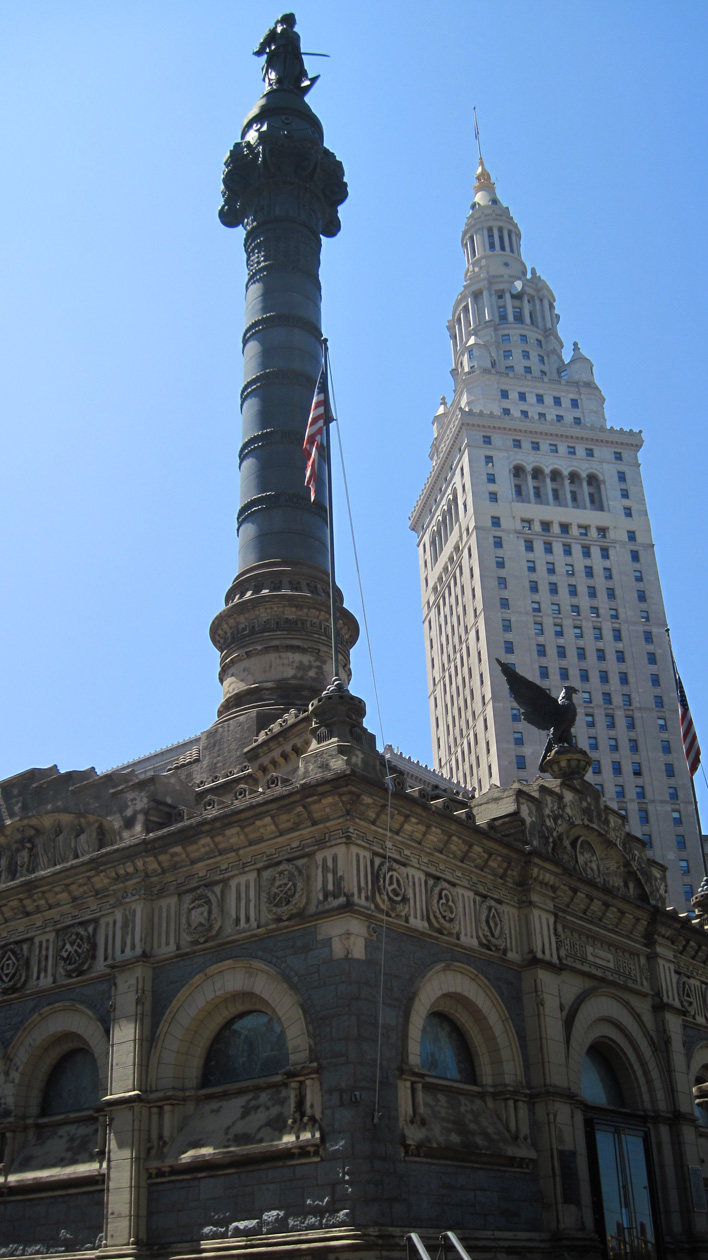
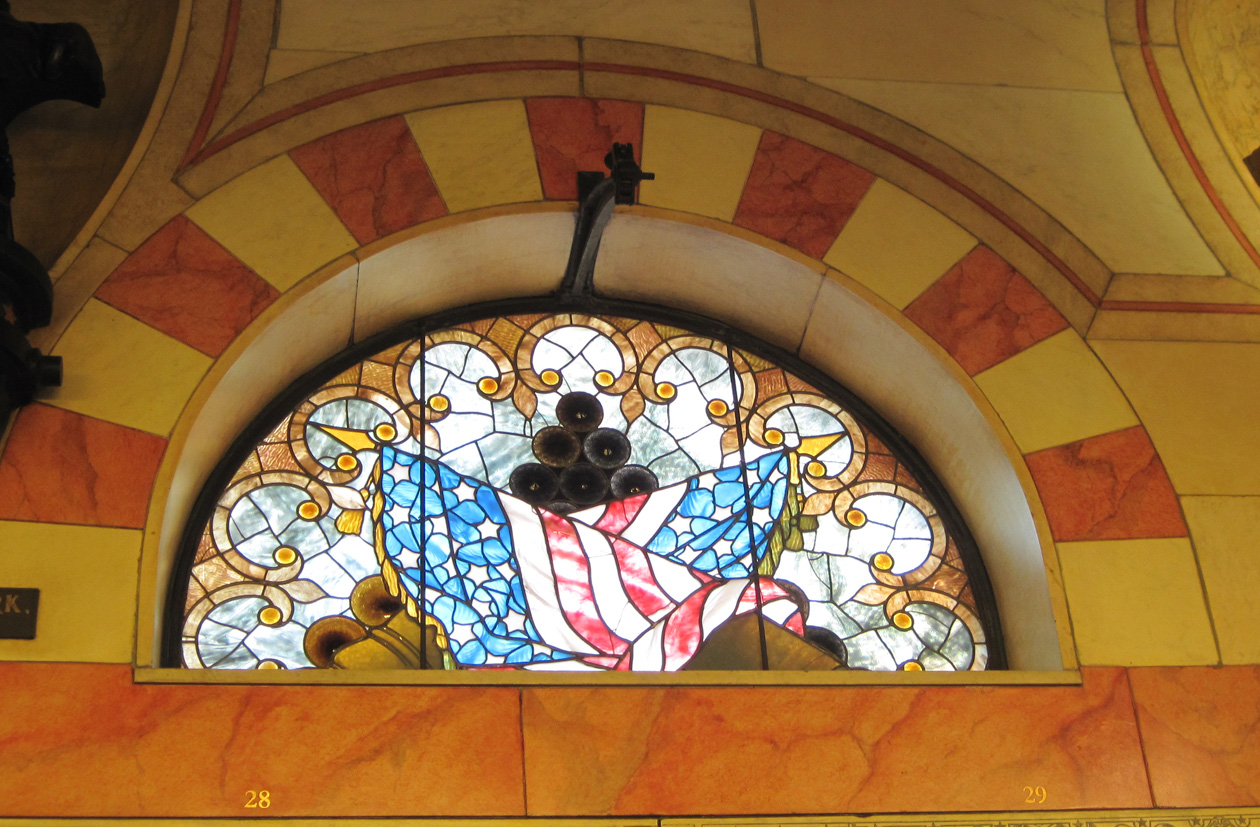
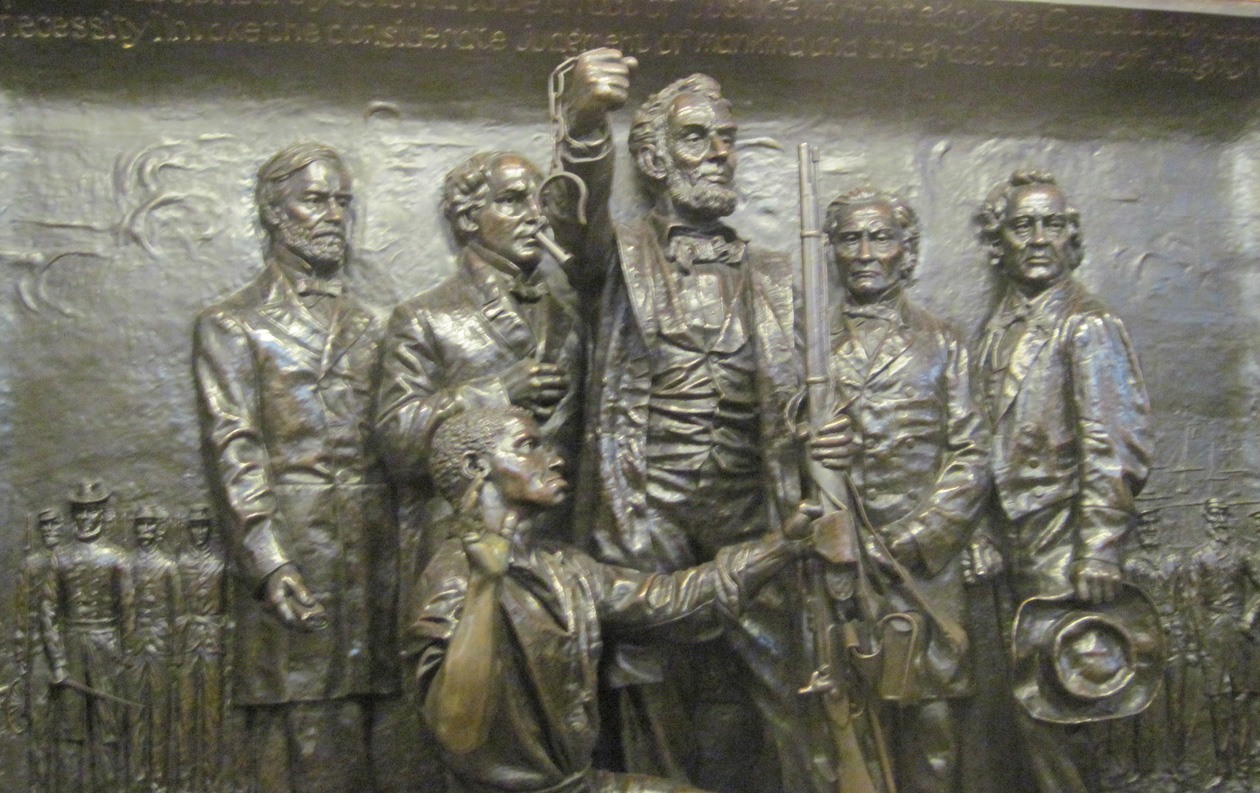
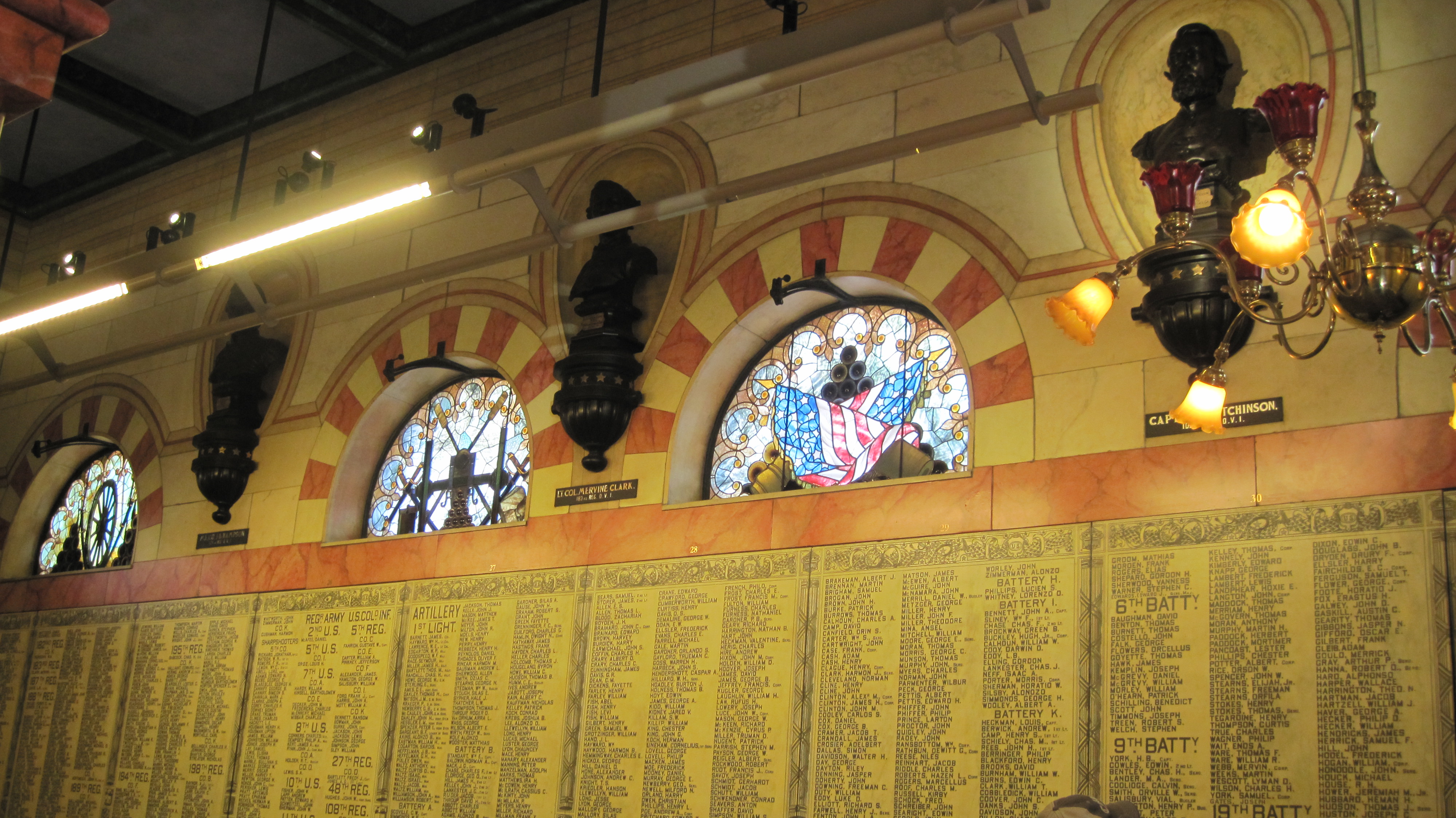
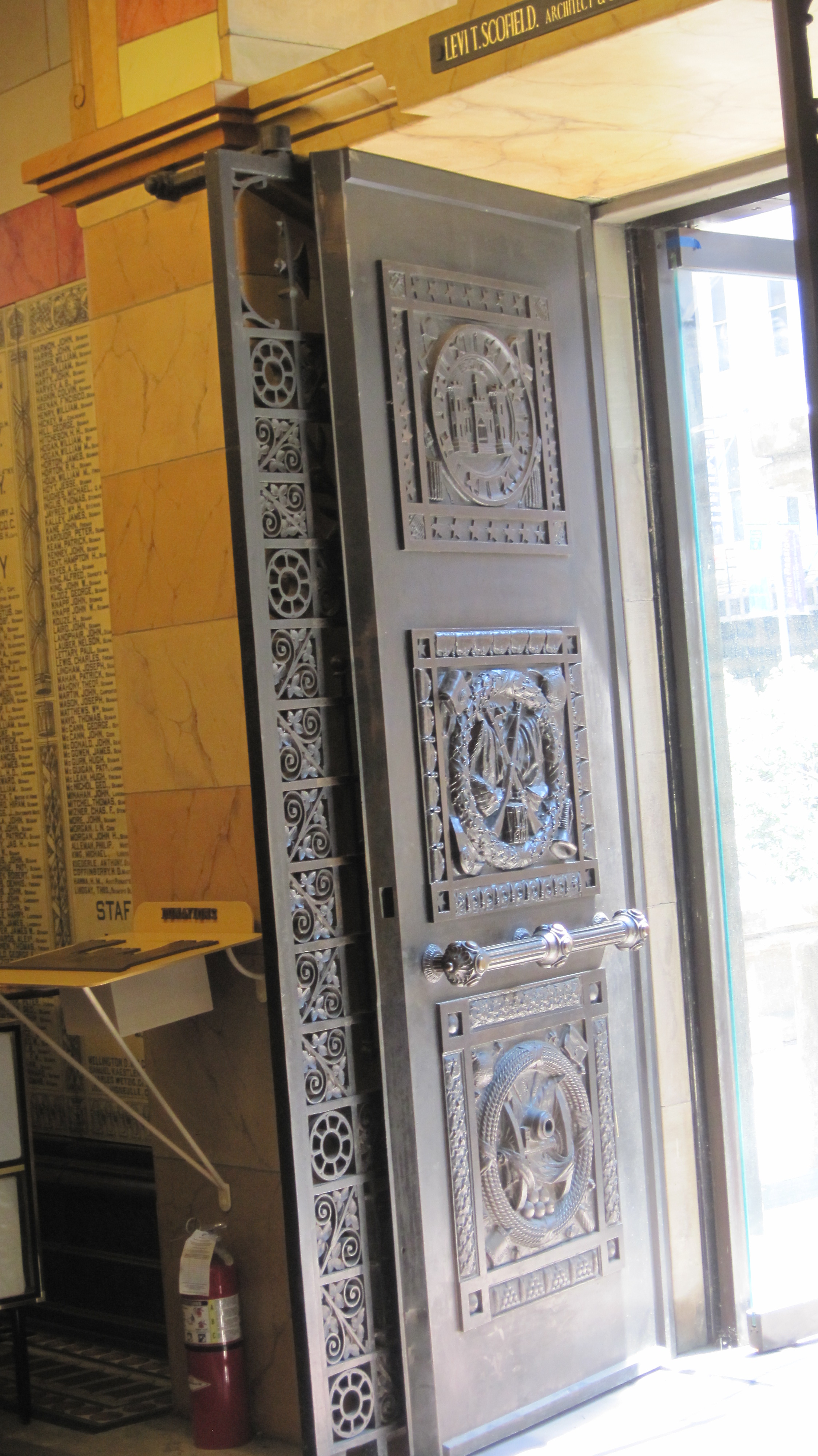
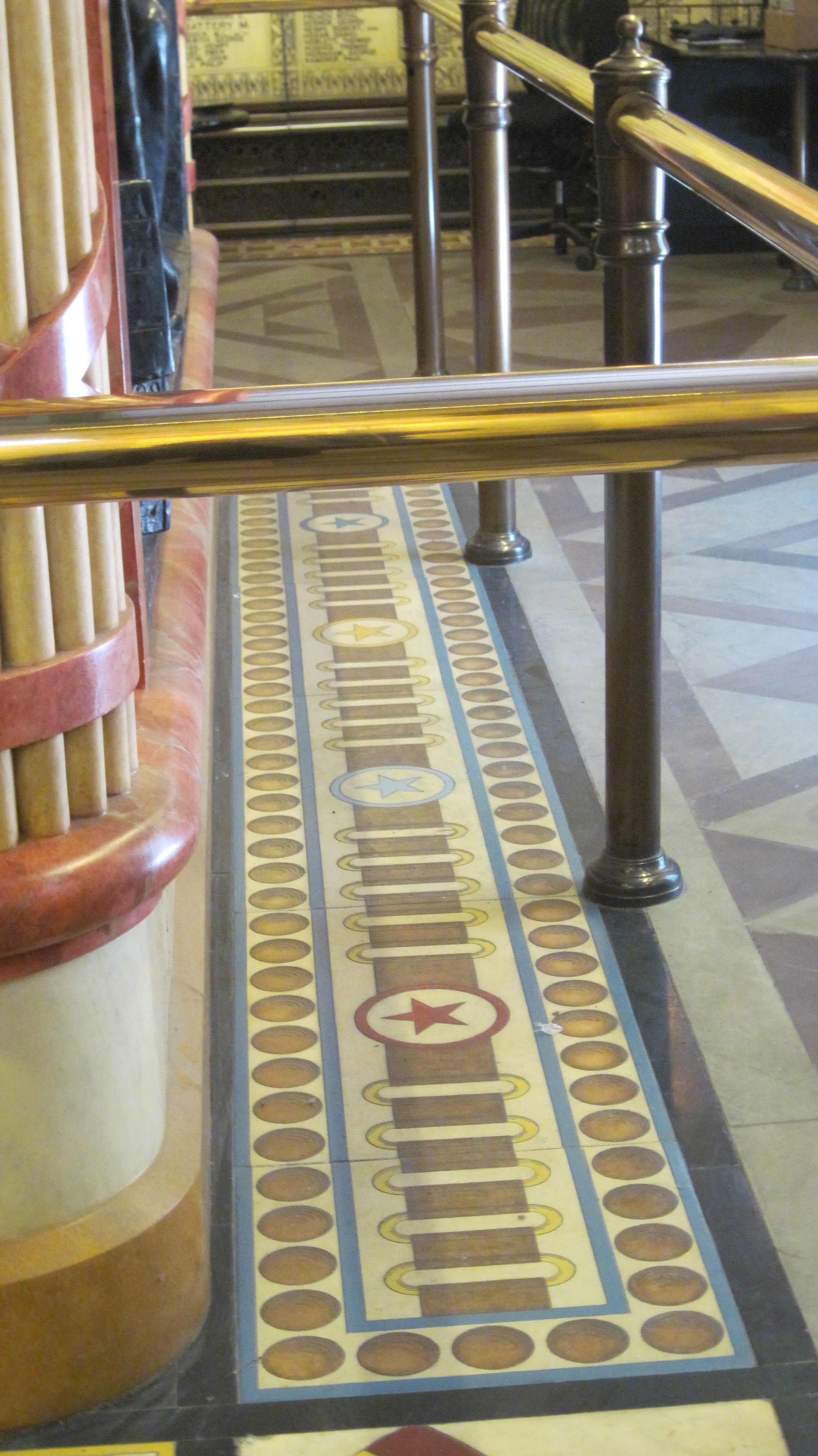
I also paid a visit to the Soldiers and Sailors Monument. This building has recently undergone a $2 million restoration and it is beautiful inside and out. Well worth a visit.
The monument has bas reliefs on the inside walls, the names of the fallen on the outside walls, art glass and mosaics. Outside are four large bronze sculptures depicting scenes from the Civil War. The restoration work is beautiful and the monument is a gem.
Finally, I saw this on my way home.
It was a holiday weekend – so I guess that explains the giant potato!

 When I think of Buckminster Fuller, I think of geodeisic domes, Bucky balls, and things like that. In 1920, however, he entertained the idea of entering the housing market with what he called the Dymaxion House. The benefits of this thoughtfully designed structure have appeal – easy to heat, dust is drawn down through the baseboards almost eliminating that noxious chore, rotating closets that bring the clothes to you (this was repeated in an episode of Tool Time). A full description is here at the Fuller Institute.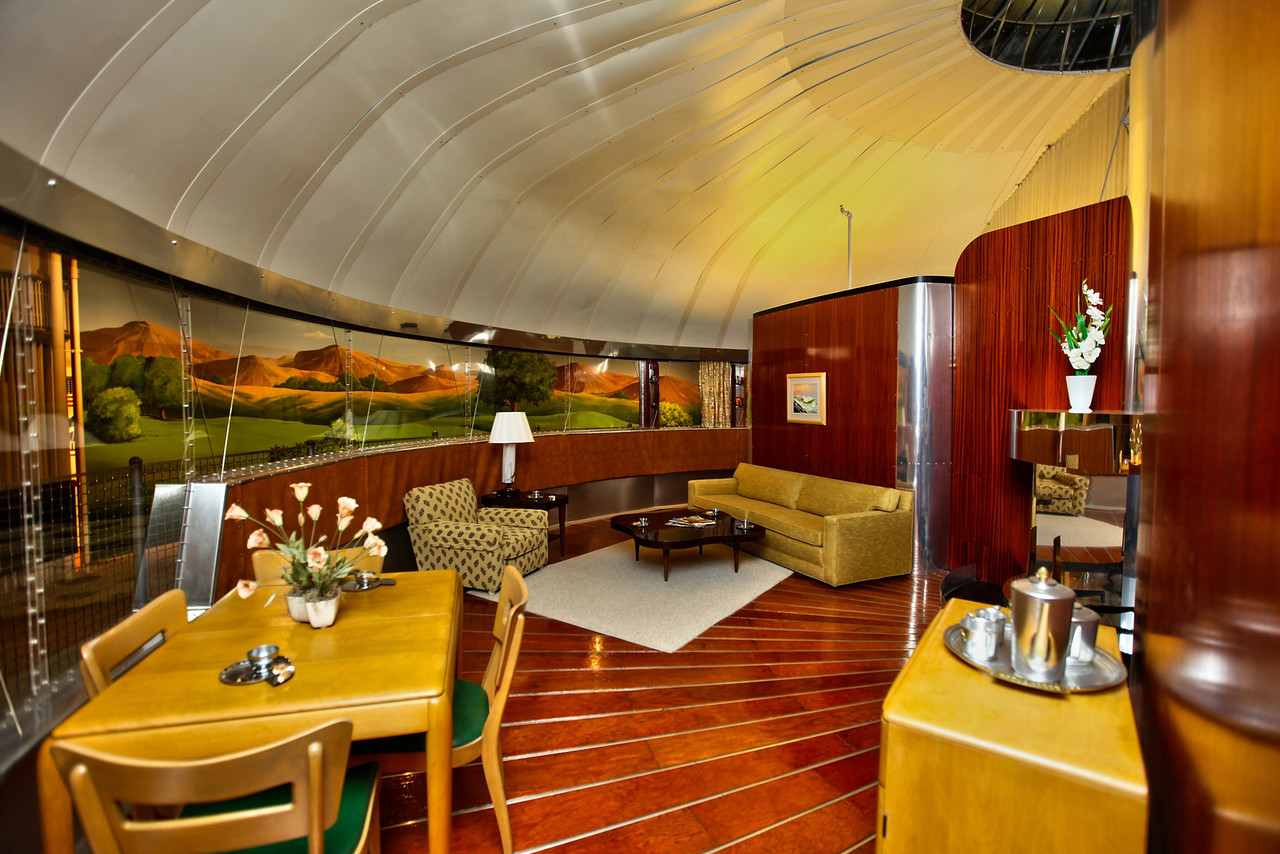
 Oooo, shiny!
















 Gunsmoke and Knitting