Posts Tagged ‘animals’

h1

What am I sappy cat blogging?

June 30, 2017
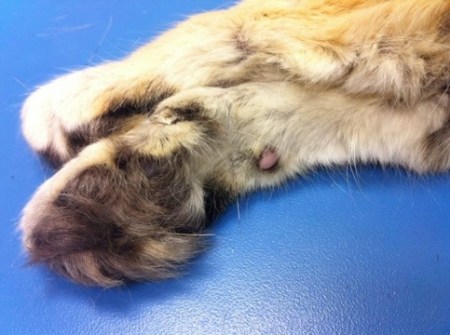
Cat leaves purr-fect paw print in 2,000-year-old tile unearthed in Lincoln

“Don’t you just hate it when you work hard for something and someone just walks over your work — literally? Well, we don’t really know how any Romans would feel after a cat walked over their roof tiles, but now, after almost two millennia, it’s nothing but cute.

The tile dates from 100 AD, from a Roman site in Lincolnshire, UK. Archaeologists found it along with over one thousand other pieces, by the Washingborough Road site, excavated due to railway works in the area. Scientists believe that the site was a complex of buildings, perhaps a town or a smaller settlement, which included some pretty wealthy people. Most houses during that time would have been built of timber and thatch. This is also likely because many of the buildings excavated there were made of stone and bricks and had tiled roofs — indicating some pretty wealthy Romans lived in the area. This was likely part of a big villa, as archaeologists even found a fish pound around.

The tiles were made through a relatively common technique. Most craftsmen would have made the tiles close to the settlement. The wet clay was molded into the desired shape and then left out to dry — it’s then that our cat would have stepped on it, sinking ever so slightly into the drying clay and leaving a print that would live on for posterity.

It’s known that Romans kept cats as pets, mostly to keep the mice and rats away.

Aside from Roman artifacts, the site has revealed a trove of other findings. Flints from hunter-gatherers, arrows and other weapons from Neolithic hunters, Bronze-Age burial urns, even human ashes were all retrieved from the area, which seems to have been continuously inhabited for a very long time. Moving on closer to the present date, archaeologists have also discovered a Medieval malthouse and pre-modern farmhouse. Still, if you ask me, nothing quite compares to the charm of this small paw print.”
From the Lincolnshire News:  Read more here.

h1

What am I sappy goat blogging?

June 23, 2017

Goats are crazy!

You’ve seen goats climb rocks, houses, cliffs or even this dam in Italy.

goat-dam-2

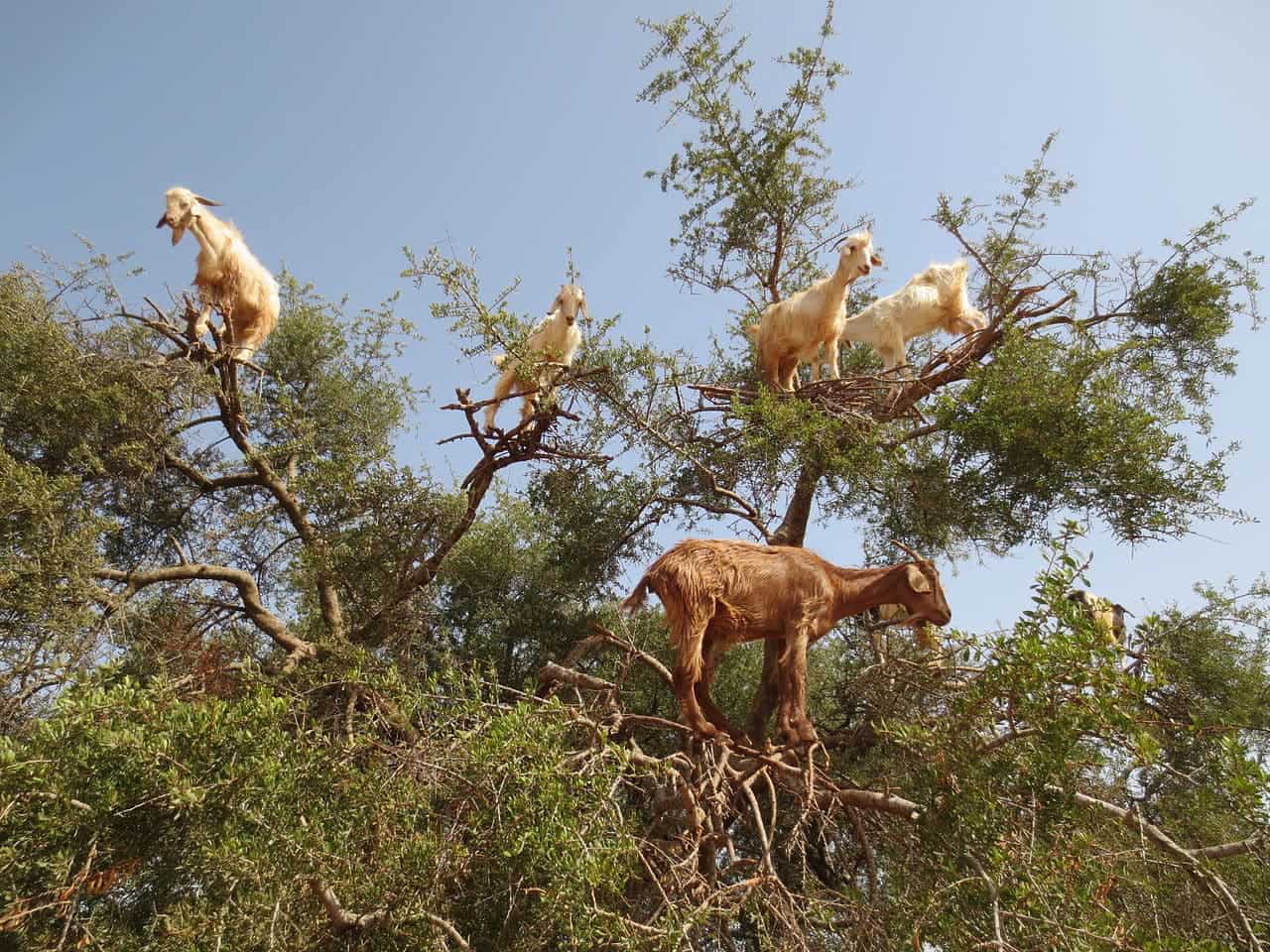
But have you ever seen goats climb trees? In Morrocco, this is a very common occurrence. You see, in most parts of the world where you’ll find goats, their food is usually right under their hoofs. In and around the Atlas Mountains, though, grazing pastures are patchy – here and there. So, goats have learned to make the best of anything they could get their adorable hoofs and snouts on, even if that means being perched high up in the trees.

A lovely goat enjoying some argan seeds. Credit: Pixabay.

A lovely goat enjoying some argan seeds. Credit: Pixabay.

This is not only nice for goats but for the trees themselves too. According to a recent study in the journal Frontiers in Ecology and the Environment by Spanish researchers who wanted to learn whether domesticated goats benefit argan trees (Argania spinosa). 

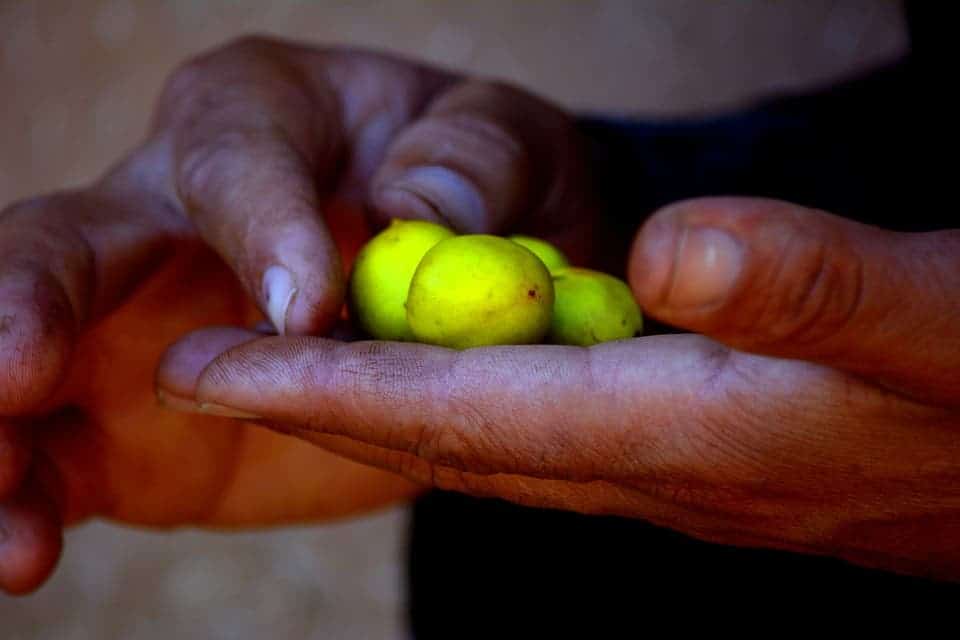
Goats in Southern Morrocco will often climb 30-foot-trees in search for food, in this case, acorn-sized argan seeds. Even as much as three-quarters of their time is spent in the argan trees during the autumn days when vegetation is scarce. The team wanted to know if the goats help in any way with seed dispersal.

Goats are excellent climbers and rarely if ever fall down from a tree. Credit: Wikimedia Commons.

Goats are excellent climbers and rarely if ever fall down from a tree. Credit: Wikimedia Commons.

It’s well established that many animals spread the seed of various trees and plants by excreting seeds. This is how all sorts of plant species end up on islands, for instance, after some bird pooped them out even after hundreds of miles. The argan seed, however, is way too big and shouldn’t make it intact out of a goat’s digestive tract.

Argan seeds can grow to be quite large. Credit: Max Pexels.

Argan seeds can grow to be quite large. Credit: Max Pexels.

But precisely because the seeds are so large, they can be a nuisance for the goat.  Instead, the researchers chronicled the goats as they spit the seeds out. Like cows and other ruminants, a goat has multiple stomachs. So, what a Moroccan goat does is it will regurgitate the argan seeds from the first stomach and chew on it some more. During this process, the goats will often spit out some of the argan seeds, sometimes days after first ingesting them. Some seeds are spit very far from the parent tree too, the team found.

Argan farming is the main source of revenue for many rural Moroccans. Some successful farmers will use some of their profits to buy more goats as is the custom, which is aptly given part of that success is predicated on the goats’ ability to disperse the argan seeds and help more trees grow. Ironically, though, if there are too many goats, no new argan forests will appear since the animals eat all the baby trees. This is something many farmers should be more mindful of. And they’re not the only ones either. The main takeaway, not just for you the reader but for many working scientists too, is to look beyond the dung.

“In conclusion, many previous studies that investigated the role of ruminants as seed dispersers were based exclusively on dung analyses and may have underestimated an important fraction of the total number of dispersed seeds. Moreover, this fraction of seeds should correspond to plant species with particular fruit and seed traits (eg large linear dimensions) differing from those of plant species dispersed exclusively or mostly through defecation,” the team wrote in their paper.

“Importantly, the seeds of some species are unlikely to survive passage through the ruminant lower digestive tract so that spitting from the cud may represent their only, or at least their main, dispersal mechanism. It is therefore essential to investigate the effectiveness of this overlooked mechanism of seed dispersal in various habitats and systems,” the Spanish scientists concluded.

Credit:  Tibi Puiu

Displayed with permission from ZME Science

h1

What am I sappy cat blogging?

June 9, 2017

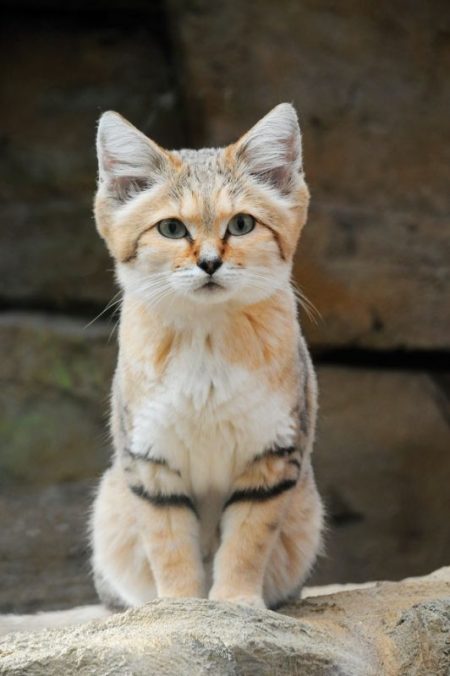
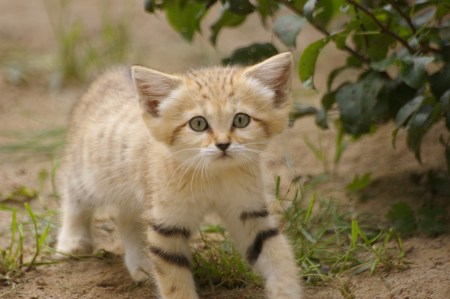
The sand cat (Felis margarita), also known as the sand dune cat, is the only cat living foremost in true deserts. This small cat is widely distributed in the deserts of North Africa, the Middle East and Central Asia. It was listed as Near Threatened on the IUCN Red List since 2002 because the population was considered fragmented and small with a declining trend. It was downlisted to Least Concern in 2016.

The sand cat inhabits both sandy and stony desert, in areas far from water. Having thickly furred feet, it is well adapted to the extremes of a desert environment and tolerant of extremely hot and cold temperatures. – Wikipedia

Sand Cat Range

h1

Why do I have wings on my feet?

June 5, 2017

Japanese artist, Keiko Otsuhata, designed these high heels to look like pigeons.  She then wore them to the park to see if she could attract the genuine article with her artifice.  I don’t think she was particularly successful, but I give her credit for an amusing and original idea.
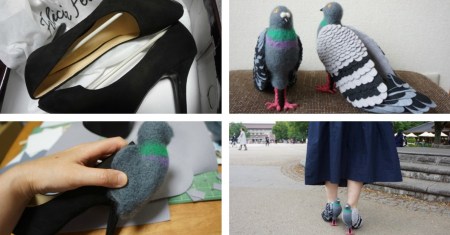
Read the whole story here on Spoon and Tomago.

h1

What am I sappy squid blogging?

May 26, 2017

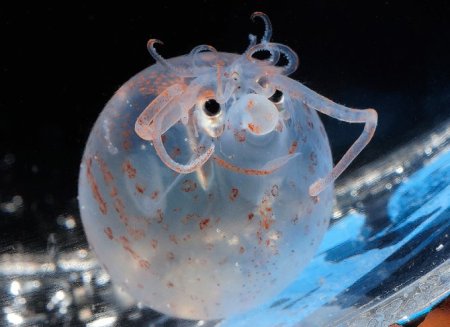
The piglet squid measures only a few centimeters across, and it’s one of the cutest animals out there! It can be found in virtually all oceans in the deep water, over 100 meters deep. Due to its tiny size and deep water habitat, the piglet squid is actually not that well studied and understood.
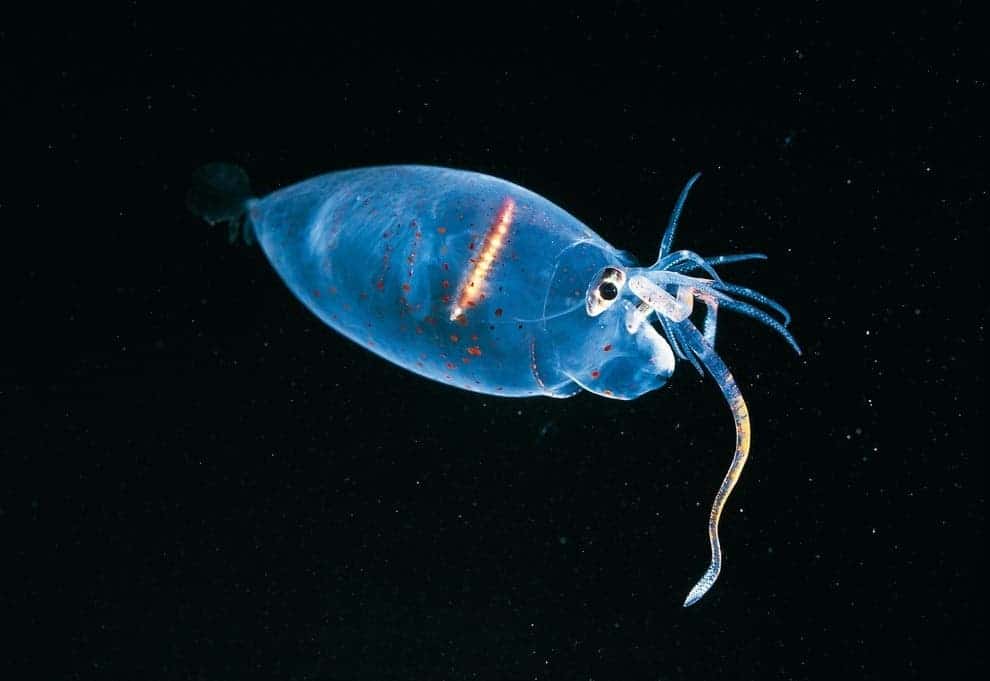
 

They are known to be sluggish swimmers, mostly because they often fill up with water, which is then released through the funny looking siphone you see above. Indeed, it does look like a piglet squid. It maintains itself buoyant with ammonium ions in its body fluid. It also has a large light producing organ (photophore) is located beneath each of its large eyes.

The body is almost entirely clear, and if you look at it, you can barely see the semi-transparent internal organs, which provide a smile-like look. Interestingly enough, the piglet squid has most often been observed from submersibles with its head upside down. However, it is entirely unclear why they do this.

Actually, now that I’ve seen it like a piglet in the upside down position, it’s hard for me to see it the other way.


Reblogged from ZME Science

h1

What am I sappy seal blogging?

May 19, 2017

Don’t try this at home.

h1

What am I sappy cat blogging?

May 12, 2017

This week’s wonderful sappy cat photo comes from Carol at Light Words.

Look carefully at the upper left corner of the photo.  See the mockingbird mocking the poor, confused kitty? Thanks, Carol!

h1

What is my Wednesday update?

May 10, 2017

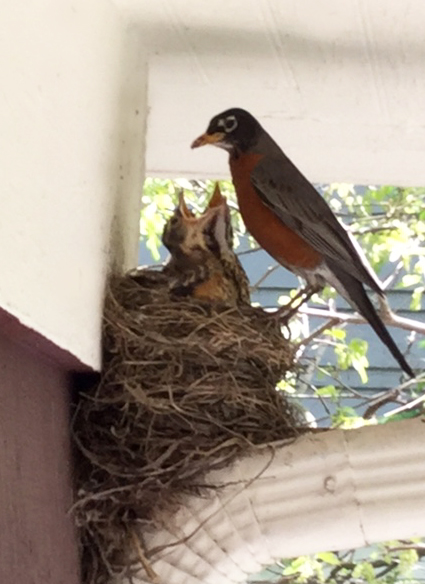
This is the robin family – you can see two youngsters, but there are at least three in the nest.

Seen on the road last week – this was taken outside Mt. Rushmore in SD.

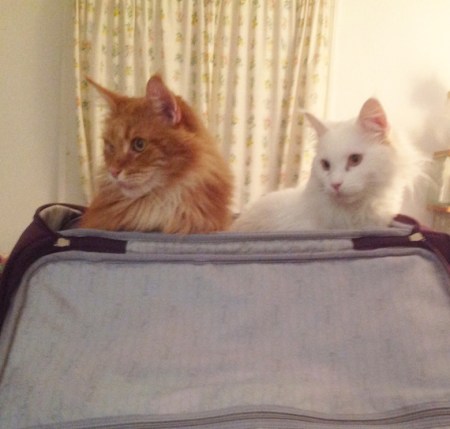
As soon as we got home and I emptied my suitcase, Cmdr. Sam Vimes and his brother, Hobbes, jumped in.  Apparently they feel we should not go away again any time soon.

h1

Why am I saying “chirp?”

May 9, 2017

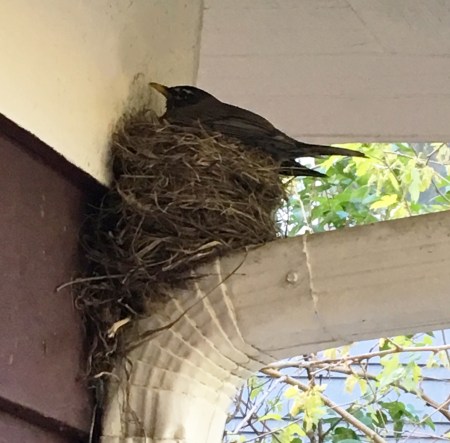
The robin family that has been nesting over our back door down spout has successfully hatched three or four chicks.  This happened when we were out of town last week, so they had quiet family time while we were away.

Last year they tried twice to raise a family, but raccoons got the eggs both times.

If you look closely, you can see the nest looks kind of like a duplex because the robins built a brand new nest right on top of last year’s.

The chicks are getting pretty big.  I’ll bet they will fledge soon.  Nice.

h1

What am I sappy cake blogging?

May 5, 2017

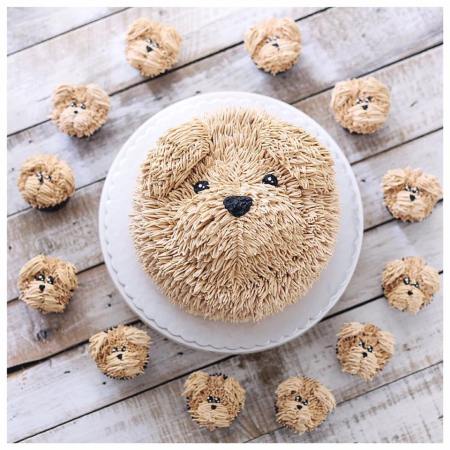
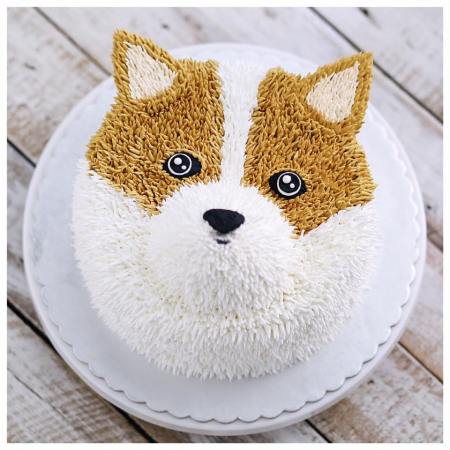
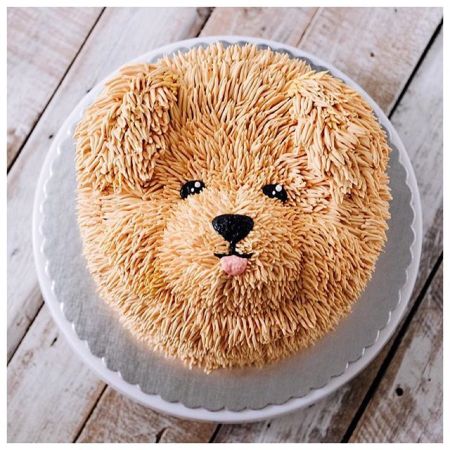
From Iven Kawi,  the same cake artist that creates frosting cactus gardens . . . here are cakes appropriate for sappy cat,and dog, blogging . . .

I have no idea how she does this.