Today is Get Out Your Guitar Day . . .


Home is where the Guitar is.


Today is Get Out Your Guitar Day . . .
Home is where the Guitar is.

NPR journalist Mary Louise Kelly says U.S. Secretary of State Mike Pompeo — apparently angered over some tough questioning — summoned her to his private living room at the State Department and challenged her to point to Ukraine on an unmarked map. Kelly — who has a master’s degree in European Studies from Cambridge — said she did. Pompeo (who’s set to arrive in Kyiv on January 30) later suggested Kelly had pointed to Bangladesh instead. How would you fare if you were called on the carpet by Pompeo?
My results on the quiz rated “not bad,” but I think I embarrassed myself.
Take the Pompeo quiz: https://www.rferl.org/a/pompeo-npr-kelly-ukraine-map-quiz/30403854.html
It’s tattoo Tuesday:

On February 3, 1959, American rock and roll musicians Buddy Holly, Ritchie Valens, and “The Big Bopper” J. P. Richardson were killed in a plane crash near Clear Lake, Iowa, together with pilot Roger Peterson. The event later became known as “The Day the Music Died”, after singer-songwriter Don McLean referred to it as such in his 1971 song “American Pie”. At the time, Holly and his band, consisting of Waylon Jennings, Tommy Allsup, and Carl Bunch, were playing on the “Winter Dance Party” tour across the Midwest. Wikipedia
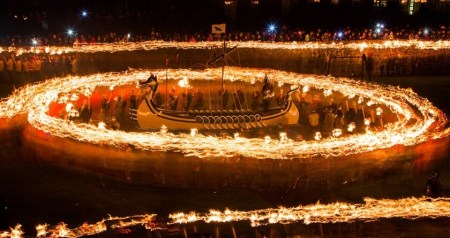
Today is Up Helly Aa – a (sort of) Viking Festival marking the end of the Yule season – and also giving folks something to do during the bleak winter days. There is fire – and drinking – what could possibly go wrong?

Tattoo Tuesday . . .


Yesterday (January 27 in 2227) will be the birthday of Dr. Leonard “Bones” McCoy, Chief Medical Officer of the Starship Enterprise.
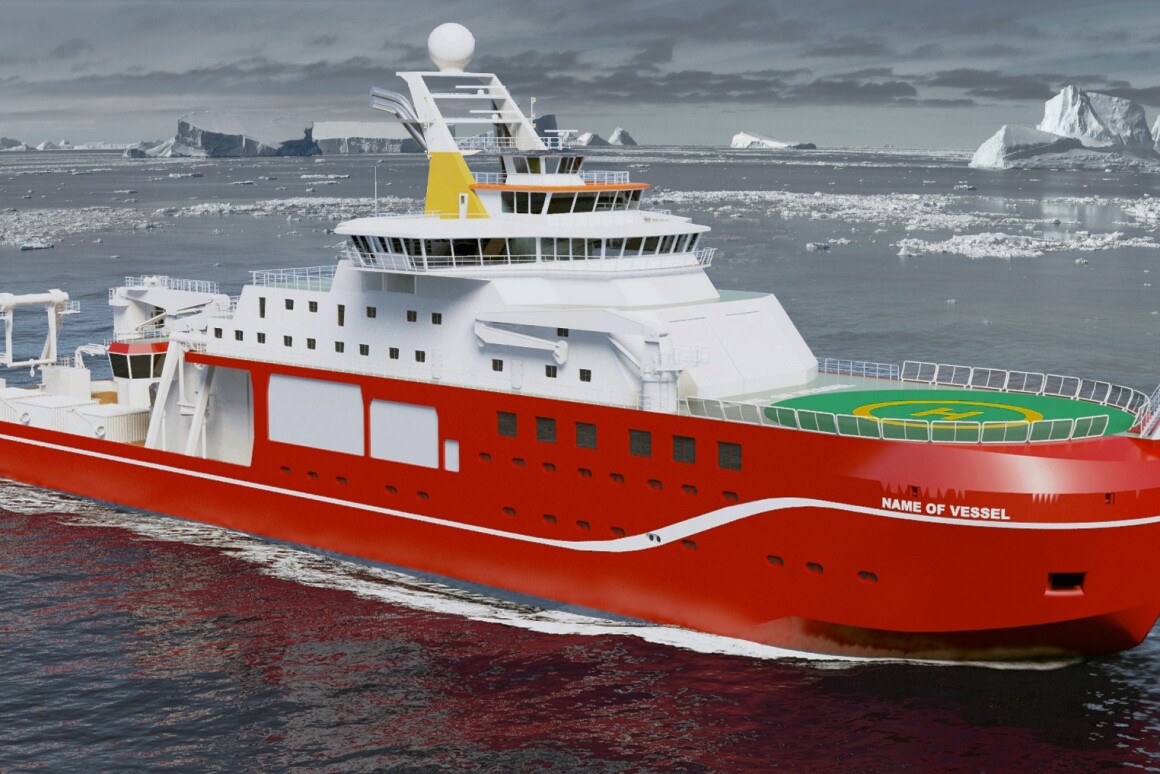
The British Antarctic Survey’s (BAS) polar research vessel RRS Sir David Attenborough came a step closer to going into service this week as its power systems came online for the first time and its advanced lifeboats were commissioned. In the final stages of construction at the Cammell Laird shipyard in Birkenhead, UK, it’s the first British ship that is International Maritime Organisation Polar Code-compliant.
Named after the famed nature documentary maker, the floating laboratory RRS Sir David Attenborough caused some amusement in 2016 when an invitation for the public to name it resulted in the winner being Boaty McBoatface. Now sporting a more dignified moniker, the Attenborough replaces the RRS Ernest Shackleton and RRS James Clarke Ross. When it enters service, it will carry 60 scientists and support staff in BAS operations in both the Antarctic and the Arctic. It’s 129.6 m (425 ft) long, 25 m (82 ft) abeam, has a draft of 7.5 m (24 ft), displaces 12,790 tonnes (14,098 tons), and has 4,200 m³ (148,000 ft³) of cargo space.
As part of the completion process, the lifeboats for the Attenborough have been commissioned. Each of these can carry 90 people and they are situated on both sides of the ship on specially designed davits. Based on data from previous Arctic lifeboat search and rescue expedition trials, the lifeboats and their davits can operate at temperatures down to -35° C (-31° F).

In addition, this week saw Cammell Laird engineers bringing the Attenborough’s power systems up to 100 percent for the first time. The ship runs on a hybrid system with two six-cylinder and two nine-cylinder Rolls-Royce Bergen diesel engines powering the generators, which run through a series of battery banks to provide constant loads to the electric propulsion motors and the ship’s systems. According to BAS, having engines of different sizes allows for more efficient operations under different conditions. They also run on low-sulfur fuels and are fitted with a Selective Catalytic Reduction (SCR) system to keep down emissions.
The hybrid system allows the Attenborough to break its way through ice packs a meter thick at a speed of three knots (3.5 mph, 5.6 km/h). Additionally, by using electric motors and engines sitting on rubber noise-damping pads, the ship minimizes noise to both protect the local sea life and avoid interfering with the onboard acoustic and seismic instruments.
“This is a great moment in the final stages of the build,” says John Drummond, Project Director at Cammell Laird. “Testing power and installing lifeboats are very visible signs of the huge amount of technical and engineering work that has been undertaken. This truly unique ship is state-of-the-art and highly complex – we are proud to be getting it ready for sea.”
Source: British Antarctic Service (BAS) via NewAtlas (David Szondy)
You are currently browsing the archives for the Uncategorized category.
Firearms, fibers, any news or behaviors that make me say, "hmm, let me take another look at this."
I still miss my man, but my aim is getting better.











 Gunsmoke and Knitting