Pop-Tarts – introduced on this day in 1964. I think it is interesting that Pop-Tarts are sold in the US, Canada, England and Ireland, but have been discontinued in Australia. These cardboard-like toaster items (I think “pastries” is too strong a word to use in this instance) have been the focus of news and lawsuits over the years from their fat content, leading to low-fat Pop-Tarts, to allergy recalls, and toaster fire warnings.
As with creme brulee, I think Pop-Tarts are best plain – no frosting, no sprinkles. I prefer brown sugar cinnamon or strawberry, but I am willing to give the s’mores flavor a chance sometime.
Paula Poundstone on Pop-Tarts:
Here’s a list of flavors available from the Kellogg’s website via Wiki:
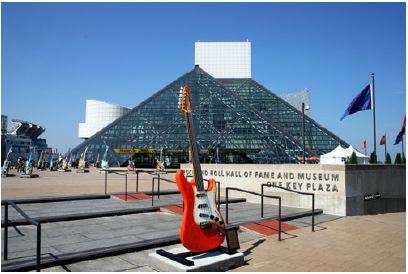
All of these things occurred in Cleveland, Ohio, where Moses Cleaveland landed on July 22, 1796. Here is a recreation of Settlers’ Landing on the banks of the Cuyahoga.
For more history and information about famous Clevelanders, go here and here.
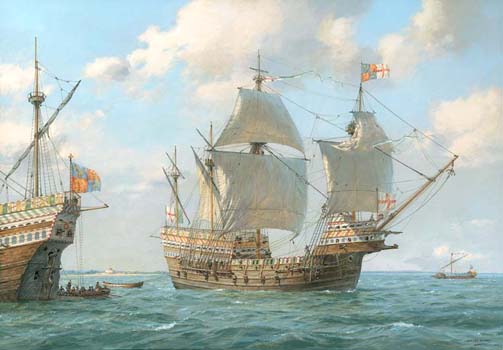
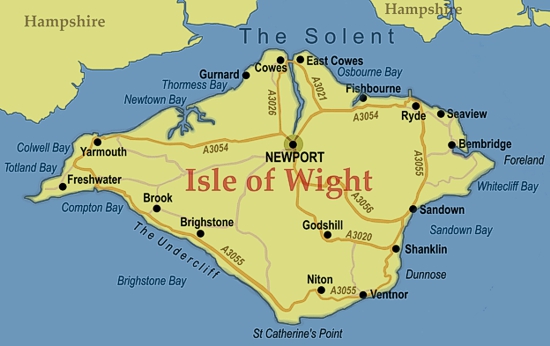
The Mary Rose was Henry VII’s flag ship. She sank precipitously in the Solent Strait between England and the Isle of Wight on July 19, 1545, after leading the English ships into battle with the French.
The Mary Rose was one of the first ships that was built expressly as a warship; earlier naval vessels were often refitted from merchant tasks. She was one of the first ships built in Henry VII’s expansion of the British Navy. She was also one of the first warships configured so that she could fire a broadside. The monarch oversaw her construction in the shipyards in Portsmouth.
The Mary Rose sank quickly and yet the reasons are not clear. She was, however, located and raised between 1979 and 1982. The ship is undergoing conservation and many of her artifacts are on display at the Portsmouth Historic Dockyard.
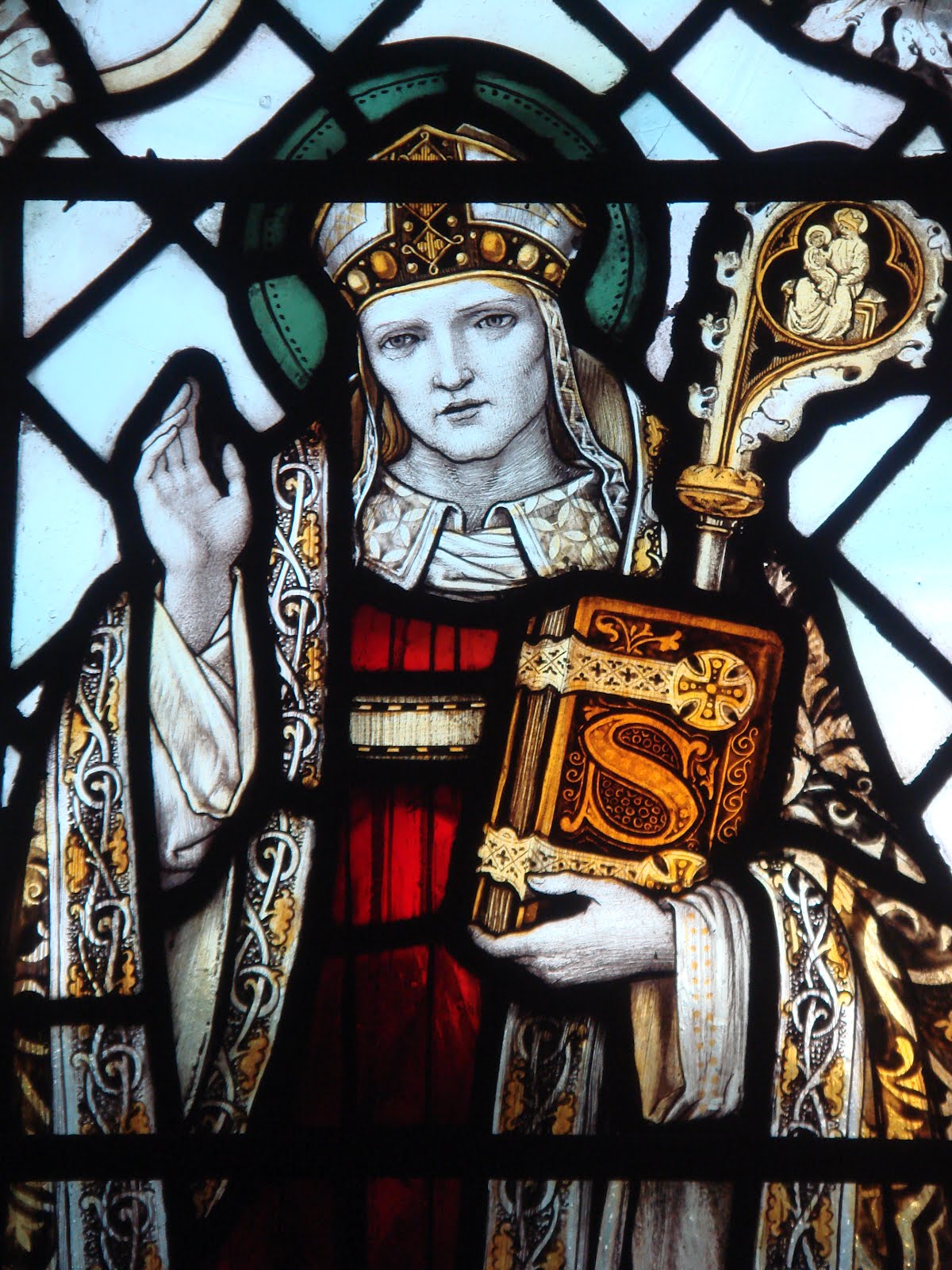
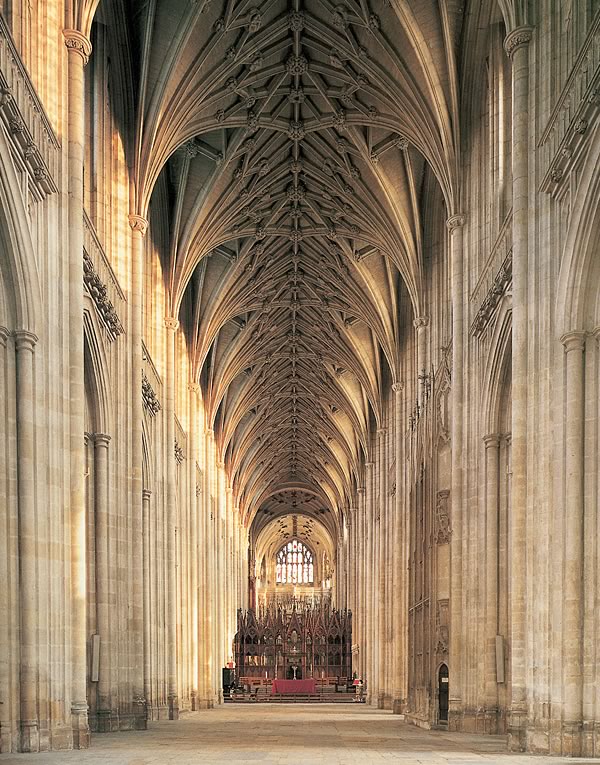
Swithin was Bishop of Winchester in the 9th century. Little is known of his life, although he was rumored to be humble and charitable. He is best known these days because of this weather forecasting ditty:
St Swithin’s Day, if thou dost rain,
For forty days it will remain:
St. Swithin’s Day, if thou be fair,
For forty days ’twill rain nae mair.’
He was said to have asked to be buried outside the cathedral where people would pass by his remains and the rain would fall on him. One hundred years later, his relics were moved (translated) into a shrine in the new church. Miracles were associated with this translation and Swithin was canonized.
Gaius Julius Caesar was a Roman general and statesman and a distinguished writer of Latin prose. He played a critical role in the gradual transformation of the Roman Republic into the Roman Empire. (Wiki)
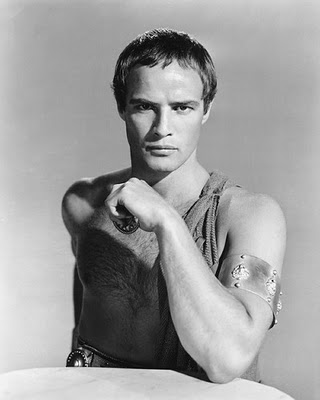
Here is Marlon Brando in the Caesar role – now there’s a Roman emperor for you.
The obvious culinary reference for me to make would be a recipe for a Caesar Salad – nope – here’s a recipe for a Bloody Caesar cocktail.
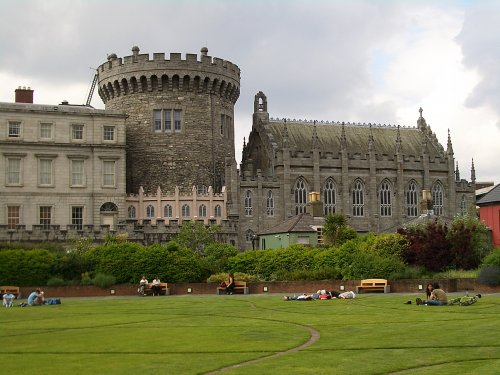
The founding of Dublin, Ireland in 988, represented by the raven banner of the Kingdom of Dublin.
In 988, Máel Sechnaill mac Domnaill led the initial Irish conquest of Dublin. As a result the founding of Dublin is counted by some from the year 988, notwithstanding that a village has existed on the site of Dublin since before the Roman occupation of Great Britain nearly a thousand years earlier. Máel Sechnaill mac Domnaill was dethroned by Brian Boru (1002–1014).
The name Dublin comes from the Gaelic dubh linn or “black pool” – where the Poddle stream met the River Liffey to form a deep pool at Dublin Castle. The city’s modern name – Baile Áth Cliath – means the “town of the ford of the hurdles”. Ireland’s four principal routeways converged at a crossing place made of hurdles of interwoven saplings straddling the low-tide Liffey.
In spite of this venerable founding date, the area of modern Dublin has been occupied for at least 2000 years and was an early Norse settlement – indeed one of the longest Norse occupations outside of Scandinavia.
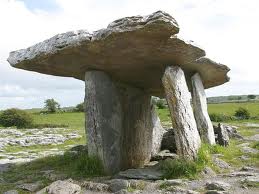
But settlement of this area goes back even further than the Vikings, witnessed by the Clare Dolman standing stones below:
All of this rich history contributed to the development of modern Dublin.
“We like to stress her accomplishments rather than her disappearance,” said Louise Foudray, who serves as caretaker and historian of the Amelia Earhart Birthplace Museum. “However, everyone loves a mystery.”
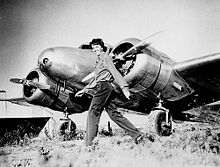
Today marks the 75th anniversary of Amelia Earhart’s disappearance, along with navigator, Fred Noonan, over the Pacific Ocean while attempting to circumnavigate the globe.
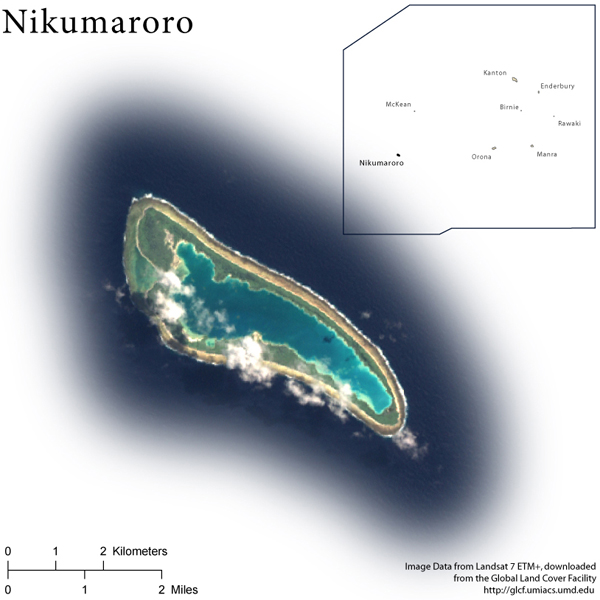
It seems strange to read that there is breaking news about the tragic loss of this pioneering figure, but a new search for her plane is being initiated off the island of Nikumaroro, which is part of the nation of Kiribati. The search was stimulated by a vintage jar of anti-freckle cream found on a island in the western Pacific near Earhart’s last reported location.
She was married to writer George Putnam, but had progressive ideas about marriage and the roles of women.
She placed third at the Cleveland Women’s Air Derby, later nicknamed the “Powder Puff Derby” by Will Rogers. As fate would have it, her life also began to include George Putnam. The two developed a friendship during preparation for the Atlantic crossing and were married February 7, 1931. Intent on retaining her independence, she referred to the marriage as a “partnership” with “dual control.” In a letter written to Putnam and hand delivered to him on the day of the wedding, she wrote, “I want you to understand I shall not hold you to any midaevil [sic] code of faithfulness to me nor shall I consider myself bound to you similarly.”
June 30 marks the 104th anniversary of the Tunguska Impact. This event was not well recognized at first. It happened in a remote location; 1908 was a time of political unrest in Russia; and the seismic activity from the event could have come from a number of sources.
The origin, track and outcome of the explosion that took place in the early morning on June 30 are still under debate by scientists.
Some have concluded that it was a near earth asteroid that came really near. A group of Italian scientists proposethat Lake Cheko in western Siberia might be a crater formed when a chunk of debris broke off the cosmic object and created a trench that then became the lake. The most often discussed possibility is that a comet, or piece of a comet, entered earth’s atmosphere and exploded before impact.
According to an eye witness who was questioned by an investigative team,
Suddenly in the north sky… the sky was split in two, and high above the forest the whole northern part of the sky appeared covered with fire… At that moment there was a bang in the sky and a mighty crash… The crash was followed by a noise like stones falling from the sky, or of guns firing. The earth trembled.
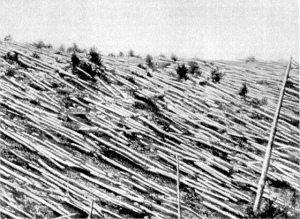
Most dramatic are the photographs of trees that were burned and blasted away from the impact, losing their branches and looking list the results of a clear cut on the most massive scale.
Tunguska remains a mystery and a talking point among scientists and lay people to this day,
“If you want to start a conversation with anyone in the asteroid business all you have to say is Tunguska,” says Don Yeomans, manager of the Near-Earth Object Office at NASA’s Jet Propulsion Laboratory. “It is the only entry of a large meteoroid we have in the modern era with first-hand accounts.”





















 Gunsmoke and Knitting