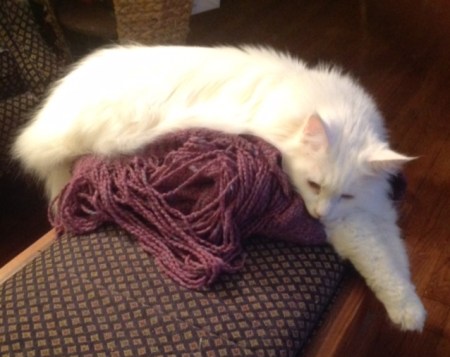
Hobbes, the mighty snow leopard rests after conquering the treacherous alpine blanket monster.

Hobbes, the mighty snow leopard rests after conquering the treacherous alpine blanket monster.

Yes, um, let’s see, I’d like two salmon crullers and a large iced herring latte. Yeah, to go.


It was this guy – circling and circling over the campus at Fancy-Pants University in the middle of the city. Looking for yummy, tasty squirrels. It was lunch time.

Red Tailed Hawk
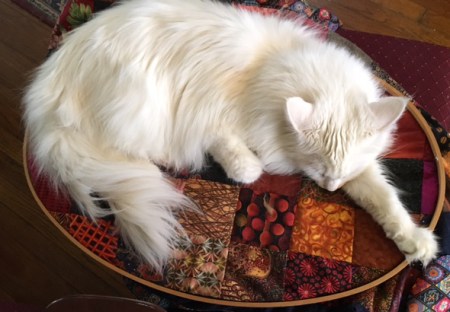
Hobbes the mighty snow leopard rests after subduing the wild and ferocious cinnabar quilt that I will never be able to finish.
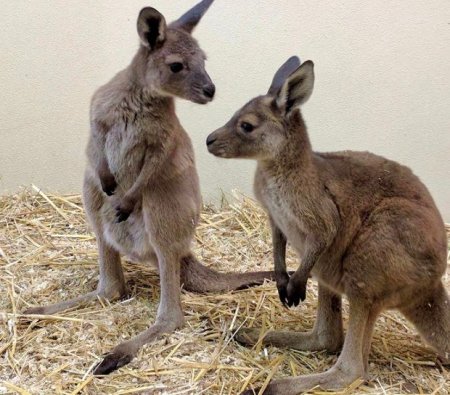
“Two juvenile western gray kangaroos are leaning toward independence at the Cleveland Metroparks Zoo’s Australian Adventure.
They were born to mothers Mieehi and Niley around last Valentine’s Day and have been pouch-bound until last fall.
One left the pouch for good around Jan. 3. The second oldest of the unnamed newbies is still going in the pouch but is growing more independent by the day.
Three others were born in May and remain pouch potatoes. Since Australian Adventure opened in 2000, 34 western gray kangaroos have been born at Cleveland Metroparks Zoo.
All kangaroos are marsupials. Babies, called joeys, are born very small and continue their development in their mother’s pouch. Gray kangaroos spend about eight months in the pouch before poking their heads out. Joeys then spend about a month and a half going in and out of the pouch before being completely independent. Gray kangaroos are one of the seven species of marsupials housed in Australian Adventure and have access to their outdoor yard throughout the winter.
Western gray kangaroo Macropus fulginosus: The head-to-tail length of the western gray kangaroo ranges from 37 inches to 87 inches for males, and from 38 inches to 68 inches for females. Weight ranges from 66 to 118 pounds in males, and from 10 to 60 pounds in females.”
-J. Ewinger, The Plain Dealer
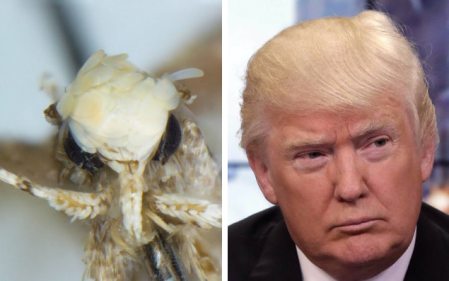
“A tiny moth species has been named Neopalpa donaldtrumpi, becoming the first species to bear the name of the US president elect. The species was named thusly not so much to honor Trump, but rather to raise awareness about the need for species conservation.
It’s not the first time a species has been named after someone famous – in fact, it happens quite a lot. A wasp species was recently named after the singer Shakira, a dinosaur after the poet Georgia O’Keeffe, and a flower fly after Bill Gates.” –Mihai Andrei
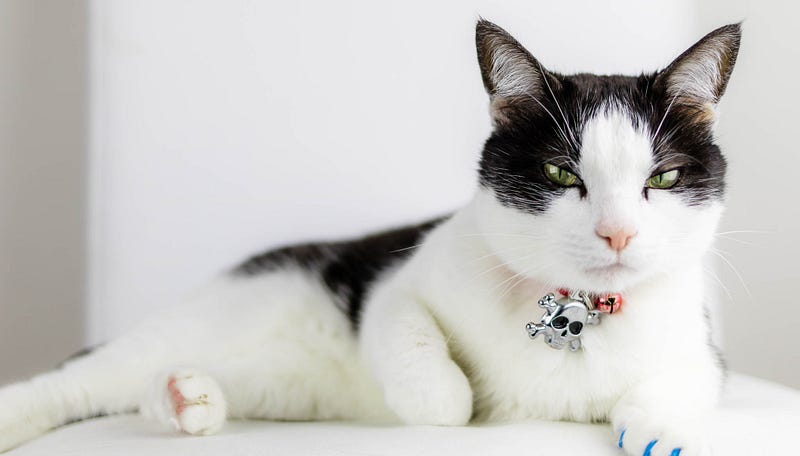
As the year draws to a close, it’s time to sit down with your cats and give them feedback on how they’ve been performing. To help you prepare for the conversation, I’ve written a few guidelines from my own experiences.
When thinking about how your cat is meeting expectations, ensure that you are evaluating against a standard. It should take into account the cat’s level which is ultimately based on age and breed. A level 2 cat such as a 6 month old Persian kitten will not have the same performance expectations as a level 5 cat like an 8-year-old gray tabby. Ideally you’ve discussed these expectations with your cat at length. They should be reasonable and achievable while still providing enough of a challenge to allow for personal growth. Some sample performance goals can include: number of hours of expected sleep during the day (aim for 16–18); time spent playing in boxes; level of cuteness on a scale from 1–10 (this should be maintained with self-grooming and a general posture of perky ears and wide eyes).
In order to help your cat grow, your feedback must be specific and actionable. By using the situation-behavior-impact (SBI) model, your cat will be able to understand the rationale behind your feedback. An example conversation might go: “Skittles, when I was sleeping and you jumped on the bed and meowed in my face at 4am, it woke me up and that made me feel angry and tired all day. One way you can have more positive impact is to STFU and sleep until at least 8am.”
This can be challenging. Your cat might get defensive, or worse, ignore you entirely and pretend that she doesn’t understand you. Don’t be fooled. She understands everything you say. When your cat is not meeting expectations, you’ll need to be prepared with a performance improvement plan or PIP. This PIP should include specific steps your cat will need to take in order to meet the expectations of her role and level. You can tell her, for example, that the number of times she jumps on the counter and gets her poo-poo paws all over your food prep areas is unacceptable and must be reduced by at least 80% over the next quarter.
It may be necessary to remind her just what a lucky SOB she is to have food and a warm place to sleep on these cold winter nights.
Help your cat understand the consequences if performance does not improve. It may be necessary to remind her just what a lucky SOB she is to have food and a warm place to sleep on these cold winter nights. As your cat’s manager, you should also be aware of your own role in her performance. Are you present enough? Does she get adequate space to grow, play? Have you provided the necessary toys and furniture to scratch? It’s unfair to punish your cats for scratching the couch and destroying your nice things if you haven’t given them a proper scratching post.
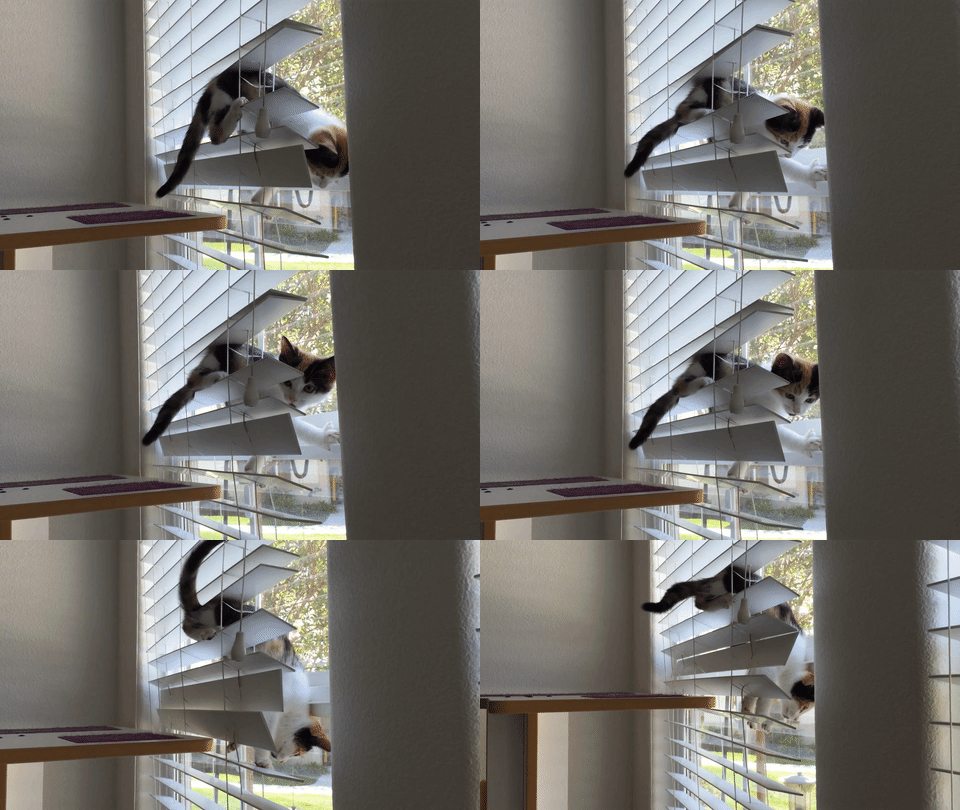
You should be having regular individual 1:1s with your cats. Any negative feedback should be given privately so as not to embarrass or shame one cat in front of the group. However, some feedback can be given in a group setting when it benefits the whole team. For example, you can share with all of your cats how much you appreciate their adorable fuzzy faces and how cute they are when they make biscuits on your lap before curling up for a good snuggle.
Skittles, I loved that time you tried to jump on the bookshelf but completely missed and fell. I laughed for days.
You might be more concerned with your cat’s negative behaviors but it’s important to show appreciation where it is due. Again, follow the SBI model: “Skittles, I loved that time you tried to jump on the bookshelf but completely missed and fell. I laughed for days. The video got me over 50 likes on Instagram.” Remember it’s your job to support your cats as they grow, encourage them to lean in, and work hard at being cats.
From Hackernoon – Thanks, HMS Defiant
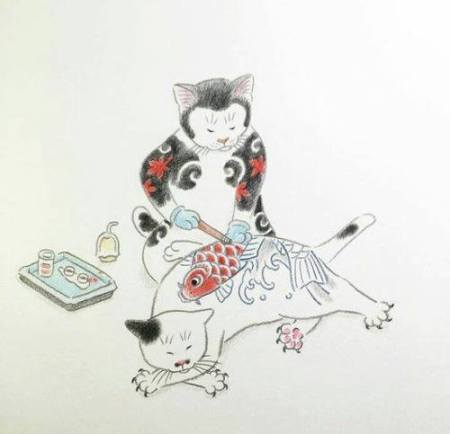
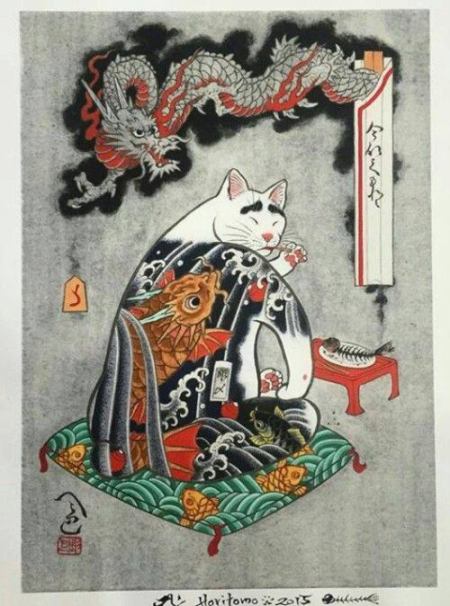
Kazuaki Horitomo is a California-based Japanese artist who combines two of his great passions – tattoos and cats – into one. As an illustrator and tattoo artist, Horitomo is steeped in the Japanese tradition of tebori (a technique of tattooing by hand) and his illustrations reflect that. Some of our favorites works are the humorous and surreal depictions of cats performing tebori on other cats.


Firearms, fibers, any news or behaviors that make me say, "hmm, let me take another look at this."
I still miss my man, but my aim is getting better.











 Gunsmoke and Knitting