Posts Tagged ‘geeky science blogging’

h1

Why am I shedding a tear?

January 27, 2020

There will be no “Boaty McBoatface” – Polar research ship RRS David Attenborough fires up for the first time
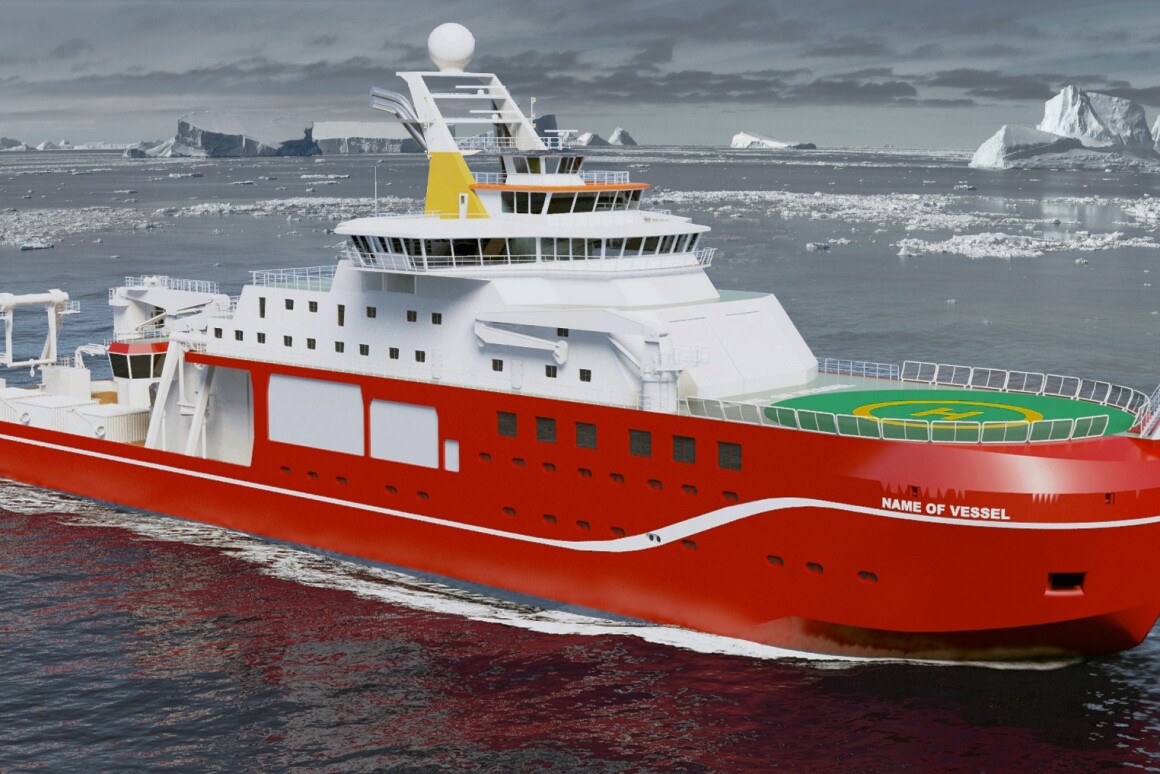
Artist's concept of RS Sir David Attenborough
Artist’s concept of RRS Sir David Attenborough

The British Antarctic Survey’s (BAS) polar research vessel RRS Sir David Attenborough came a step closer to going into service this week as its power systems came online for the first time and its advanced lifeboats were commissioned. In the final stages of construction at the Cammell Laird shipyard in Birkenhead, UK, it’s the first British ship that is International Maritime Organisation Polar Code-compliant.

Named after the famed nature documentary maker, the floating laboratory RRS Sir David Attenborough caused some amusement in 2016 when an invitation for the public to name it resulted in the winner being Boaty McBoatface. Now sporting a more dignified moniker, the Attenborough replaces the RRS Ernest Shackleton and RRS James Clarke Ross. When it enters service, it will carry 60 scientists and support staff in BAS operations in both the Antarctic and the Arctic. It’s 129.6 m (425 ft) long, 25 m (82 ft) abeam, has a draft of 7.5 m (24 ft), displaces 12,790 tonnes (14,098 tons), and has 4,200 m³ (148,000 ft³) of cargo space.

As part of the completion process, the lifeboats for the Attenborough have been commissioned. Each of these can carry 90 people and they are situated on both sides of the ship on specially designed davits. Based on data from previous Arctic lifeboat search and rescue expedition trials, the lifeboats and their davits can operate at temperatures down to -35° C (-31° F).
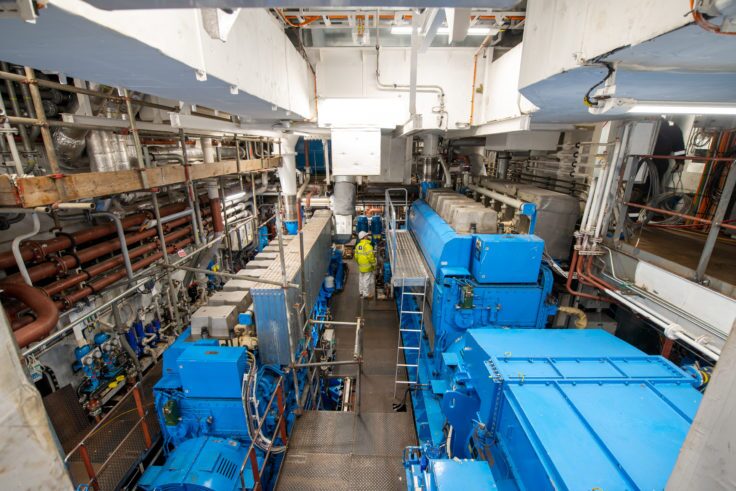
The Attenborough runs on a hybrid diesel/electric system

The Attenborough runs on a hybrid diesel/electric system
BAS

In addition, this week saw Cammell Laird engineers bringing the Attenborough’s power systems up to 100 percent for the first time. The ship runs on a hybrid system with two six-cylinder and two nine-cylinder Rolls-Royce Bergen diesel engines powering the generators, which run through a series of battery banks to provide constant loads to the electric propulsion motors and the ship’s systems. According to BAS, having engines of different sizes allows for more efficient operations under different conditions. They also run on low-sulfur fuels and are fitted with a Selective Catalytic Reduction (SCR) system to keep down emissions.

The hybrid system allows the Attenborough to break its way through ice packs a meter thick at a speed of three knots (3.5 mph, 5.6 km/h). Additionally, by using electric motors and engines sitting on rubber noise-damping pads, the ship minimizes noise to both protect the local sea life and avoid interfering with the onboard acoustic and seismic instruments.

“This is a great moment in the final stages of the build,” says John Drummond, Project Director at Cammell Laird. “Testing power and installing lifeboats are very visible signs of the huge amount of technical and engineering work that has been undertaken. This truly unique ship is state-of-the-art and highly complex – we are proud to be getting it ready for sea.”

Source: British Antarctic Service (BAS) via NewAtlas (David Szondy)

h1

What am I Lego loving?

January 22, 2020

The International Space Station set is designed to inspire space enthusiasts young and old

“Lego is adding to its catalog of space-themed kits, today announcing a replica of the International Space Station. Available from next month, the latest product to emerge via Lego’s Ideas program is built to challenge space enthusiasts with a 864-piece set that features moving parts to mimic some of the orbiting laboratory’s realistic functions.

Just like the Saturn V Apollo rocket set, the Women of NASA set and the Apollo 11 Lunar Lander set, the International Space Station set is designed to inspire space enthusiasts young and old by bringing some of humankind’s grandest engineering achievements to the living room floor.”

The Lego Ideas International Space Station kit will be available from February 1 for a price of US$70

As you can see from the image above – this product is not necessarily for children.  The space station will launch on February 1.

from: New Atlas

h1

Why am I looking up?

January 16, 2020

“When the Sun is in the right position and, typically, hidden from direct view, these thin clouds can be seen significantly diffracting sunlight in a nearly coherent manner, with different colors being deflected by different amounts. Therefore, different colors will come to the observer from slightly different directions. Many clouds start with uniform regions that could show iridescence but quickly become too thick, too mixed, or too angularly far from the Sun to exhibit striking colors.

The featured image and an the video were taken late last year over Ostersund, Sweden.”

Video credit: Göran Strand

reblog from WirelessTech

h1

Happy Solstice

December 23, 2019

Yesterday was the shortest day of the year here at

41.486338″ N, 81.498847″ W

This is a photo of the shadow of the flagpole outside the local post office at “high” noon yesterday.  The sun never got any higher than this.

I hope you cast your cakes and ale under the trees to help bring back the sun.

h1

What am I noting today?

October 23, 2019

What Is Mole Day? - Date and How to Celebrate

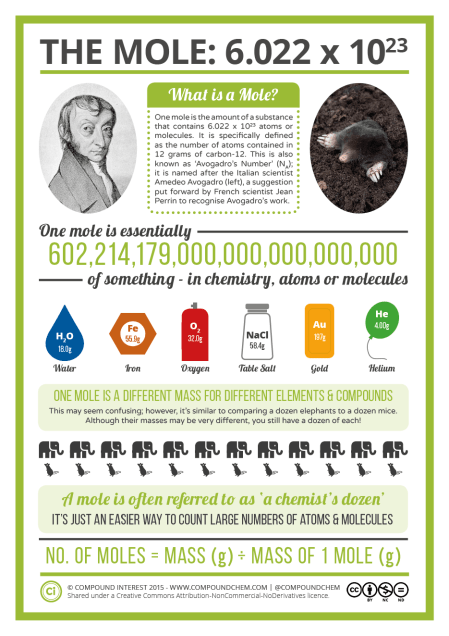
Today is Mole Day – 10/23

h1

What am I watching?

October 10, 2019


I may have posted this earlier, but I like it.

h1

Where am I traveling?

October 3, 2019
h1

What am I writing?

September 4, 2019


Like the video “Powers of 10”, but we know more now.

from Colossal

h1

Where have we traveled?

July 20, 2019

Edit

h1

What am I sappy T Rex blogging?

May 10, 2019

Baby T-Rex could be the Cutest Floor Monster - Absolute ...

Article from LiveScience – click here to see the animated gif of baby T rex (it is copyrighted, hence the link.)

“It may be hard to imagine towering Tyrannosaurus rex as tiny, but the toothy Cretaceous giant didn’t spring from an egg fully grown. In fact, T. rex hatchlings were about the size of very skinny turkeys, with “arms” that were longer in proportion to their tiny bodies than in adults. And each baby T. rex was covered in a coat of downy feathers.

What’s more, T. rex‘s feathers likely grew along the animal’s head and tail into adulthood, according to new reconstructions that represent the most accurate models of the dinosaur to date. . . . more.”