
A guide to giving your cats their annual performance review
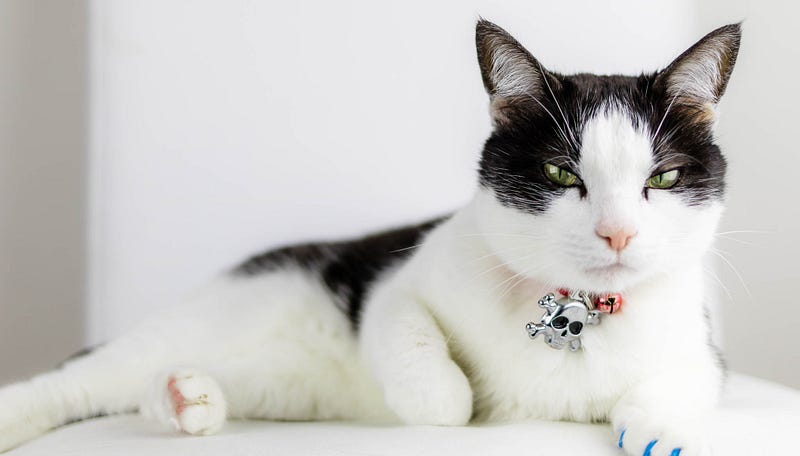
As the year draws to a close, it’s time to sit down with your cats and give them feedback on how they’ve been performing. To help you prepare for the conversation, I’ve written a few guidelines from my own experiences.
Evaluate against a standard
When thinking about how your cat is meeting expectations, ensure that you are evaluating against a standard. It should take into account the cat’s level which is ultimately based on age and breed. A level 2 cat such as a 6 month old Persian kitten will not have the same performance expectations as a level 5 cat like an 8-year-old gray tabby. Ideally you’ve discussed these expectations with your cat at length. They should be reasonable and achievable while still providing enough of a challenge to allow for personal growth. Some sample performance goals can include: number of hours of expected sleep during the day (aim for 16–18); time spent playing in boxes; level of cuteness on a scale from 1–10 (this should be maintained with self-grooming and a general posture of perky ears and wide eyes).
Focus on impact
In order to help your cat grow, your feedback must be specific and actionable. By using the situation-behavior-impact (SBI) model, your cat will be able to understand the rationale behind your feedback. An example conversation might go: “Skittles, when I was sleeping and you jumped on the bed and meowed in my face at 4am, it woke me up and that made me feel angry and tired all day. One way you can have more positive impact is to STFU and sleep until at least 8am.”
How to frame a needs-improvement discussion
This can be challenging. Your cat might get defensive, or worse, ignore you entirely and pretend that she doesn’t understand you. Don’t be fooled. She understands everything you say. When your cat is not meeting expectations, you’ll need to be prepared with a performance improvement plan or PIP. This PIP should include specific steps your cat will need to take in order to meet the expectations of her role and level. You can tell her, for example, that the number of times she jumps on the counter and gets her poo-poo paws all over your food prep areas is unacceptable and must be reduced by at least 80% over the next quarter.
It may be necessary to remind her just what a lucky SOB she is to have food and a warm place to sleep on these cold winter nights.
Help your cat understand the consequences if performance does not improve. It may be necessary to remind her just what a lucky SOB she is to have food and a warm place to sleep on these cold winter nights. As your cat’s manager, you should also be aware of your own role in her performance. Are you present enough? Does she get adequate space to grow, play? Have you provided the necessary toys and furniture to scratch? It’s unfair to punish your cats for scratching the couch and destroying your nice things if you haven’t given them a proper scratching post.
When to give team feedback vs individual feedback
You should be having regular individual 1:1s with your cats. Any negative feedback should be given privately so as not to embarrass or shame one cat in front of the group. However, some feedback can be given in a group setting when it benefits the whole team. For example, you can share with all of your cats how much you appreciate their adorable fuzzy faces and how cute they are when they make biscuits on your lap before curling up for a good snuggle.
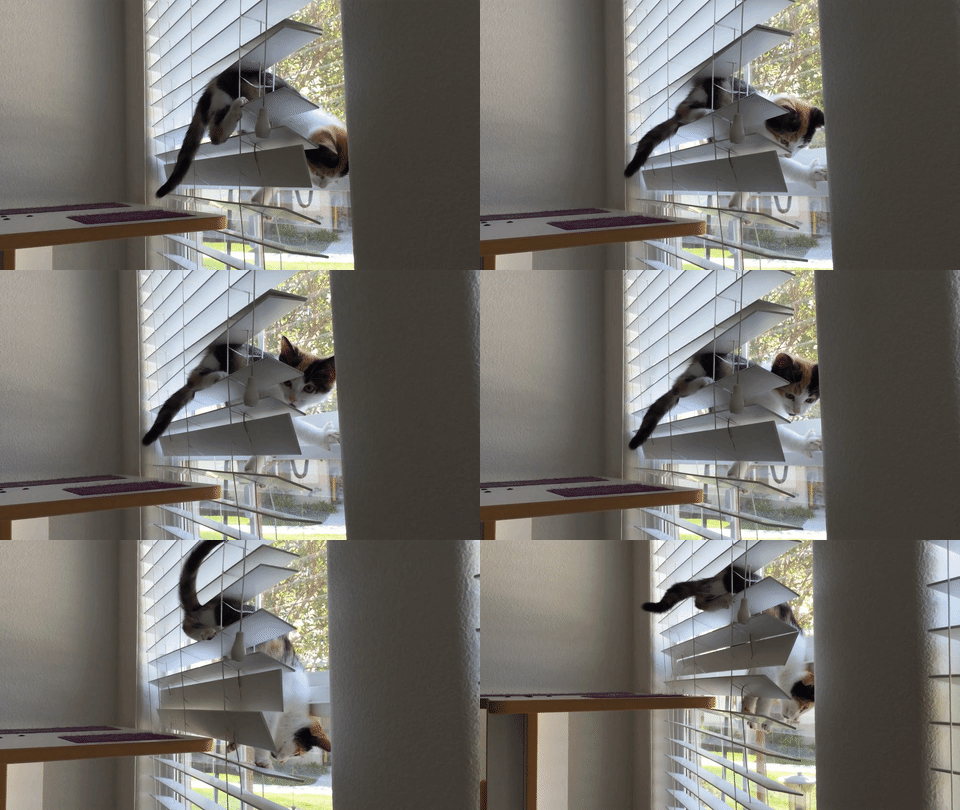
Skittles, I loved that time you tried to jump on the bookshelf but completely missed and fell. I laughed for days.
Don’t leave out the positive
You might be more concerned with your cat’s negative behaviors but it’s important to show appreciation where it is due. Again, follow the SBI model: “Skittles, I loved that time you tried to jump on the bookshelf but completely missed and fell. I laughed for days. The video got me over 50 likes on Instagram.” Remember it’s your job to support your cats as they grow, encourage them to lean in, and work hard at being cats.
From Hackernoon – Thanks, HMS Defiant


 While traveling through the Amazon to study reptile and amphibian diversity with the Herpetology Division at the University of Michigan, photographer Mark Cowan happened upon a strange sight: a caiman whose head was nearly covered in butterflies. The phenomenon itself isn’t particularly unusual, salt is critical to the survival of many creatures like butterflies and bees who sometimes drink tears from reptiles in regions where the mineral is scarce (we’ve seen the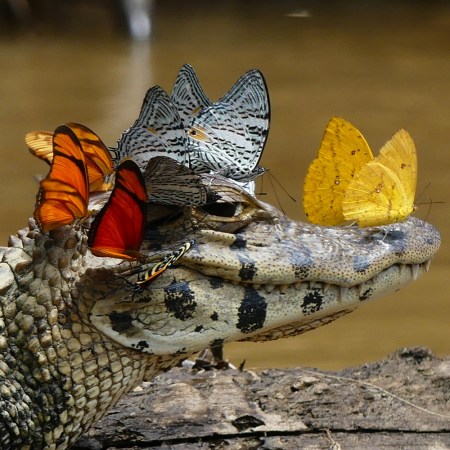










 Gunsmoke and Knitting